
Mostrar mensagens com a etiqueta Saúde. Mostrar todas as mensagens
Mostrar mensagens com a etiqueta Saúde. Mostrar todas as mensagens
quinta-feira, 23 de julho de 2020

quinta-feira, 23 de abril de 2020
terça-feira, 12 de abril de 2016

sexta-feira, 16 de maio de 2014

quinta-feira, 22 de março de 2012

quinta-feira, 7 de julho de 2011

domingo, 2 de janeiro de 2011
Feliz Ano Novo - De Grávida a Mãe

[De quem é esta bela ilustração?]
Notícias Magazine, do DN
O que acontece no corpo e na mente das mulheres desde o momento da concepção até ao primeiro fôlego do seu bebé. O determinismo dos genes, o poder do factores ambientais, dicas para viver uma gravidez tranquila e ter um bebé saudável. Uma obra para quem quer saber de amamentação, chuchas, fraldas e noites mal dormidas. O conhecimento é a melhor arma contra a insegurança, como explicam, com graça, Michael Roizen e Mehmet Oz.
Não tem nada que enganar. Basta um ovo, cem milhões de espermatozóides muito excitados e paixão q.b. para envolver o que ganhar a corrida. Depois, guarda-se no útero durante quarenta semanas e protege-se com uma boa dose de serenidade. Seguir estes passos é meio caminho andado para ter uma gravidez tranquila e um bebé saudável após o nascimento e durante toda a vida.
É mais ou menos assim que a famosa dupla Michael Roizen e Mehmet Oz começa o seu novo livro, YOU Vou Ter Um Bebé, o Manual de Instruções para Uma Gravidez Saudável e Feliz. Desta vez os médicos norte-americanos propõem-se ajudar as futuras mães a terem uma gravidez sem stress, um parto sem complicações e o bebé mais saudável do mundo. Desejos e anseios que dependem da informação e do conhecimento, da gestão do stress e da ansiedade e do apoio das pessoas que estão à volta das grávidas. O funcionamento do corpo, a alimentação, os enjoos e os apetites, a auto-imagem e o desejo sexual, a genética e a epigenética, enfim, tudo o que se passa na cabeça da mulher antes, durante e depois de trazer um bebé ao mundo: «Independentemente de ser a primeira ou a quarta, a gravidez é a coisa mais avassaladora do mundo. E a que gera maior conflito interno. Num momento está toda entusiasmada, completamente eufórica e impaciente pelo primeiro sorriso do seu bebé, o primeiro balbuciar, o primeiro abraço que lhe encherá a alma. No outro, sente-se ansiosa, cheia de incertezas perante o que se passa na sua barriga, se o pequenote está a crescer bem e se você vai conseguir viver sem dormir nada.» Para que nenhuma mãe «entre em parafuso», Roizen e Oz lembram que «o corpo da mulher está preparado para ter bebés de uma forma segura e eficaz. Não quer dizer que a viagem corra sempre às mil maravilhas, mas significa que tem tudo a seu favor. Se souber o que fazer para que a natureza siga o seu percurso natural, só aumenta as probabilidades de tudo correr bem». Ora vamos ver o que é que a espera, a si e ao seu bebé.
Post-its biológicos
Depois da batalha romântica, é a vez de os genes e o ambiente entrarem em acção. E ao facto de nascermos de «uma simples célula fertilizada e nos transformarmos nos milhares de milhões de células que compõem uma pessoa» Oz chama um grande milagre da natureza: «As células humanas contém 23 pares de cromossomas, as estruturas que contêm o nosso ADN, uma espécie de livro de instruções que diz ao corpo como se deve desenvolver.» Mas isto é só uma pequena parte da história, senão os gémeos idênticos, que têm exactamente o mesmo ADN, não desenvolviam traços diferentes, como acontece. O que está por detrás destas diferenças, explica a dupla médica, são os factores ambientais que, «muito provavelmente ainda no útero, influenciam a expressão dos genes». É a epigenética em acção.
E é a epigenética que nos torna únicos: «Os genes são como as receitas, são instruções para se criar uma coisa. Tanto a mãe como pai dão ao seu descendente uma cópia do enorme livro de receitas de cada um mas, no caso de muitos genes, só uma cópia de cada receita será usada pelo bebé. Por exemplo, os genes dos olhos são castanhos, azuis ou verdes e para esses genes só se expressa o gene do pai ou da mãe, ou seja, só uma cópia é activada, nunca as duas.»
O organismo humano é composto por cerca de 25 mil genes e contém cerca de duzentos tipos de células diferentes. Para que estas saibam quais os genes que lhes interessam - o da mãe ou o do pai -, «o corpo põe post-its biológicos, chamados etiquetas epigenéticas, em determinados genes para definir quais as receitas biológicas que vão ser usadas». Esta «rotulagem», explicam Oz e Roizen, «ocorre durante vários processos químicos mas, vejam só, «as acções da mãe durante a gravidez influenciam esses processos e determinam onde são colocados os post-its e quais os genes que serão expressos afectando, em última análise, a saúde do bebé».
Entendido porque é que os genes, só por si, não explicam a diversidade do nosso aspecto, comportamento e até a forma como nos desenvolvemos? «A forma como os genes são expressos tem um papel importantíssimo na imensa diferença que há entre nós e os macacos, com quem partilhamos 99,8 por cento do ADN, e nas óbvias e subtis diferenças entre dois seres humanos, embora tenhamos 99,9 por cento de ADN comum.»
Uma canção biológica
Agora que já sabe que os factores de stress do meio envolvente da mãe, incluindo a alimentação e o tabaco, provocam alterações nos padrões de expressão dos genes do feto, chegou a altura de explicitar os desafios que se colocam às mães. Sem culpabilidades, pois até há pouco tempo desconhecia-se o papel da epigenética antes do parto e, por outro lado, «podemos regular a actividade dos genes depois do nascimento - no caso da criança que vai ter, de crianças anteriores e até no seu caso». Como? «O segredo é parar e fazer uma inversão de marcha YOU e acabar com os comportamentos prejudiciais logo que possível. Até mesmo os efeitos nefastos do tabaco podem ser revertidos se deixar de fumar no princípio da gravidez.
O Dr. Oz usa uma metáfora musical para explicar melhor o funcionamento da epigenética: «O ADN é a composição que determina a individualidade do bebé, afinal existem milhares de formas de juntar as notas musicais. Mas a questão é que há muitas maneiras de interpretar uma canção. A mesma canção, diferentes interpretações, diferentes resultados. Ora, você e o seu parceiro têm, cada um, o respectivo ADN, e depois de se renderem a uma noite de boogie-woogie fizeram a vossa canção biológica na forma de um bebé. O código genético está definido, mas têm ainda a oportunidade de interpretar a canção e mudar a forma de os genes do seu filho se expressarem. E isto, caros amigos, é música para os vossos ouvidos.»
Dicas YOU
Estar grávida e ter um filho é talvez o maior desafio da nossa vida. Mas é um desafio bom. Agora que está preparada para o repto lembre-se de que durante os próximos meses o seu comportamento vai mudar: «Tal acontece devido às alterações dos níveis hormonais que podem levá-la a fazer coisas que nunca imaginaria. Não tem importância. O seu objectivo é proporcionar ao bebé um ambiente saudável mas não tem de se sentir mal se de vez em quando não cumprir essas recomendações.»
No que respeita à alimentação, o importante é comer bem a maior parte do tempo. «Já sabemos que os seus hábitos alimentares podem dar voltas de 180 graus de um momento para o outro. Por isso não deve estranhar os momentos em que lhe apetece comer tudo e mais alguma coisa nem os momentos em que parece que vai desfalecer. Deve é procurar comer nove ou mais doses (uma mão-cheia) de fruta e vegetais, três ou mais doses de cereais integrais, três ou mais doses de proteína magra (carne magra e aves sem pele, peixe, ovos, nozes, feijões, lentilhas, tofu).» Ter um momento de fraqueza e cair em tentações gastronómicas de vez em quando não é problema de maior. Desde que não se torne um habito, avisam os médicos Michael Roizen e Mehmet Oz.
Outra regra de ouro da alimentação é comer várias vezes por dia. Pelo menos seis. «Assim se evita a queda dos níveis de açúcar e os enjoos.» E para fazer face aos desejos a dica é comer alimentos que a deixem satisfeita e que não prejudicam nem a si nem ao seu bebe. Trocar batatas fritas por batatas assadas; gelados por iogurte; alimentos fritos por grelhados; bolachas com pepitas de chocolate por um quadradinho de chocolate preto; batatas fritas de pacote por pipocas rebentadas em ar quente e não em gordura são algumas sugestões. Segundo a dupla norte-americana, devem evitar-se os hidratos de carbono simples (açúcar refinado, massas e pão branco), gorduras transaturadas (gordura de animais de quatro patas, óleo de palma e de coco, óleos hidrogenados, alimentos fritos ou processados) e, claro, os demónios alimentares das grávidas - a cafeína (incluindo as bebidas carbonadas) e o peixe com alto teor em toxinas (peixe-espada, cavala, atum). Faça-o por si e pelo seu bebé, que precisa de nutrientes e não de calorias.
Do que o seu bebé também precisa é de ser estimulado. Ainda no útero, com a voz da mãe e com música, e depois do nascimento, mimando-o e dando-lhe a atenção, os cuidados e o tempo de que os recém-nascidos precisam. Até lá, informe-se, porque o conhecimento é a melhor arma contra a insegurança. Em YOU Vou Ter Um Bebé, o Manual de Instruções para Uma Gravidez Saudável e Feliz, Michael Roizen e Mehmet Oz explicam tintim-por-tintim o sentido do planeamento da gravidez, os exercícios durante a gestação, o sono, os medicamentos, o peso, o trabalho, a preparação para o parto, a escolha da parteira, do médico e do hospital, os cuidados com o recém-nascido, o regresso a casa, as vacinas, etc. A resposta a todas as dúvidas que a assolam numa linguagem clara, rica e muito divertida. Com dicas para exercícios, planos alimentares e pareceres muito sérios sobre o papel do homem, enquanto marido e pai.
E por falar em pai, é claro que este não vai festejar o nascimento do filho com charutos, mas sim com muitos beijinhos e abraços e, porque não, com uma simpática lista de desejos oferecida pela mãe. Para já, fique a saber que há três áreas em que o pai vai realmente fazer a diferença: na logística (a pintar paredes, a montar e a desmontar berços, cadeirinhas, carrinhos, etc.); no plano emocional (já não é o número um e as conversas sobre futebol, política ou música já não interessam, o que está na ordem do dia são enjoos, ecografias, birras e sogras) e, finalmente, a nível físico (vai gastar menos calorias a fazer amor, a não ser que passe a usar as duas mãos para fazer carícias e massagens). Preparados para o embate que vai mudar as vossas vidas? Com certeza que sim!
Grandes momentos da vida no útero
As etapas mais importantes do desenvolvimento do bebé, segundo a idade clínica.
6 semanas O coração está formado e a circulação estabelecida. Uma grande parte dos pulmões também está formada, bem como os dedos das mãos e dos pés e partes da face, nomeadamente os lábios.
7 semanas O feto consegue produzir urina. As «bolhas» na zona dos olhos colapsam formando estruturas côncavas.
9 semanas O sistema imunológico começa a desenvolver-se com a formação das células B, um tipo de glóbulos brancos que ajudam a combater as infecções. As fossas nasais estão formadas. O bebé é do tamanho de um feijão e tem a mesma forma.
10 semanas Os olhos movem-se para a frente da cara e formam-se as pálpebras, que se unem (separam-se mais tarde, no segundo trimestre). O feto começa a cerrar os olhos, abre a boca e faz pequenos movimentos com os dedos dos pés e das mãos.
11 semanas As bochechas, sobrancelhas e braços são sensíveis ao tacto.
12 semanas As papilas gustativas desenvolvem-se e amadurecem. Calma com as anchovas, mãe.
14 semanas O sistema imunológico desenvolve-se rapidamente, com a formação de células T. Já se detectam muitos químicos do sistema digestivo, como a bilirrubina do fígado e a insulina do pâncreas. O bebé começa a desenvolver a pele, o cabelo e as unhas. Começa a engolir. Toda a superfície do corpo é sensível ao tacto. Tamanho do feto: mais ou menos o de uma laranja.
16 semanas Os genitais são visíveis. Os cem milhões de neurónios que se formam no córtex visual primário começam a desenvolver-se a partir deste momento até às 28 semanas. A respiração desenvolve-se. Tamanho: mais ou menos o de uma toranja.
20 semanas As orelhas sobressaem da cabeça. Uma penugem cobre o corpo. Tamanho: 300 gramas, o peso de dois iPods.
25 semanas O feto reage aos sons. Cuidado com o que diz.
26 semanas O feto é capaz de sugar. É capaz de ouvir sons. Podem ver-se as sobrancelhas e as pestanas. Tamanho: 630 gramas (mais ou menos o peso de três laranjas). Quase metade dos bebés que atingem esta idade conseguem sobreviver a um parto prematuro.
29 semanas Os pulmões, já com fluidos no seu interior, começam a expandir-se e a comprimir-se simulando o movimento da respiração.
30 semanas Os olhos são sensíveis à luz e o olfacto começa a desenvolver-se. O feto consegue sugar e engolir, para ajudar a desenvolver o sistema gastrintestinal. Além disso, pode ter soluços e pode respirar, o que é muito bom caso venha a nascer nesta fase, uma vez que noventa por cento dos bebés sobrevivem. Tamanho: 1,100 quilogramas, ou o peso de um ananás.
34 semanas A pele é vermelha e engelhada. A gordura começa a depositar-se para cobrir o feto. Ganha reflexos como pestanejar e agarrar, e começa a ter padrões de sono perceptíveis. Tamanho: 1,800 quilogramas ou o tamanho de um chihuahua médio.
36 semanas Se ainda não o fez, o bebé começa a descer na direcção da pélvis para se preparar para o parto. As unhas cresceram e estão completamente formadas.
37 semanas Os pulmões desenvolvem-se e se o bebé nascer já não é considerado prematuro. Encara-se como uma gestação de termo.
38 semanas Com a formação de mais gordura, o corpo torna-se mais redondo, menos enrugado. Tamanho: 2,5 quilos ou o peso de um portátil levezinho.
40 semanas Termina o período normal de gestação. Todos os sistemas a funcionar.
Mistérios da maternidade
Tudo o que acontece dentro e fora da barriga ao longo de 280 dias de gravidez. As coisas mais incríveis sobre o corpo, da concepção ao nascimento. YOU Vou Ter Um Bebé, o Manual de Instruções para Uma Gravidez Saudável e Feliz é uma obra a ler por todas as mulheres que não querem entrar em parafuso antes e depois do nascimento dos filhos. «Estamos aqui para acabar com mitos, para desafiar a sua mente e preparar o seu corpo para a maior viagem que o ser humano pode fazer, desde o momento em que duas células se tornam uma até ao momento em que o seu pequeno rebento sai da concha confortável que é a sua barriga», referem os autores e médicos Michael F. Roizen e Mehmet C. Oz. O primeiro, especialista em medicina interna e presidente do Departamento de Anestesiologia da Universidade de Chicago, entrou no corredor da fama após a «invenção» do conceito Real Age. Já Mehmet Oz, um reputado cirurgião cardíaco, tornou-se célebre com a rubrica «Ask Dr. Oz», no programa The Oprah Winfrey Show, e desde há um ano é a estrela maior do seu próprio programa, The Dr. Oz Show, que passa de segunda a sexta-feira na SIC Mulher. Um verdadeiro comunicador.
YOU Vou Ter Um Bebé, a Manual de Instruções para Uma Gravidez Saudável e Feliz, de Michael F. Roizen e Mehmet C. Oz. Uma edição Lua de Papel.
terça-feira, 7 de setembro de 2010
The Normal Newborn and Why Breastmilk is Not Just Food

What is a normal, term human infant supposed to do?
First of all, a human baby is supposed to be born vaginally. Yes, I know that doesn't always happen, but we're just going to talk ideal, normal for now. We are supposed to be born vaginally because we need good bacteria. Human babies are sterile, without bacteria, at birth. It's no accident that we are born near the anus, an area that has lots of bacteria, most of which are good and necessary for normal gut health and development of the immune system. And the bacteria that are there are mom's bacteria, bacteria that she can provide antibodies against if the bacteria there aren't nice.
Then the baby is born and is supposed to go to mom. Right to her chest. The chest, right in between the breasts is the natural habitat of the newborn baby. (Fun fact: our cardiac output, how much blood we circulate in a given minute, is distributed to places that are important. Lots goes to the kidney every minute, like 10% or so, and 20% goes to your brain. In a new mom, 23% goes to her chest- more than her brain. The body thinks that place is important!)
That chest area gives heat. The baby has been using mom's body for temperature regulation for ages. Why would they stop? With all that blood flow, it's going to be warm. The baby can use mom to get warm. When I was in my residency, we would put a cold baby "under the warmer" which meant a heater thingy next to mom. Now, as I have matured, if a baby is "under the warmer," the kid is under mom. I wouldn't like that. I like the kids on top of mom, snuggled.
Now we have a brand new baby on the warmer. That child is not hungry. Bringing a hungry baby into the world is a bad plan. And really, if they were hungry, can you please explain to me why my kids sucked the life force out of me in those last few weeks of pregnancy? They better have been getting food, or well, that would have been annoying and painful for nothing.
Every species has instinctual behaviors that allow the little ones to grow up to be big ones and keep the species going. Our kids are born into the world needing protection. Protection from disease and from predators. Yes, predators. Our kids don't know they've been born into a loving family in the 21st century- for all they know it's the 2nd century and they are in a cave surrounded by tigers. Our instinctive behaviors as baby humans need to help us stay protected. Babies get both disease protection and tiger protection from being on mom's chest. Presumably, we gave the baby some good bacteria when they arrived through the birth canal. That's the first step in disease protection. The next step is getting colostrum.
A newborn baby on mom's chest will pick their head up, lick their hands, maybe nuzzle mom, lick their hands and start to slide towards the breast. The kids have a preference for contrasts between light and dark, and for circles over other shapes. Think about that...there's a dark circle not too far away.
Mom's sweat smells like amniotic fluid, and that smell is on the child's hands (because there's been no bath yet!) and the baby uses that taste on their hand to follow mom's smell. The secretions coming from the glands on the areola (that dark circle) smell familiar too and help the baby get to the breast to get the colostrum which is going to feed the good bacteria and keep them protected from infection. The kids can attach by themselves. Watch for yourself! And if you just need colostrum to feed bacteria and not yourself, well, there doesn't have to be much. And there isn't because the kids aren't hungry and because Breastmilk is not food!
We're talking normal babies. Breastfeeding is normal. It's what babies are hardwired to do. 2009 or 209, the kids would all do the same thing: try to find the breast. Breastfeeding isn't special sauce, a leg up or a magic potion. It's not "best. " It's normal. Just normal. Designed for the needs of a vulnerable human infant. And nothing else designed to replace it is normal.
Colostrum also activates things in the baby's gut that then goes on to make the thymus grow. The thymus is part of the immune system. Growing your thymus is important. Breastmilk= big thymus, good immune system. Colostrum also has a bunch of something called Secretory Immunoglobulin A (SIgA). SIgA is made in the first few days of life and is infection protection specifically from mom. Cells in mom's gut watch what's coming through and if there's an infectious cell, a special cell in mom's gut called a plasma cell heads to the breast and helps the breast make SIgA in the milk to protect the baby. If mom and baby are together, like on mom's chest, then the baby is protected from what the two of them may be exposed to. Babies should be with mom.
And the tigers. What about them? Define "tiger" however you want. But if you are baby with no skills in self-protection, staying with mom, having a grasp reflex, and a startle reflex that helps you grab onto your mom, especially if she's hairy, makes sense. Babies know the difference between a bassinette and a human chest. When infants are separated from their mothers, they have a "despair- withdrawal" response. The despair part comes when they alone, separated. The kids are vocally expressing their desire not to be tiger food. When they are picked up, they stop crying. They are protected, warm and safe. If that despair cry is not answered, they withdraw. They get cold, have massive amounts of stress hormones released, drop their heart rate and get quiet. That's not a good baby. That's one who, well, is beyond despair. Normal babies want to be held, all the time.
And when do tigers hunt? At night. It makes no sense at all for our kids to sleep at night. They may be eaten. There's nothing really all that great about kids sleeping through the night. They should wake up and find their body guard. Daytime, well, not so many threats. They sleep better during the day. (Think about our response to our tigers-- sleep problems are a huge part of stress, depression, anxiety).
I go on and on about sleep on this site, so maybe I'll gloss over it here. But everybody sleeps with their kids- whether they choose to or not and whether they admit to it or not. It's silly of us as healthcare providers to say "don't sleep with your baby" because we all do it. Sometimes accidentally. Sometimes intentionally. The kids are snuggly, it feels right and you are tired. So, normal babies breastfeed, stay at the breast, want to be held and sleep better when they are with their parents. Seems normal to me. But there is a difference between a normal baby and one that isn't. Safe sleep means that we are sober, in bed and not a couch or a recliner, breastfeeding, not smoking...being normal. If the circumstances are not normal, then sleeping with the baby is not safe.
That chest -to -chest contact is also brain development. Our kids had as many brain cells as they were ever going to have at 28 weeks of gestation. It's a jungle of waiting -to-be- connected cells. What we do as humans is create too much and then get rid of what we aren't using. We have like 8 nipples, a tail and webbed hands in the womb. If all goes well, we don't have those at birth. Create too much- get rid of what you aren't using. So, as you are snuggling, your child is hooking up happy brain cells and hopefully getting rid of the "eeeek" brain cells. Breastfeeding, skin-to-skin, is brain wiring. Not food.
Why go on and on about this? Because more and more mothers are choosing to breastfeed. But most women don't believe that the body that created that beautiful baby is capable of feeding that same child and we are supplementing more and more with infant formulas designed to be food. Why don't we trust our bodies post-partum? I don't know. But I hear over and over that the formula is because "I am just not satisfying him." Of course you are. Babies don't need to "eat" all the time- they need to be with you all the time- that's the ultimate satisfaction.
A baby at the breast is getting their immune system developed, activating their thymus, staying warm, feeling safe from predators, having normal sleep patterns and wiring their brain, and (oh by the way) getting some food in the process. They are not "hungry" --they are obeying instinct. The instinct that allows us to survive and make more of us.
quinta-feira, 29 de julho de 2010
How to apply sunscreen

How much do I need?
At least six full teaspoons for an average adult. Anything less reduces protection.
How do you apply it?
Put it on 15 to 30 minutes before you go out in the sun, then 15 to 30 minutes afterwards – and every two hours after that. If you get sweaty or swim you need to reapply it even if it is water repellent. Don't rub it in too much – it should still look a bit white on your skin. Don't re-use last year's bottles – sunscreens can get damaged by heat and bacteria.
What SPF do I need?
Dermatologists recommend SPF 30. Children under six months should not be out in direct sun, but they need an SPF of 50. Sunscreen will also protect you from UV-A rays, which are also linked to skin cancer. Their protection is measured relative to the UVB protection given by a sunscreen and shown in stars – five gives 90% of the UVB protection.
Are clothes better protection?
Yes, if they are tightly woven and not light-coloured.
Dr. Luisa Dillner's How To... guides from The Guardian
quarta-feira, 21 de abril de 2010
Claro que é um Pastor Alemão / Of course it's a German shepherd
It was the dog trainer's honesty that won Lisa McMillan over.
When McMillan asked the trainer whether she was able to train a dog to assist with her autistic twin boys, the dog trainer said, "I don't know anything about autism."
The mother did. And Kelli Collins knew how to train dogs. Together, they would train and raise a puppy to be a companion to the then-3-year-olds, Eric and James. Collins would work with the puppy, Caleb, on learning the boys' scent so he could find them when they bolted. He soon would learn to comfort them, almost instinctively, when they needed a friend.
Autism, a developmental disorder, affects one of every 110 children, according to the Centers for Disease Control and Prevention. People with autism often have social, communication and behavioral challenges, but to varying degrees.
Collins is a trainer for the Georgia K9 National Training Center in Canton, Georgia. Collins, with her partner, Jeff Schettler, started as a trainer for law enforcement and search and rescue dogs. She also teaches obedience to family dogs. She's been training dogs for 15 years.
The pair trained Caleb at the center's indoor and outdoor facilities, the family's home and out in social settings. They fused their search and training techniques for finding missing people with handling a child who can bolt in an instant. They taught Jennifer Fair, who lives with the McMillans, how to give directions and encourage positive behavior with the puppy in the home and on outings.
"You can create physical disability in a training environment, you can't create autism. There's so many varying degrees of autism. Each child is a little different. Even between your own children, they are very different. We can't create that in a sterile training environment," Collins said.
The pair had to learn how autistic children thought and acted. This was their first service dog. They even made a tether for Eric, inscripted with his name and stars, because that personalized the belt and made it his. Soon the training became natural for the trainers, Schettler said.
"The first time we took Caleb out and he was tethered to [Eric], the sense of freedom that child had was amazing. He was happy," Collins said. "And he never tried to really even bolt. One time we were sitting outside at a café and he went to get up and run and Lisa's first instinct was to jump up and I'm like, 'Let the dog do his job,' and the dog stayed. Eric couldn't go. She's like, 'He would've been around the corner and down the street now.' "
The training of puppies -- environmental, obedience and service -- starts at 8 weeks old and continues on for the first 1½ years of the puppy's life, Schettler said. The puppies go with the trainers everywhere -- the grocery store, post office and restaurants. Georgia K9 places the puppies in homes when the puppies are between 10 and 16 weeks old.
"We find the bonding and everything that the dog does at this age becomes second nature to them. It's almost hard-wired in."
For families or individuals looking for a service dog for autism, Collins recommends finding a program that gives not only the training, but follow-ups and continuing guidance to help with the life transition of having a service dog. The training of service dogs for autism can cost anywhere between $15,000 and $25,000.
As an occupational therapist, Amy Johnson has been working with the brothers on their life skills and challenges. She said Eric and James at first wanted little to do with the puppy but soon grew to embrace him.
"One of the best things is seeing how Caleb helps the boys in terms of safety," Johnson said. "Whether they are tethered to Caleb or tied to him, they can take them out in the community and I think for the boys, Caleb is a sense of security and comfort and it helps keep them grounded, but at the same time it gives Mom and Dad the relief knowing that they are tied to Caleb and can't get away."
Johnson said traditional therapies are still necessary, but one of the most important things is carrying therapy over into the home. That's where the service dog helps, she said.
"I think families [dealing with autism] want to always try anything they can and try anything that might work when you don't have a cure and you don't have any answers. This way it's getting a pet for your family that's a safe pet and a pet that's there to really help with your child and grow with your child."
sexta-feira, 2 de abril de 2010

quarta-feira, 24 de março de 2010

quinta-feira, 22 de outubro de 2009
Communicating with children using smells
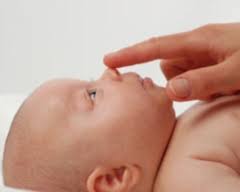
Alongside her, Harrison, 4, is rolling his head back and smiling deliriously. The aroma infused on to his card is that of a farm yard. Horses, hay, manure, cows, green fields — incredibly all this has been distilled on to an inch of cardboard. Another smell that has been created in readiness for November 5 is the bouquet of Bonfire Night.
The children are among pupils aged between 2 and 19 at the Seashell Trust School, in Cheadle Hulme, Cheshire, formerly known as the Royal School for the Deaf, where a soap and shampoo firm has been enlisted to help severely disabled children to communicate for the first time via olfaction.
PZ Cussons, the company behind Imperial Leather and Carex, which has an innovation centre in nearby Salford, has seconded its creative perfumer Kate Williams to work with the school to help children with varying levels of multisensory impairment to make choices about what they eat and drink, the activities on offer and to help them to put the environment in context.
It may involve using smell to tell a carer whether they want chocolate or strawberry milkshake or it may be, as Anne Gough, who runs the school’s sensory unit, says, that the staff use smells simply for comfort, pleasure or to calm. A marshmallow scent is good for this. Vanilla is apparently the universal smell of happiness. Most children will respond positively to something that smells sweet.
The Seashell Trust is both a day and residential, co-educational, non-maintained special school, offering specialist provision for pupils who have severe and complex disabilities, combined with communication difficulties.
One boy, whenever he goes to the park, sniffs the metallic chains that hold the swings. Kate has therefore recreated that unique, ferrous smell and this is a way of telling him that he is about to go to the park. For most people it is almost impossible to imagine such levels of disability, such sensory limitations, but Anne, whose inspirational skills last year won her the Special Needs Teacher of the Year award, believes that we must not underestimate such children’s capabilities. “People will be amazed at what these children can achieve,” she says. “Some people have low expectations of them and I think this is wrong.”
Indeed, one of the hardest things for sensory-impaired people to understand is concept and representation. But by using the smell-card, one child with partial vision has learnt to recognise pictures and words — a remarkable achievement. A further development in progress to help children to recognise classmates or members of staff is to create unique scents for staff, and thus enable them to distinguish between teachers. Plug-in fragrances are already used to help children to understand days of the week. Monday smells of lemon, for instance, and Tuesday of lavender.
Sofia’s ability to read the world around her is limited even further by her physical handicap. Her hands make involuntary movements and thus she cannot even rely on her fingers to relay information and navigate her surroundings. “If Sofia was being taken to the farm, she would just arrive there and that would be it,” says Kate. “But if you have introduced the idea beforehand by smell it helps to put it in context.” Similarly, since she is fed by a gastric tube, presenting the smell of milk communicates to her what is about to happen.
“Eighty per cent of your learning is visual and 15 per cent is aural so that only leaves \ these children with 5 per cent. This is why it’s so important to give them a medium,” says Anne. “What Kate has done is incredible. These aren’t smells that you can buy in a shop; she has had to break down the smell into individual elements and recreate it in her lab.”
The Seashell Trust changed its name last year to emphasise working with students rather than providing things for them. Children who are deaf are usually educated within mainstream schools.
The Seashell thus offers facilities for pupils with multisensory impairment and with multiple learning difficulties, autistic spectrum disorders and physical and medical conditions. All children are taught on a one-to-one basis which makes it an expensive place to run.
While fragrance may not seem like a major breakthrough, to these children it provides a language. Simply being able to communicate to a teacher — whether it’s with a smile or a gesture — what they do or don’t want to eat while out on a day trip empowers them by giving them choice.
Kate says that creating a fragrance is like creating music. A single note may be orange oil or lemon oil and chords are created when things are put together. “When we gave the fragrances to one child, it was like we spoke to him in a different language, one that he understood,” she says. “If you can create a fragrance to help the children learn they just run with it.”
segunda-feira, 19 de outubro de 2009
4 por 6 - Refeições para 4 Pessoas por 6 euros - que desafio!

Participantes:;
Caos na Cozinha
Elvira's Bistrot (que também nos dá a Tasca da Elvira em francês, e que eu ia jurar nos deu a Tabacaria ;)
Three Fat Ladies
Gourmets Amadores
Tachos de Ensaio (cujo subtítulo é Ensaios sobre a lucidez de cozinhar e a cegueira de saborear ;)
Cinco Quartos de Laranja
Is sleeping with your baby dangerous?

Far from seeking to demonise parents, advice to always put sleeping infants in their cots is a lifesaver
To sleep with your baby? Or not to sleep with your baby? That is the question facing about 300,000 households across the UK after research suggested that sleeping with a parent increases the risk of cot death.
The study, which found that just over half of cot deaths occurred when a child was sleeping with a parent, has sparked concern from some quarters that it demonises the parental bed. But that is not what the researchers intended.
The study was led by the world’s greatest authority on cot death, Professor Peter Fleming from the University of Bristol. It was his team that in 1991 introduced the Back to Sleep campaign — where parents were urged to put their babies to sleep on their backs — which has been credited with saving the lives of as many as half a million babies worldwide.
Since the campaign was launched in the UK, the number of babies dying from cot death has plummeted by more than 75 per cent to about 300 babies a year. That is still 300 too many, but thanks to Fleming’s team there are probably 20,000 children and young people alive today who would not have been here had sleeping practices remained unchanged. So when they publish new findings we should listen.
A couple of things are immediately clear from this latest study. First, sleeping with your baby if you are under the influence of drugs and alcohol is a recipe for disaster. And second, sleeping anywhere but the bedroom is particularly hazardous — snoozing with your baby on a chair, bean-bag or sofa may be tempting for a tired parent but should be avoided, even if you haven’t had a drink or taken any drugs. But what about in bed?
The parental bed may be safer than the sofa but is still more dangerous than having baby in his or her own cot. Accidents can happen to the most abstemious of parents and their young baby can overheat or suffocate. And if you do get into the habit of sleeping with your baby, will you always remember to put him or her in a cot when you have been out for a few drinks with friends, or after a dinner party at home? Probably not, which is one reason why the Foundation for the Study of Infant Deaths (FSID) suggests that the safest option is always to have them in a cot beside you instead.
No one is trying to demonise the parental bed, but the evidence shows that baby is safer in a cot.
But all this is only guidance; individual practice will eventually come down to parental choice. Healthcare professionals and the FSID are not trying to alarm parents (cot death is rare) or to be dictatorial, but are trying to ensure that the final choice is an informed one.
Here is a summary of the latest recommendations:
1 Put your baby to sleep on his or her back.
2 Give up smoking and don’t let anyone smoke in your house. If both parents smoke, their baby is five times more likely to succumb to cot death.
3 Consider a dummy (research suggests that it can halve the risk of cot death) at night and when baby is napping during the day. Don’t force your baby to take it and don’t worry if it falls out when he or she goes to sleep. If your child is breastfed, don’t offer a dummy until he or she is four weeks old, by which time breastfeeding should be well established. Use the dummy until the child is six months old, when the risk of cot death recedes.
4 Don’t overdress your baby: no more than two light layers of nightclothes. Use a sheet and blanket and tuck both in firmly at the foot of the cot, making sure that baby’s head remains uncovered.
5 Place your baby with his or her feet at the bottom of the cot in a bedroom that is 16-20C (61-68F).
6 Ideally, he or she should sleep in a cot in the same room as you for the first six months. Do not share your bed with your baby if he or she was born prematurely, if either of you smoke, if you have been drinking or taking drugs that make you drowsy, or if you feel very tired (that is every night for most parents).
7 Avoid sleeping, however briefly, with a baby in a sofa or armchair.
8 If a young baby is unwell, seek medical advice promptly.
One unintended consequence of the Back to Sleep campaign has been an increase in the number of babies with “flat head syndrome”. Pressure on a malleable skull from lying in the same position can cause flattening of the back or side of the head, and US research suggests that about half of all babies are now affected to some degree. Most cases are trivial and of minor cosmetic concern only but parents still worry about it, and few are given advice on how to minimise flattening. These tips should help, particularly for the critical first six months of life when the growing skull is most susceptible to external pressures.
1 Continue to put your baby to sleep on his or her back to reduce the risk of cot death. Ensure that he or she spends plenty of time on his/her front during the daytime.
2 Never leave your baby in a car seat in the house. Put him or her on the floor instead.
3 Alter your baby’s position so that he or she is not always lying or looking in the same direction.
4 Alternate between arms when feeding your baby (natural for breastfeeding mums but not for bottle-feeders).
5 Seek advice from your GP or midwife if you are worried. Skull deformities that need aggressive intervention are rare.
domingo, 13 de setembro de 2009
Why won't feminists admit the pleasure of infants?

(...)
People often compare having a new baby to the early days of a love affair, which is true as far as it goes, but one’s physical fixation on, and craving for, a newborn is much stronger and more intense that that. How often in a love affair can you literally find yourself in tears because you were away from a man for three hours?
Read all at Double X
segunda-feira, 23 de março de 2009

segunda-feira, 9 de março de 2009
Ora isto é que interessa :)
HONG KONG (Reuters) - Children of older fathers appear to perform less well in intelligence tests during infancy and childhood, a study by researchers in Australia shows.
In contrast, the study found that children with older mothers tended to gain higher scores in the same tests designed to measure the ability to think and reason, including concentration, learning, memory, speaking and reading skills.
Men and women are having children later particularly in developed countries. But while the effects of having children later for women are widely discussed, consequences of increased paternal age are not as well known.
Recent studies have drawn links between older fathers and specific health problems in their children, including birth deformities and cancer, as well as neuropsychiatric conditions such as autism and schizophrenia.
In the study, the researchers analyzed data from intelligence tests taken by 33,437 children who were born between 1959 and 1965 in the United States.
The children were tested at 8 months, 4 years and 7 years and were assessed for their sensory discrimination, hand-eye coordination, reading, spelling and arithmetic ability.
They found that the older the father, the more likely the child would have lower scores on the various tests.
In contrast, the older the mother, the higher the scores of the child in the cognitive tests.
"Previous researchers have suggested that the children of older mothers may perform better because they experience a more nurturing home environment; if this is the case, this study suggests that children of older fathers do not necessarily experience the same benefit," the researchers wrote in a statement.
The researchers said the lower scores obtained by offspring of older men may have to do with mutation.
"Unlike a woman's eggs which are formed when she herself is in the womb, a man's sperm accumulates over his lifetime, which previous studies have suggested can mean increased incidence of mutations in the sperm at an older age," they wrote.
sexta-feira, 6 de março de 2009
Warning! Eating books could seriously damage your health
Stop. Go and check your bookcases. Are there any children's books that were published before 1985? Maybe a bit of Beatrix Potter, Enid Blyton, or even a copy of The Very, Very, Very Long Dog? Well, put on some gloves and remove them immediately, because those things could be lethal. Don't burn them though – that might release poisons into the air. Don't bury them either, that could pollute an aquifer. In fact, I'm not sure what you should do. Ah, that's it! Panic.
You think I'm joking. But apparently the US government believes that these old publications might give children brain damage. You see, prior to 1985, many books were printed with inks and paints that used lead pigments. Last year, following the Chinese "killer toy" scandal, Congress passed the Consumer Product Safety Improvement Act, imposing strict limits on the amount of lead permitted in anything intended for use by children aged 12 and under, from toys to bikes to books. The law was retroactive and came into force on 10 February, and now – according to Walter Olson, an expert in American legal lunacy – anyone who tries to peddle old books for kids containing lead may be in serious trouble: "Penalties … can include $100,000 fines and prison time, regardless of whether any child is harmed."
Now, you might object that a child would have to eat a great many copies of the Partridge Family Special 1972 before enough lead was in his or her bloodstream to do any damage. And you'd be right, as there has never been a case of a child killed, wounded or mentally impaired by exposure to a browning reproduction of David Cassidy's face. However, mere facts rarely have much force against the juggernaut of ill-thought-out laws rushed through in a blur of media hype. And although the American Consumer Product Safety Commission (CPSC) has stated that it will hold off on enforcing the law until February 2010, Olson reveals that it has nevertheless issued guidelines instructing thrift stores and anyone selling second-hand children's goods – including books – manufactured in the Age of Lead that they may only sell them after they have paid for expensive tests proving the items are lead free. As a result, many charity shops and second-hand bookstores have started removing all old children's books from their shelves while refusing new donations, from fear that this stay of execution is only temporary. For, living as they do in the land of puppy-eating, baby-disemboweling litigators, they know full well that they will lose their homes, cars and underpants if subsequently found guilty of selling an illegal copy of Cat in the Hat to a minor.
Of course, this pencils-up-the-nose, forehead-slapping "I'm mad, me" stupidity has many negative consequences: traders' livelihoods are threatened; poor people lose access to a source of cheap literature for their kids; libraries may be forced to undertake expensive restocking, while out-of-print books will be lost forever (although an exception has been made for rarities, so long as they are sold for adult use only). The American Library Association actually warned Congress that the law was a bit shoddy but were ignored. Now according to Olson the ALA:
"… apparently intends to take the position that the law does not apply to libraries unless it hears otherwise."
However he goes on to explain that they may not prevail as:
"… the law bans the 'distribution' of forbidden items, whether or not for profit. In addition, most libraries regularly raise money through book sales, and will now need to consider excluding older children's titles from those sales. One CPSC commissioner, Thomas Moore, has already called for libraries to 'sequester' some undefinedly large fraction of pre-1985 books until more is known about their risks."
Quite a card, that Thomas Moore, eh? Thus a great many books could very soon become inaccessible. Even when they survive on private shelves, it is technically illegal to pass them on for free. And on top of all that, the law is incoherent: what's to stop a child from being exposed to books for adults published prior to 1985? Why not ban them all? Though I probably shouldn't even say that. The idea of banning books as a health hazard would be all too popular with those politicians who are opposed to freedom of speech, but too mealy-mouthed to come out and say it.
The mass destruction of books is another step on from Book TV, so that's a job well done for the members of the US Congress, busy as they are with a $787bn stimulus package that's going to prevent economic apocalypse. Not that any of them read that all the way through, either.
The Guardian
You think I'm joking. But apparently the US government believes that these old publications might give children brain damage. You see, prior to 1985, many books were printed with inks and paints that used lead pigments. Last year, following the Chinese "killer toy" scandal, Congress passed the Consumer Product Safety Improvement Act, imposing strict limits on the amount of lead permitted in anything intended for use by children aged 12 and under, from toys to bikes to books. The law was retroactive and came into force on 10 February, and now – according to Walter Olson, an expert in American legal lunacy – anyone who tries to peddle old books for kids containing lead may be in serious trouble: "Penalties … can include $100,000 fines and prison time, regardless of whether any child is harmed."
Now, you might object that a child would have to eat a great many copies of the Partridge Family Special 1972 before enough lead was in his or her bloodstream to do any damage. And you'd be right, as there has never been a case of a child killed, wounded or mentally impaired by exposure to a browning reproduction of David Cassidy's face. However, mere facts rarely have much force against the juggernaut of ill-thought-out laws rushed through in a blur of media hype. And although the American Consumer Product Safety Commission (CPSC) has stated that it will hold off on enforcing the law until February 2010, Olson reveals that it has nevertheless issued guidelines instructing thrift stores and anyone selling second-hand children's goods – including books – manufactured in the Age of Lead that they may only sell them after they have paid for expensive tests proving the items are lead free. As a result, many charity shops and second-hand bookstores have started removing all old children's books from their shelves while refusing new donations, from fear that this stay of execution is only temporary. For, living as they do in the land of puppy-eating, baby-disemboweling litigators, they know full well that they will lose their homes, cars and underpants if subsequently found guilty of selling an illegal copy of Cat in the Hat to a minor.
Of course, this pencils-up-the-nose, forehead-slapping "I'm mad, me" stupidity has many negative consequences: traders' livelihoods are threatened; poor people lose access to a source of cheap literature for their kids; libraries may be forced to undertake expensive restocking, while out-of-print books will be lost forever (although an exception has been made for rarities, so long as they are sold for adult use only). The American Library Association actually warned Congress that the law was a bit shoddy but were ignored. Now according to Olson the ALA:
"… apparently intends to take the position that the law does not apply to libraries unless it hears otherwise."
However he goes on to explain that they may not prevail as:
"… the law bans the 'distribution' of forbidden items, whether or not for profit. In addition, most libraries regularly raise money through book sales, and will now need to consider excluding older children's titles from those sales. One CPSC commissioner, Thomas Moore, has already called for libraries to 'sequester' some undefinedly large fraction of pre-1985 books until more is known about their risks."
Quite a card, that Thomas Moore, eh? Thus a great many books could very soon become inaccessible. Even when they survive on private shelves, it is technically illegal to pass them on for free. And on top of all that, the law is incoherent: what's to stop a child from being exposed to books for adults published prior to 1985? Why not ban them all? Though I probably shouldn't even say that. The idea of banning books as a health hazard would be all too popular with those politicians who are opposed to freedom of speech, but too mealy-mouthed to come out and say it.
The mass destruction of books is another step on from Book TV, so that's a job well done for the members of the US Congress, busy as they are with a $787bn stimulus package that's going to prevent economic apocalypse. Not that any of them read that all the way through, either.
The Guardian
terça-feira, 24 de fevereiro de 2009
Disability
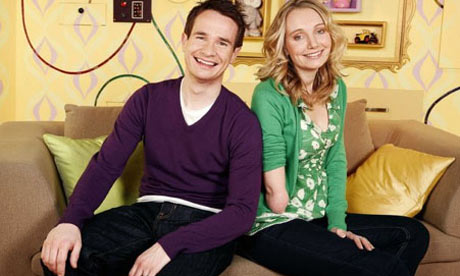
New presenters Alex Winters and Cerrie Burnell. Photograph: BBC
Nine official complaints have so far been lodged with the BBC – plus many more blog postings – about 29-year-old children's television presenter Cerrie Burnell, who was born with only one hand. Parents have complained that they cannot let their children watch her because the sight will "possibly cause sleep problems", that she is scaring toddlers, and that they are being forced to discuss the issue of disability with their offspring before they are ready.
Altogether, it makes you glad that the medieval witch-hunters weren't internet-enabled. The comments of course reveal nothing about the children's true feelings and everything about those of the adults involved. Young, CBeebies-age children do not have profound concerns about disability. I worked for several years, on and off, at a school for physically disabled children and it was never their able-bodied peers who were the problem when our paths crossed on school outings, but their parents, who kept them pinioned to their sides and made sure they turned their faces away. If a curious child ever did slip out of his mother's vice-like grip and come over, he or she would ask a few unabashed questions about what the problem was, want to press buttons on a few wheelchairs, and accept quite happily the explanations offered. To a young child, it is just another element of a large and confusing world that they want to inquire about, no more fearsome or embarrassing than any other.
No, Burnell's arm is likely only to give parents nightmares. It is they who do not want to confront disabilities, not now, not at teatime, not ever. To let your toddler be scared every day that Burnell has hurt herself rather than explain the truth is a failure of parenting, not an imposition by the BBC. And toddlers are frightened of lots of things. My two-year-old godson is currently terrified by trees ("Too scary! Too scary!"). His mother isn't out felling all nearby arboreal horrors – she's taking him on extra visits to the park.
So it should be here, though increasing exposure to presenters with disabilities is going to be tricky. I can only think of performer Mat Fraser, who appears occasionally on television, often presenting programmes about living with the shortened limbs caused by Thalidomide, and even more occasional screen appearances by the actor and standup comedian Francesca Martinez, who has cerebral palsy. Perhaps the most frequently seen is BBC security correspondent Frank Gardner , who has used a wheelchair since being shot while reporting from Riyadh five years ago.
The Guardian
Subscrever:
Mensagens (Atom)
