Two girls pick books from the children's section during the opening of the annual Francophone Book Fair in Beirut on October 22, 2009. The 16th edition of the Salon du livre francophone de Beyrouth, will be on till November 1st including several cultural events around it with Beirut being the World Book Capital for this year. AFP PHOTO/RAMZI HAIDAR (Photo credit should read RAMZI HAIDAR/AFP/Getty Images).
sábado, 24 de outubro de 2009
sexta-feira, 23 de outubro de 2009
quinta-feira, 22 de outubro de 2009
Communicating with children using smells
Sofia’s world is largely a dark and silent one. As a blind and deaf child of 9, her sense of smell is one of the few means by which she can interpret the landscape.And what she is smelling today, on a small, laminated square, is the seaside. The ozonic scent of salty air, wet sand, seaweed and ocean spray has been replicated and impregnated on to a scrap of paper.
Alongside her, Harrison, 4, is rolling his head back and smiling deliriously. The aroma infused on to his card is that of a farm yard. Horses, hay, manure, cows, green fields — incredibly all this has been distilled on to an inch of cardboard. Another smell that has been created in readiness for November 5 is the bouquet of Bonfire Night.
The children are among pupils aged between 2 and 19 at the Seashell Trust School, in Cheadle Hulme, Cheshire, formerly known as the Royal School for the Deaf, where a soap and shampoo firm has been enlisted to help severely disabled children to communicate for the first time via olfaction.
PZ Cussons, the company behind Imperial Leather and Carex, which has an innovation centre in nearby Salford, has seconded its creative perfumer Kate Williams to work with the school to help children with varying levels of multisensory impairment to make choices about what they eat and drink, the activities on offer and to help them to put the environment in context.
It may involve using smell to tell a carer whether they want chocolate or strawberry milkshake or it may be, as Anne Gough, who runs the school’s sensory unit, says, that the staff use smells simply for comfort, pleasure or to calm. A marshmallow scent is good for this. Vanilla is apparently the universal smell of happiness. Most children will respond positively to something that smells sweet.
The Seashell Trust is both a day and residential, co-educational, non-maintained special school, offering specialist provision for pupils who have severe and complex disabilities, combined with communication difficulties.
One boy, whenever he goes to the park, sniffs the metallic chains that hold the swings. Kate has therefore recreated that unique, ferrous smell and this is a way of telling him that he is about to go to the park. For most people it is almost impossible to imagine such levels of disability, such sensory limitations, but Anne, whose inspirational skills last year won her the Special Needs Teacher of the Year award, believes that we must not underestimate such children’s capabilities. “People will be amazed at what these children can achieve,” she says. “Some people have low expectations of them and I think this is wrong.”
Indeed, one of the hardest things for sensory-impaired people to understand is concept and representation. But by using the smell-card, one child with partial vision has learnt to recognise pictures and words — a remarkable achievement. A further development in progress to help children to recognise classmates or members of staff is to create unique scents for staff, and thus enable them to distinguish between teachers. Plug-in fragrances are already used to help children to understand days of the week. Monday smells of lemon, for instance, and Tuesday of lavender.
Sofia’s ability to read the world around her is limited even further by her physical handicap. Her hands make involuntary movements and thus she cannot even rely on her fingers to relay information and navigate her surroundings. “If Sofia was being taken to the farm, she would just arrive there and that would be it,” says Kate. “But if you have introduced the idea beforehand by smell it helps to put it in context.” Similarly, since she is fed by a gastric tube, presenting the smell of milk communicates to her what is about to happen.
“Eighty per cent of your learning is visual and 15 per cent is aural so that only leaves \ these children with 5 per cent. This is why it’s so important to give them a medium,” says Anne. “What Kate has done is incredible. These aren’t smells that you can buy in a shop; she has had to break down the smell into individual elements and recreate it in her lab.”
The Seashell Trust changed its name last year to emphasise working with students rather than providing things for them. Children who are deaf are usually educated within mainstream schools.
The Seashell thus offers facilities for pupils with multisensory impairment and with multiple learning difficulties, autistic spectrum disorders and physical and medical conditions. All children are taught on a one-to-one basis which makes it an expensive place to run.
While fragrance may not seem like a major breakthrough, to these children it provides a language. Simply being able to communicate to a teacher — whether it’s with a smile or a gesture — what they do or don’t want to eat while out on a day trip empowers them by giving them choice.
Kate says that creating a fragrance is like creating music. A single note may be orange oil or lemon oil and chords are created when things are put together. “When we gave the fragrances to one child, it was like we spoke to him in a different language, one that he understood,” she says. “If you can create a fragrance to help the children learn they just run with it.”
quarta-feira, 21 de outubro de 2009
(because Daddy does it ;) Learning to juggle grows brain networks for good
Juggling boosts the connections between different parts of the brain by tweaking the architecture of the brain's "white matter" – a finding that could lead to new therapies for people with brain injuries.
White matter describes all areas of the brain that contain mostly axons – outgrowths of nerve cells that connect different cells. It might be expected that learning a new, complex task such as juggling should strengthen these connections, but previous work looking for changes in the brains of people who had learned how to juggle had only studied increases in grey matter, which contains the nerve cells' bodies.
Now Jan Scholz and his colleagues at the University of Oxford have discovered that juggling changes white matter, too. They gave 24 young men and women training packs for juggling and had them practise for half an hour a day for six weeks. Before and after this training period, the researchers scanned the brains of the jugglers along with those of 24 people who didn't do any juggling, using a technique called diffusion tensor imaging that reveals the structure of white matter.
They found that there was no change in the brains of the non-jugglers, but the jugglers grew more white matter in a part of the parietal lobe – an area involved in connecting what we see to how we move.
The same transformation was seen in all the jugglers, regardless of how well they could perform. This suggests that it's the learning process itself that is important for brain development, not how good you are.
Learning matters
Arne May of the University Medical Centre Hamburg-Eppendorf in Germany, who led the previous work on juggling and grey matter, finds this result "fascinating". "It suggests that learning a skill is more important than exercising what you are good at already – the brain wants to be puzzled and learn something new," he says.
Like May, Scholz's group found increases in grey matter, but differences in the size and timing of the grey- and white-matter changes suggest they are independent. Nevertheless, both are probably necessary to learn how to juggle, argues Scholz.
"More white matter on its own might mean you can move more quickly, but you'd need the grey matter to make sure your hands were in the right place," he says.
Don't use it, don't lose it
The group scanned the jugglers' brains again after four weeks without juggling. They found that the new white matter had stayed put and the amount of grey matter had even increased. This could be why, when we learn a new skill, we retain some ability, no matter how long ago we last practised.
"It's like riding a bike," Scholz says. "Either you can juggle or you can't. It takes a lot of training to learn, but once it clicks, you don't forget it."
Scholz also hopes that it might be possible to develop juggling-based training programmes to help people with brain injuries, or that further study of how juggling changes the architecture of the brain may lead to the discovery of drugs that could boost this plasticity. "If we could use training or drugs to help stroke patients regenerate damaged parts of their brains, that would be fantastic," he says.
terça-feira, 20 de outubro de 2009
Roald Dahl characters still dominate children's favourites
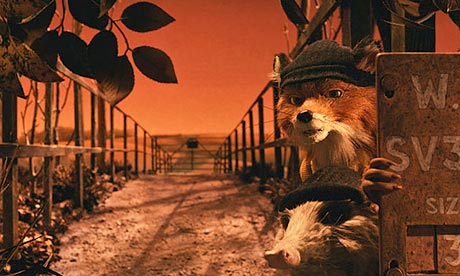
An eclectic mix of classic titles, television spin-offs, modern favourites and fairy stories emerged when books charity Booktrust asked 1,318 children aged between five and 12 to pick their favourite literary characters. The list was, inevitably, topped by bespectacled wizard Harry Potter, but Dahl was the author to collect the most mentions from children, with Charlie and the Chocolate Factory's Charlie coming in 10th, Matilda 15th, Fantastic Mr Fox 16th and the BFG 20th.
"Roald Dahl's books are like modern fairy tales. The books still resonate because they sparkle with his genius," said Katherine Solomon at Booktrust. "It is no wonder that he is still so appealing: his books have such a vibrant and vivid mixture of grotesque dark characters filled with a wicked humour and unbelievable energy."
Francesca Simon's mop-haired rascal Horrid Henry was second favourite, followed by Jacqueline Wilson's Tracy Beaker in third. The likes of Hannah Montana, Ben 10 and Doctor Who also muscled in on the top 10, relegating Peter Pan and Cinderella into joint 11th place, but Winnie the Pooh managed to sneak into the top 10 in eighth place, ahead of Dav Pilkey's creation Captain Underpants.
The research also found that the most powerful ingredient for attracting children to a particular book was character, with 51% citing that as their reason for reading a title, ahead of plot at 43%. Thirty eight percent were attracted to a book if was based on a television show, and 32% if it was based on a film, while just 5% said they would read a book if a celebrity such as David Walliams or Madonna had written it.
The top 20 in full:
1. Harry Potter
2. Horrid Henry
3. Tracy Beaker
4. Biff, Chip and Kipper (school reading scheme characters)
5. Hannah Montana
6. Doctor Who
7. Ben 10
8. Winnie the Pooh
9. Captain Underpants
10. Charlie from Charlie and the Chocolate Factory
11= Cinderella
11= Gruffalo
11= Peter Pan
11= Charlie and Lola
15. Matilda
16= Alex Rider
16= Fantastic Mr Fox
16= Spiderman
19. Thomas The Tank Engine
20. BFG
segunda-feira, 19 de outubro de 2009
4 por 6 - Refeições para 4 Pessoas por 6 euros - que desafio!
«O objectivo do 4 por 6 é apresentar refeições completas, para 4 pessoas, por 6 euros. Tentaremos mostrar que mesmo com pouco dinheiro se pode comer bem, diversificar nos sabores e na apresentação e, sobretudo, ter prazer no que se cozinha e no que se come. Assim, três vezes por semana, haverá uma sugestão 4 por 6 num dos blogues acima mencionados. Esses posts serão assinalados pelo logotipo que a talentosa Mrs. Pickles criou para nós.»
Participantes:;
Caos na Cozinha
Three Fat Ladies
Gourmets Amadores
Tachos de Ensaio (cujo subtítulo é Ensaios sobre a lucidez de cozinhar e a cegueira de saborear ;)
Cinco Quartos de Laranja
Participantes:;
Caos na Cozinha
Elvira's Bistrot (que também nos dá a Tasca da Elvira em francês, e que eu ia jurar nos deu a Tabacaria ;)
Three Fat Ladies
Gourmets Amadores
Tachos de Ensaio (cujo subtítulo é Ensaios sobre a lucidez de cozinhar e a cegueira de saborear ;)
Cinco Quartos de Laranja
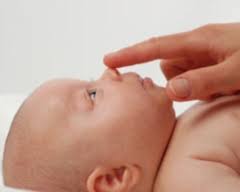
Is sleeping with your baby dangerous?
Far from seeking to demonise parents, advice to always put sleeping infants in their cots is a lifesaver
To sleep with your baby? Or not to sleep with your baby? That is the question facing about 300,000 households across the UK after research suggested that sleeping with a parent increases the risk of cot death.
The study, which found that just over half of cot deaths occurred when a child was sleeping with a parent, has sparked concern from some quarters that it demonises the parental bed. But that is not what the researchers intended.
The study was led by the world’s greatest authority on cot death, Professor Peter Fleming from the University of Bristol. It was his team that in 1991 introduced the Back to Sleep campaign — where parents were urged to put their babies to sleep on their backs — which has been credited with saving the lives of as many as half a million babies worldwide.
Since the campaign was launched in the UK, the number of babies dying from cot death has plummeted by more than 75 per cent to about 300 babies a year. That is still 300 too many, but thanks to Fleming’s team there are probably 20,000 children and young people alive today who would not have been here had sleeping practices remained unchanged. So when they publish new findings we should listen.
A couple of things are immediately clear from this latest study. First, sleeping with your baby if you are under the influence of drugs and alcohol is a recipe for disaster. And second, sleeping anywhere but the bedroom is particularly hazardous — snoozing with your baby on a chair, bean-bag or sofa may be tempting for a tired parent but should be avoided, even if you haven’t had a drink or taken any drugs. But what about in bed?
The parental bed may be safer than the sofa but is still more dangerous than having baby in his or her own cot. Accidents can happen to the most abstemious of parents and their young baby can overheat or suffocate. And if you do get into the habit of sleeping with your baby, will you always remember to put him or her in a cot when you have been out for a few drinks with friends, or after a dinner party at home? Probably not, which is one reason why the Foundation for the Study of Infant Deaths (FSID) suggests that the safest option is always to have them in a cot beside you instead.
No one is trying to demonise the parental bed, but the evidence shows that baby is safer in a cot.
But all this is only guidance; individual practice will eventually come down to parental choice. Healthcare professionals and the FSID are not trying to alarm parents (cot death is rare) or to be dictatorial, but are trying to ensure that the final choice is an informed one.
Here is a summary of the latest recommendations:
1 Put your baby to sleep on his or her back.
2 Give up smoking and don’t let anyone smoke in your house. If both parents smoke, their baby is five times more likely to succumb to cot death.
3 Consider a dummy (research suggests that it can halve the risk of cot death) at night and when baby is napping during the day. Don’t force your baby to take it and don’t worry if it falls out when he or she goes to sleep. If your child is breastfed, don’t offer a dummy until he or she is four weeks old, by which time breastfeeding should be well established. Use the dummy until the child is six months old, when the risk of cot death recedes.
4 Don’t overdress your baby: no more than two light layers of nightclothes. Use a sheet and blanket and tuck both in firmly at the foot of the cot, making sure that baby’s head remains uncovered.
5 Place your baby with his or her feet at the bottom of the cot in a bedroom that is 16-20C (61-68F).
6 Ideally, he or she should sleep in a cot in the same room as you for the first six months. Do not share your bed with your baby if he or she was born prematurely, if either of you smoke, if you have been drinking or taking drugs that make you drowsy, or if you feel very tired (that is every night for most parents).
7 Avoid sleeping, however briefly, with a baby in a sofa or armchair.
8 If a young baby is unwell, seek medical advice promptly.
One unintended consequence of the Back to Sleep campaign has been an increase in the number of babies with “flat head syndrome”. Pressure on a malleable skull from lying in the same position can cause flattening of the back or side of the head, and US research suggests that about half of all babies are now affected to some degree. Most cases are trivial and of minor cosmetic concern only but parents still worry about it, and few are given advice on how to minimise flattening. These tips should help, particularly for the critical first six months of life when the growing skull is most susceptible to external pressures.
1 Continue to put your baby to sleep on his or her back to reduce the risk of cot death. Ensure that he or she spends plenty of time on his/her front during the daytime.
2 Never leave your baby in a car seat in the house. Put him or her on the floor instead.
3 Alter your baby’s position so that he or she is not always lying or looking in the same direction.
4 Alternate between arms when feeding your baby (natural for breastfeeding mums but not for bottle-feeders).
5 Seek advice from your GP or midwife if you are worried. Skull deformities that need aggressive intervention are rare.
domingo, 18 de outubro de 2009
Wishlist (tinha de ser): Oscar and the Mooncats
Oscar loves his boy.Goblin Farm, the author's website
He also loves stinky cat food for breakfast and crunchy cat food for dinner.
He loves his catnip mouse and his red pillow by the window. Maybe more than anything else, though, he loves to jump up on top of things and watch . . . everything.
Oscar loves his boy. But is love enough to get him home again?
Illustrated by Nicoletta Ceccoli ;)
A arte de Nicoletta Ceccoli
Graças ao Jardim Assombrado
sexta-feira, 16 de outubro de 2009
quinta-feira, 15 de outubro de 2009
Do we really need another parenting book?
Don’t we humans come pre-programmed with all the instinctual knowledge necessary to help our kids become bright, well-adjusted members of society? Ok, I’ll wait for those of you with kids to stop laughing before I continue… Obviously, there are a lot of times when parents have to admit: I have no idea what I’m doing. That state of mind is “nurture shock.” We just muddle through with a combination of common sense, things we learned (positive and negative) from our own parents, and various other bits of knowledge that we’ve cobbled together.
I know I’ve read a number of parenting books and magazines myself: about teaching kids to read, or how to discipline them, or making a decision about home-schooling. The problem is that if you read enough, you’ll soon realize that basically you’re the one who has to decide which advice to follow, because for any given topic you’ll probably find support on both sides. From the amount of TV they watch to whether thumb-sucking is okay to when and how you should potty-train them, you get a buffet of options on each subject, with entire books devoted to them. It’s often very easy to be convinced by somebody’s anecdotal arguments on something, and then be equally convinced by the opposite side.
What sets NurtureShock apart is the science.
Po Bronson and Ashley Merryman didn’t set out to write a book about parenting, but sort of stumbled across it while researching a story for Time Magazine. They found that, at least when it comes to praising our kids, our instincts appear to be completely wrong. And they wondered: what else have we gotten wrong? Digging deeper, they found piles of scientific studies done about children, and spent three years investigating what really works and what doesn’t. The results are often counterintuitive and (unfortunately) completely opposite of what we do by “instinct.”
I can’t really do the book justice in one article because there’s just so much information. I could throw out some random statistics but it’s really all the research and background that makes it especially convincing for me. Bronson and Merryman hit a lot of critical topics: self-esteem, sleep habits, race, sibling rivalry, gifted kids, self-control, and language acquisition. Each chapter had at least one thing that surprised me; most had several. There are definitely several areas where I’m actively trying to change the way I raise my kids because of this book, and a couple where I’ve finally gotten some real confirmation that I’m doing the right thing.
Just to give you a small taste, I’ll share something from the second chapter, “The Lost Hour.” Worldwide, children are sleeping about an hour less than their counterparts thirty years ago. Bronson and Merryman tie this to poor performance in school, depression, and even obesity. They point out that, according to some scholars, “many hallmark traits of modern adolescence—moodiness, impulsiveness, disengagement—are also symptoms of chronic sleep deprivation.” For younger kids, an hour of sleep can be equivalent to losing two years worth of development. For older kids, lack of sleep can actually make you unable to recall positive memories.
Also, to give you an idea of the evidence backing up Bronson and Merryman’s writing, consider this: the actual text of the book is about 239 pages long. It’s followed by nearly twenty pages of endnotes, and then about forty more pages of references and sources (which are in addition to the many interviews they did). We’re not talking about the latest “science du jour,” as the authors put it. This is solid stuff.
I had only one significant complaint. In a few of the chapters, I felt like I was left unsure about what to do with the information. For example, in “Plays Well With Others,” which addresses bullying and other “antisocial” behavior, Bronson and Merryman show that it’s not just the rejected kids who resort to aggressive behavior—in fact, many of the most popular kids use relational aggression much more often. Teaching kids not to bully is, in fact, detrimental to their social status. But what they don’t say is is whether that’s a bad thing or not. Do I want my kid to have a lot of friends? Or is it preferable to let them be picked on? Is there a third option?
I know this stems from Bronson and Merryman’s desire not to create a “paint-by-numbers” parenting book. They would prefer to present the evidence and then allow us to decide for ourselves on a course of action. But there were a few cases where I wished they had given just a little more explanation or guidance. Most of the chapters were a little less ambiguous about what’s good for kids and what isn’t, but there were a few in which the answers were not so easily defined. Perhaps, then, my complaint isn’t necessarily about the book so much as it is that kids are variable creatures.
Since I started reading NurtureShock, I haven’t been able to shut up about it. I’m planning to pass it along to several parents and teachers, and I’ve been recommending it to my friends who have kids. I help select books at our local library, and I’ll be requesting that they purchase a copy right away. If you have kids or work with kids, you really ought to check this one out.
This is the sort of book that is covered with blurbs like “one of the most important books you will read this year,” “Alarming,” and “I feel like I’ve been smacked between the eyes with a two-by-four…” But now, having read NurtureShock, I’m sold. This is probably the most important book I’ve read this year. I’ll continue to read other books, and I’ll continue to recommend things that I like, but if you only read one thing I review on GeekDad this year, please make it this one. Before I was even through the first two chapters, I already had the urge to call a meeting with our school board to discuss it.
As a footnote, I learned about the publisher, Twelve Books, when I was looking up information on NurtureShock. It’s an interesting company, publishing no more than one book a month and seeking out quality material. They state that their goal is to publish books that “explain our culture; that illuminate, inspire, provoke, and entertain.” It’s admirable (and I’m sure very challenging), and while I haven’t read any of their other offerings yet, I certainly believe NurtureShock achieves that goal. Under full disclosure, Twelve Books sent me a free copy to review, but it was after I contacted them and requested one—if they had turned me down I was considering purchasing a copy anyway. As it is, this is a book I’ll probably buy a couple copies myself to give away.
Website dedicated to the book
quarta-feira, 14 de outubro de 2009
The International Children's Digital Library
A Library for the World's Children, Books from around the world ;)
Those in Portuguese are from Brazil
Sementes de Música para Bebés e Crianças
Os autores querem proporcionar o contacto com rimas infantis que integram diferentes elementos musicais, com canções que embalam ou que contam uma história, com jogos de ritmo e de interacção. O CD que acompanha o livro contém música gravada para escutar, dançar ou imaginar, com sons de instrumentos, com ambientes de ontem, de hoje e de sempre.
Ilustradora: Madalena Matoso
terça-feira, 13 de outubro de 2009
Catching the Wind in rural Malawi
From the blustery plains of Texas to the Danish island of Samsø, wind power—and the giant, bladed towers that generate it—is all the rage in a warming world searching for cleaner sources of energy. Fourteen-year-old William Kamkwamba had never heard of windmills, or climate change, for that matter, when he stumbled across a photograph one day and it changed his life forever.
Now 22, Kamkwamba has become something of an international DIY celebrity: He’s spoken at the World Economic Forum, at the Aspen Ideas Festival, and at TED Global—twice. He’s chatted with Al Gore, Bono, and Larry Page. A documentary about his life is currently in the works. But Kamkwamba’s story isn’t really about stardom: It’s about the grit, resourcefulness, and audacity of a young engineer who built a windmill from scrap in his native Malawi and brought power to his home—and eventually lit up every house in the village. It’s told in brilliant detail in The Boy Who Harnessed the Wind (out now from William Morris), co-authored with journalist Bryan Mealer. Seed editor Maywa Montenegro spoke with Kamkwamba while he was in New York City kicking off a US book tour.
Seed: How did you first get the idea to build a windmill?
William Kamkwamba: In 2001, there was drought in Malawi so many people didn’t have enough food. Starting in November, people began starving to death. It was the same year I was supposed to start high school, but in Malawi you pay school fees. My parents couldn’t manage to pay the fees so I was forced to drop out.
In order to keep up with my friends who were going to school, I decided to start reading books at the library. When I was reading, I came across a book that had a picture of a windmill. I thought maybe if I try to build one of these machines, I will be able to pump water for irrigation and then my family would no longer have to go through this hunger problem.
Seed: So the library book provided the design instructions?
WK: The book did not explain how to build the windmill. It just said a windmill could pump water and generate electricity. I had to form my own design. I had a basic idea of how electromagnets work, in terms of a radio motor and a bicycle dynamo—a small generator that attaches to a bicycle wheel. When somebody pedals and rotates the wheel, it generates electricity.
Also, when I was much younger, I used to play with pinwheels. So when I saw the windmill in the book, the idea of the pinwheel suddenly connected with the bicycle dynamo. I said, I think I can build a big pinwheel to generate electricity.
Seed: Can you describe the basic assembly? Where, for instance, did you manage to find windmill parts and construction tools?
WK: My former secondary school used to be a garage; when the garage people left, they gave the place to the minister of education, who turned it into a school. The junkyard is still there, though, so I went there to collect materials. For instance, I discovered a tractor fan and decided it was good for my rotor. A shock absorber was perfect for my shaft. And for blades, I used the plastic pipe from my aunt’s bathhouse. I cut it down the center with a bow saw and held it over a small fire until it melted. Before it cooled, I pressed it flat. For the frame, I used my father’s old bicycle.
As for tools, I didn’t have proper tools or the money to buy them. So for hammers, I used pieces of metal I found at the scrap yard or my father’s spanner—what you call a wrench. For a drill, I had to heat a big nail over a fire and push it through the plastic blades. Drilling through wood took many hours. I also had no washers, so I used beer bottle caps I found outside the Ofesi Boozing Center in Wimbe and poked a hole through them, then pounded them flat.
Diagram courtesy of WORKSHOP NYC for Moving Windmills Project
Essentially, the windmill operated the same as a bicycle: The blades were like pedals, but instead of a person pedaling them, it was done by the wind. When the blades spun, it turned the sprocket and chain on the bike, which turned the back tire. There, I’d attached a small bicycle dynamo that worked as my generator. A wire leads from the dynamo down to a small bulb in my roof.
Seed: What did the other villagers think you were doing with this scrap yard junk?
WK: When I started working on the windmill, people were laughing at me; they thought I was going crazy. It wasn’t normal for somebody to build a machine—especially a machine that people from my area don’t recognize. Also, I was going to a junkyard, collecting material. People put these two things together and thought that maybe I was smoking marijuana.
But once I managed to make the windmill I was very happy. It proved to people that what I was doing wasn’t something crazy—it was something useful. The same people started to appreciate what I did: They came with their mobile phones to charge them at my windmill.
Seed: What were the first things you did with this new electricity?
WK: I put a light bulb in my room. It was such a great experience—I didn’t sleep! Normally I went to bed around 7 pm, but I stayed up late, just looking at my light bulb, lighting up everything. I thought, Wow. I am living like people in urban areas, where they have electricity. The next step was to put light bulbs in my parent’s house.
Seed: That’s incredible. So suddenly instead of going to bed at dusk, you could actually be productive—read and study—in the evening. Were you eventually able to return to school?
WK: I stayed home for four years. At the library, I continued checking out Using Energy—the book with the picture of the windmill. One day when I went to check it out, the librarian asked me, “Why are you always checking out the same book?” I explained to her that it was helping me build a windmill. She was interested and said she would come to my place to see it for herself. After she came and saw the windmill, she said she was going to tell her bosses—people from the Malawi Teacher Training Activity (MTTA). They were also interested, and after they came to see it, they said, “We are going to come again with some journalists.” And then the journalists wrote an article about the windmill and about me.
Then many things happened at once. The people of the MTTA started organizing to put me back in school. That was tough—no school wanted to place me on account of my old age and number of years I had been a drop out. But finally I was accepted at Madisi Secondary, a public boarding school an hour from my home. Though it wasn’t one of the science-oriented schools I had been hoping for, I was very happy to return to my studies.
Then someone in the capital city of Malawi saw the newspaper article and put it on his blog. When he did that, Emeka Okufar—who works at TED and was inviting people to attend the TED conference—saw it. Mr. Okafur tracked me down and invited me to attend TED Global in Arusha.
At the same conference, I met the founder of the African Leadership Academy, a school in Johannesburg. I applied and was accepted to his school. That’s where I am right now.
Seed: Your trip to Arusha for TED Global brought a lot of “firsts.”
WK: It was the first time I saw the internet, the first time I flew in an airplane, the first time I slept in a hotel—everything was the first time. When Tom Rielly, the community director of TED, showed me Google, the first thing I did was search “windmills.” I found more than 1 million designs and any kind of information I could have needed to build my windmill! I thought, wow, this is the big source for everything. If I had had this, I could have built my windmill much more easily.
Seed: But instead you did it with just a picture, some scrap yard junk, and a big idea. Which makes me think about an article I’ve just read: In the Guardian, John Vidal wrote: “Kamkwamba is presented to the west as the ‘humble hero,’ an extraordinary Malawian who has overcome everything to improve his family’s situation, but the reality is that most of Africa, India, and the developing world depends on equally innovative and inventive people coming up with ways to make a living with no cash and next to no resources.” Do you think poverty might have an ironic upside in that it forces ingenuity?
WK: If you have everything you need, like water and electricity, there’s no reason to go looking through garbage heaps like I did. Still, I don’t think that wealthier people are lazy; it’s just they have never had to survive. Having this problem makes you very creative.
Seed: Where do you plan to take your creativity in the future?
WK: Right now I just want to finish my education. From there, I will see about jobs. I know I want to continue working on renewable energy. Apart from this, I’m also planning to design a machine that drills boreholes. Most people in my area have no access to clean water. There is water in the ground, but they lack a means of getting it. So I’m designing the machinery to drill boreholes, and I plan to use the power from the windmill to pump the water. Then people can start irrigation and have access to clean drinking water.
Seed: Have you visited any of the large wind projects in the US?
WK: Yes. I went to Palm Springs to see the big commercial windmills. It was amazing when I found out they were generating—about 600 megawatts. That’s more power than we use in all of Malawi.
Seed: Now that you have traveled around the world seeing giant wind farms, giant cities, and giant celebrities, is it hard to readjust to life in your home village?
WK: Yes…but not too bad. I’m in South Africa at school all the time and that’s a pretty modern place with internet and soccer games on television. Of course, I always like being home, but it’s impossible to compare America or the UK to my village. They are so different, and that’s why I love them. But I’m missing my home right now, especially my mother’s nsima and fish. My mother is a very good cook.
Read William Kamkwamba’s blog, see photos and videos of the windmill on Flickr, and follow him on Twitter at wkamkwamba. Front page photograph of windmill detail by Tom Rielly.
segunda-feira, 12 de outubro de 2009
Finalmente, num país que se pretende desenvolvido
Lisboa, 12 Out (Lusa) - A exibição de animais nos circos tem os dias contados com a publicação de uma lei que proíbe a compra de novos macacos, elefantes, leões ou tigres e que impede a reprodução dos animais já detidos pelos circos.
A portaria 1226/2009, publicada hoje e que entra em vigor na terça-feira, divulga uma lista de espécies consideradas perigosas, pelo seu porte ou por serem venenosas, que só podem ser detidas por parques zoológicos, empresas de produção animal autorizadas e centros de recuperação de espécies apreendidas.
Os circos não fazem parte da lista de excepções, assim como as lojas de animais, que também ficam proibidas de vender cobras de grande porte ou venenosas, algumas aranhas ou lagartos.
RTP
domingo, 11 de outubro de 2009
The best books for the youngest readers
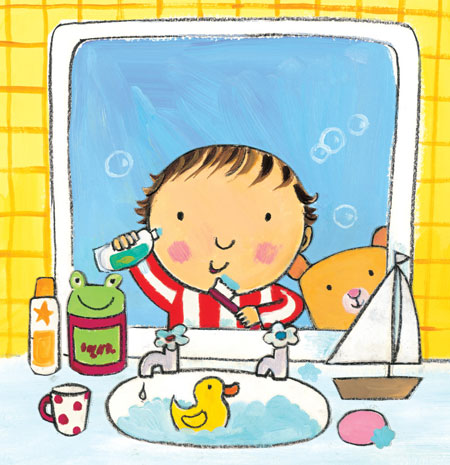
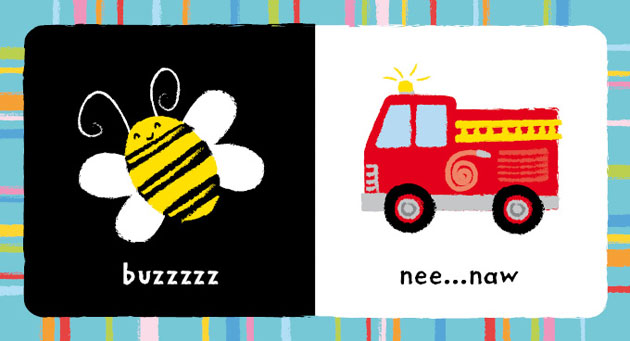
Booktrust's Early Years awards celebrate the best picture books. This year there are awards in three categories: baby book; pre-school; and best emerging illustrator. Here's a glimpse of the books shortlisted for each.
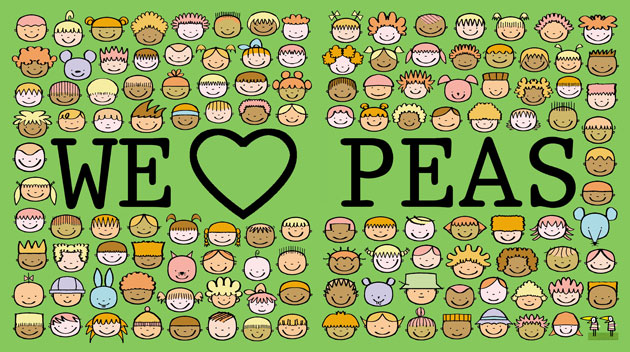
Peas! by Andy Cullen,
illustrated by Simon Rickerty
(Best emerging illustrator award shortlist)

The Guardian
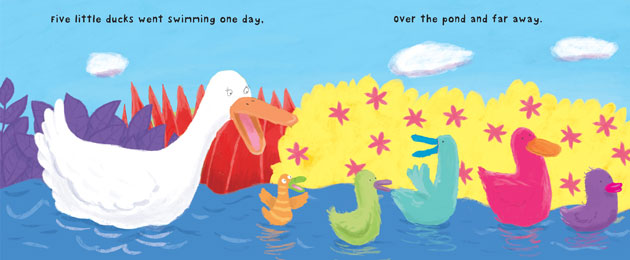
Five Little Ducks
by Francesca Stich & Jemima Lumley,
illustrated by Jason Chapman
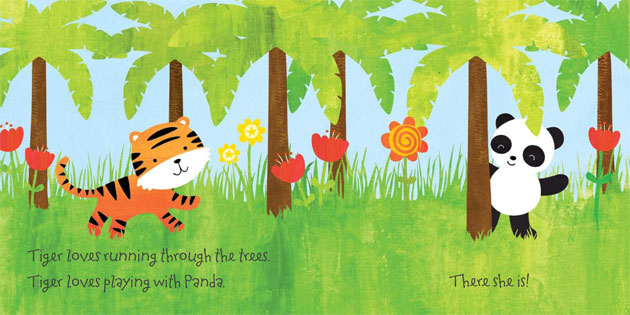
Baby Loves: Tiger
by Claire Dowe
The Big Night-Night Book
by Georgie Birkett
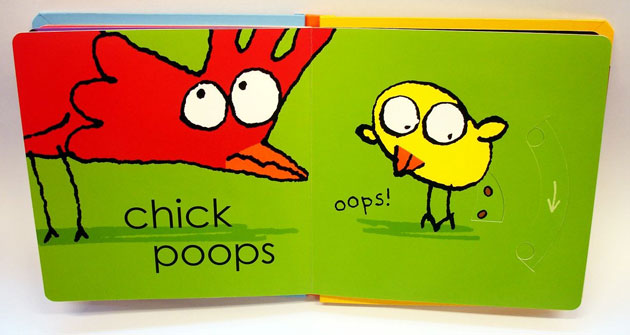
Chick by Ed Vere
(winner of the Baby Book Award)
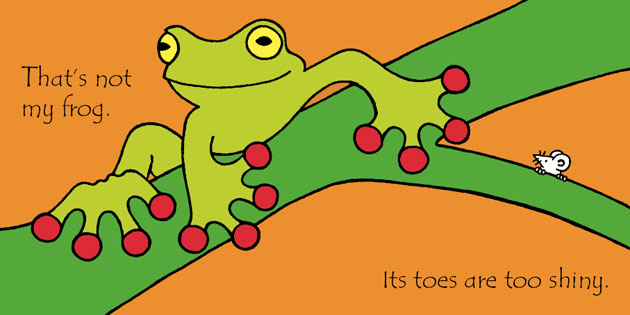
That’s Not My Frog… by Fiona Watt, illustrated by Rachel Wells
Baby’s Very First Outdoors Book
by Stella Baggott
illustrated by Simon Rickerty
(Best emerging illustrator award shortlist)
The Guardian
sábado, 10 de outubro de 2009
Concerto para Bebés: Sons para Bebés Surdos
CONCERTO PARA BEBÉS: SONS PARA BEBÉS SURDOS
Um projecto de Paulo Lameiro
Solista Convidado: Sérgio Nogueira
Instrumento: Multi-Percussões
O som é tão precioso ao ser humano que usa múltiplas formas de se fazer ouvir. Em Outubro vamos ter um concerto a pensar nos bebés e crianças que ouvem os sons “por dentro”. Por isso escolhemos as percussões, e em especial algumas percussões graves, para nos ajudarem a sentir a música com o corpo todo. Vai ajudar-nos o percussionista Sérgio Nogueira, mas também todos os adultos que envolverão os seus bebés em grandes balões!
Surpresa…
Os Concertos para Bebés são uma produção portuguesa pioneira no domínio das artes performativas para a primeira infância. Tiveram início em Novembro de 1998 numa cidade no centro de Portugal, Leiria, e é seu autor o professor e musicólogo Paulo Lameiro. Têm a sua origem no trabalho com bebés desenvolvido pela Escola de Artes SAMP, desde 1991, no programa Berço das Artes e são fortemente inspirados pela Teoria de Aprendizagem Musical do professor e pedagogo norte-americano Edwin Gordon.
Depois de percorrerem as principais salas de concerto portuguesas são actualmente projectos residentes no Centro Cultural Olga Cadaval, em Sintra, no Teatro Miguel Franco, em Leiria, e na Casa da Música, no Porto, onde se apresentam com 70 concertos anuais.
Indicado para crianças dos 3 meses aos 3 anos
Preços
Adulto + bebé até 18 meses (40 lugares em almofadas): 12,50 euros
Adulto + bebé dos 19 aos 47 meses (30 lugares em almofadas): 12,50 euros
Público com mais de 47 meses (lugares em cadeiras): 10,00 euros
Sem Descontos.
Aos bebés até aos 47 meses só será permitida a assistência com bilhetes de almofada.
sexta-feira, 9 de outubro de 2009
Great fairytales
Starting this weekend in the Guardian and the Observer, Great fairytales brings you the finest stories of morality, justice, triumph and enchantment from around the world, collected in seven themes: Wicked parents, Rags to riches, Love, Quests and riddles, Wisdom and folly, Justice and punishment and Beastly tales.
The stories are all nominated by a panel of critics, writers and experts on children's literature: Anthony Browne, AS Byatt, Abdulrazak Gurnah, Robert Irwin, Alison Lurie, Adam Phillips, Philip Pullman, Salman Rushdie and Marina Warner.
Each collection is beautifully illustrated and includes an afterword from a range of leading writers exploring each theme.
Begin on Saturday with Wicked Parents which features Hansel and Gretel, Snow White and The Tale of the Juniper Tree.
quinta-feira, 8 de outubro de 2009
O leão Christian em livro e em Português (edit)
Já aqui tínhamos postado sobre Christian,
e agora divulgamos também a sua história
em livro traduzido para Português.
Tradução de Manuela Madureira
para a Editorial Presença
e agora divulgamos também a sua história
em livro traduzido para Português.
Tradução de Manuela Madureira
para a Editorial Presença
segunda-feira, 5 de outubro de 2009
Saki em castelhano
Diz-nos Alba Marina Rivera, a ilustradora:
El contador de cuentos has been awarded the 2009 BolognaRagazzi Award for New Horizons. The Ragazzi Award is among the most prestigious international awards conferred each year in the world of children’s book publishing.
NEW HORIZONS WINNER
EKARÉ – Caracas, Venezuela
EL CONTADOR DE CUENTOS
text by Saki, illustrations by Alba Marina Rivera
EKARÉ – Caracas, Venezuela
EL CONTADOR DE CUENTOS
text by Saki, illustrations by Alba Marina Rivera
The Jury first of all considered the courage shown by illustrator Alba Marina Rivera in tackling Saki’s little masterpiece, one of the most acute and disturbing modern short stories ever. Despite the daunting task, the illustrator shows no inhibitions, uncertainties, doubts or fears. Rather she portrays the many emotions in the story – shock, irony, boredom, disgust and expectation – with masterly strokes, capturing with great visual clarity the atmosphere that reigns in the railway carriage. For this is the scene of a veritable clash between two educational concepts, two moral options and perhaps indeed two worldviews. The aunt, storyteller and children are drawn with allusive elegance, the emotional undercurrents of each scene clearly visible. With her exquisite line work, the illustrator places Saki’s storyteller firmly in the realms of the fantastic. The innovative yet elegant book jacket completes a wholly enjoyable visual presentation.
Graças ao Papel de Lustro, outra vez ;)
Livros e Bichos
Os animais são o tema mais constante e universal da literatura para crianças. Fazem coisas que não estão ao alcance das personagens humanas, eliminam estereótipos raciais e sociais, acolhem com segurança as emoções infantis. Neles reconhecemos as nossas origens e lembramos essa linguagem ancestral em que o instinto se fazia ouvir.
Na Revista Notícias Magazine de ontem, Aprender com Manawee, de Carla Maia de Almeida, de cujo blogue retiro capas de livros recomendados, que ainda não temos cá em casa e que queremos ter ;)
E sublinho uma expressão que vamos adoptar como nossa, animais da espécie inventada :)
Os Animais Fantásticos
José Jorge Letria (texto)
André Letria (ilustrações)
Ambar
O centauro, o dragão, a salamandra, o lobisomem, a serpente marinha, o ogre, o ciclope… Estes animais (ou quase animais) são da espécie inventada e também têm as suas histórias para contar. Sem dúvida, um dos melhores livros da dupla Letria, pai e filho.
José Jorge Letria (texto)
André Letria (ilustrações)
Ambar
O centauro, o dragão, a salamandra, o lobisomem, a serpente marinha, o ogre, o ciclope… Estes animais (ou quase animais) são da espécie inventada e também têm as suas histórias para contar. Sem dúvida, um dos melhores livros da dupla Letria, pai e filho.
Subscrever:
Mensagens (Atom)