segunda-feira, 15 de outubro de 2012

sexta-feira, 12 de outubro de 2012

domingo, 9 de setembro de 2012

sexta-feira, 7 de setembro de 2012

Why dinosaurs are important

by Dr. Dave Hone for The Guardian Science (and to be continued):


It is far from my intention to talk endlessly about dinosaurs on the Lost Worlds, but as a key part of my research and given the near endless public interest in them, they are going to keep coming up. I can assure readers that a more diverse set of posts will eventually turn up, but there are some good reasons to focus on the dinosaurs both in terms of thisscience in general and science communication in general, and that is worth dwelling on a little before I bore my readers with still more references to them.
I'll start with the issues of communication, outreach and education. With the odd exception of the children of palaeontologists, I've yet to meet a child who is not interested in dinosaurs, or at least used to be interested in dinosaurs. When I have the time and an invitation, I do give talks in schools and similar venues on dinosaurs and palaeontology, and am generally treated to a wonderful display of interest and an unending stream of questions afterwards.
There's a good deal of anecdotal evidence for this popularity, from the cheap plastic dinosaur toys that never seem to go out of fashion, the endless range of dinosaur books aimed at youngsters that appear year on year, and any new dinosaur exhibition can guarantee a queue around the block of children eager to see the new discoveries. I won't pretend to know why, but kids really do love dinosaurs and the important thing is that they do. (And let's not forget that there's no little interest from a great many adults too).
That provides a fantastic hook and instant introduction for palaeontologists and educators to get kids involved and interested in science. They might come for the giant bones, but there are a lot of good reasons for them to stay. Short of university, few people are likely to get even a cursory formal introduction to palaeontology, geology and the like during their education and moreover some things are not likely to generate much interest.
Few kids will (I suspect) willingly pick up a book on geology, perhaps not even one on general palaeontology, but most will probably own a dinosaur book or two at some point that will have been avidly devoured. Most of the better ones (even those aimed at younger readers) cover at least a little of how fossils are formed, different rock formations, the age of the Earth and the like, and thus they will be presented with at least a little geological information and there will likely also be parts on relationships between groups and changes over time thus introducing ideas about evolution, taxonomy and extinction.
In short, dinosaurs provide a wonderful way of talking to a young audience about all manner of scientific ideas and showing how things like geochemistry and biology can come together. They can also provide a great frame of reference for discussing issues in palaeontology. There might be better examples in the fossil record when discussing one issue in palaeontology or another, but one can all but guarantee that a good example on dinosaurs will be recognised and understood by the audience.
This then makes dinosaurs a superb educational tool and thus one that I'd be using here even if I didn't work on them myself, but dinosaurs are also inherently worthy of research. Well OK, any branch of science is inherently worthy of investigation as indeed is any group of organisms. It's perhaps better to say that dinosaurs do offer us some opportunities in palaeontological research that other groups don't necessarily offer. Thus while I wouldn't call them more worthy than other fossil groups, they're also going to be of interest to researchers who don't specialise in dinosaurs.
The modern terrestrial world is considered to be dominated by the mammals and this has more or less been the case since the demise of the dinosaurs (birds aside) some 65 million years ago. On an apparently unrelated note, the further back in time you go, the worse the fossil record (generally) gets. But together this means that if you want to look at a terrestrial fossil fauna that is not dominated by mammals, or the evolution of a non-mammalian group over time, or to examine a major extinction event and restructuring of a terrestrial ecosystem, or how terrestrial animals responded to the break up of the continents etc, the obvious place to turn to is the era of the dinosaurs. More recently it's pretty much all mammals. Further back the data is more patchy.
Similarly, dinosaurs were around for a very long time, and so for any kind of study of evolutionary change or diversity over a long period of time, dinosaurs are going to be a good candidate. Coupled to the fact that birds are dinosaurs and we have the opportunity to study a truly incredible and important piece of evolutionary history – the origin of powered flight – and of course gain insights into the origins and changes of the birds (themselves an important and diverse group).
Dinosaurs also include the largest terrestrial animals of all time in their ranks and so provide interest for biomechanics, the evolution of large size, the structures of ecosystems and more.
Finally, dinosaurs have already attracted a lot of research interest over the years, which means we know more about them than many other groups. While this does then become a bit of a self fulfilling prophesy, it does make them a better group for still further research or more integrated projects than some other groups as we're starting from a more solid base of knowledge.
Thus dinosaurs provide some unique research opportunities as well as more "normal" palaeontological research. Either way, though, their enduring popularity makes them a key part of the arsenal of the science educator. Kids love them and as such they are an ideal way of introducing children to other areas of science, especially those perceived to be "unsexy" or that might otherwise be overlooked.
I make no apology for my own love of dinosaurs, but I'd also be silly not to exploit their charisma and the instant recognition they bring. Non-dinosaur articles are coming, but expect more than a few that do involve them as the necessary educational relish to the beef of the Lost Worlds blog posts.


quinta-feira, 6 de setembro de 2012

terça-feira, 4 de setembro de 2012

quarta-feira, 20 de junho de 2012

segunda-feira, 11 de junho de 2012

quinta-feira, 24 de maio de 2012

quarta-feira, 9 de maio de 2012

RIP Maurice Sendak

1928 - 2012


Very good coverage from Slate Magazine

sexta-feira, 6 de abril de 2012

ONE

If I had a flower for every time I think of you,
I could walk through my own garden forever


Parabéns, Lilian Flor, adorada!


Pai e Filho, uma das minhas fotografias preferidas :)

silly, I know :)


Birthday Parties are different now - Amy Fusselman, courtesy of McSweeneys


Last week my daughter turned three. We had a little party at home and invited four other girls to celebrate.

Hey, remember ancient times, when you were a child having a birthday party and everyone who was invited to the party—this would be 8 or 10 of your own friends, not 50 of your parents’ friends—sat around in a circle on your living room floor and watched you open your gifts? And this gift-opening was not a somewhat shameful activity to engaged in alone, after the party was over, like a drug binge, but was actually one of the party’s main events? And children exclaimed over the gifts, and passed them around to examine, as if they were precious artifacts? You remember that? Well, there was a reason why parties were like that: it was a million years ago, before the Internet, and people were dumb then.

If you are old enough to remember these times, you have probably scratched your Cro-Magnon-esque forehead and felt perplexed when you have received a birthday party invitation for your kid that says, “No gifts, please.” You have been sending your kid off to birthday parties with gaily-wrapped objets for years now. You yourself learned from your mother not to arrive at a party empty-handed. Vigilance regarding this behavior was once known as good manners; gift-giving was once a hallmark of generosity. Who are these people coming along trying to change this?

I’ll tell you who: the new people, the ones who haven’t been here long. You are not one of them anymore. You, who remember a time when all objects were mute and unresponsive, and did not know, or care, that you were alive, are now part of a past that seems almost unimaginably quaint, like people who wore tall black hats and rode the stagecoach.

The new people see things differently. Here is how they think: firstly, for American kids today, there are only five presents: Ipod, Ipod Touch, Wii, Xbox, and Playstation. Most kids have one or all of those already, and they don’t want any other crap from you.

This brings us to the second point, which is that kids do not want crap anymore, period. This is another vestige of your bygone days, when American toddlers—perhaps you were one of them—played happily with boxes, lint, bread twisty-ties, bugs, and dirt; when a plastic harmonica was an exciting thing you could blow into once and then stomp on, and then you could examine all the excitingly sharp smithereens. Kids do not want to deal with that stuff anymore. They don’t want to examine stuff that ignores them. Exploring that junk is for the kids in Africa, who live on piles of it.

American kids do not want objects at all, except for the aforementioned five. They want experiences. And here are some of the things they want to experience to celebrate the miraculous day of their birth: torturing pygmies by throwing them in volcanoes; slicing airborne watermelons with giant knives; and listening to a cute, red, retarded creature imitating their speech. They want to do all this, while sitting on the couch with their friends, in a clean, dry, temperature-controlled environment, eating Nerds and drinking red water from single-serve plastic bottles.

But my daughter is young, and I am still in charge of her parties, so her party was not like that. Her party involved multi-colored balloons, playing with the toys we have around the house, a round cake, and in an impromptu finale, several rounds of Ring-Around-the-Rosie, including the second verse, which I had never heard before, but another mom knew: “Cows are in the meadow/Eating buttercups/Thunder, lightning/We all jump up!”

It was surprising to me how the jumping-up of verse two made the falling-down of verse one much more satisfying: it made Ring-Around-the-Rosie more like The Ring, which was good; personally, I think we can always use a little more Wagner in our American childhood rituals.

And although the whole party was over in less than 90 minutes (hardly Wagner-ian, alas) and ended without a disaster (also not very operatic), it did contain a Gotterdammerung-ian moment of realization—for me, that is—which began when the first guest walked in the door with a large, octagon-shaped present.

When I saw it, I got all excited, because I could only think of one toy that could possibly be inside, and it was one of those brightly-colored, German, wooden mosaic puzzles I have had my eye on for years now. I sat next to my daughter as she tugged at the bow. Inside were six—six—pairs of pink and white plastic high heels, each adorned with jewels and/or feathers.

I watched my girl, who rides around our apartment nude a lot on her scooter, as she toddled unevenly in the shoes, and remembered what my Russian-born, theater-director friend Yelena said when I told her I was having a girl. Yelena, then pregnant with her third boy, looked at me conspiratorially and asked: “How are you going to tell her she’s fucked?”

I laughed.

Now, a few years later, I realize that this is, in fact, one of the more vexing questions of my girl’s childhood, and that the usual course of events is that people do not tell this to their girl children at all.

But why not? Why should I not just tell my girl that she is burdened in a way that her two older brothers are not? To say the truth does not mean that we don’t wish it were otherwise.

So far, I have been avoiding the issue. I donated the high heels, as well as the purple plastic vacuum cleaner Grandma got her for Christmas. And I suppose I could just go on like this, trying to keep the truth at bay, telling the bemused and eye-rolling parents of my girl’s friends that if they are going to get her anything for her birthday they should make sure it’s suitable for a future physicist. And I could just continue looking for books that don’t have insipid princess themes to read to her, and then I could send her to a girls’ school, so she can hear about how girls can rule the world and all that.

Or I could just start, right now, to tell the truth, and maybe that would not be as much of a disservice as we fear—maybe it would actually helps things a little.

I could say, you know, your brothers are studying hard because they are going to go out in the world and make money someday, but you will probably end up married and having children, so why bother? Did I tell you how I spent my early 20s? I sat in a lovely wood-paneled room under the tutelage of a future Nobel Prize winner who was sued for sexual harassment. And you know what I do now? Clean up poop. And tell your brothers not to hit each other.

Or I could say, the reason you are not going to play flag football today and your seven-year-old brother is, is because you are a girl and girls are supposed to be pretty and smell nice and not clock people and say “Hey, fucko” like he does. So work on that, I have some frosty lip gloss for you to get all excited about. Girl power, yay!

And then, if she brings up that’s it’s unfair, and why is it that way, I’ll just say it’s because girls grow into women, and women have the children. So you can try not to have any children; that would probably help you. Now come here and hug me and we can bake some cookies together.

I was thinking about all this, at the party, with images of “Ring-Around-The Rosie”/The Ring in my head. The Ring has been performed here in New York City this season, and I saw Gotterdammerung the previous week. I saw almost all of it, that is. I left after the second intermission—that would be four hours into it—which, after having seen the previous three installments (Das RheingoldDie Walkure, and Siegfried) in their entirety—is a little like deciding to stop running the NYC marathon with 10 minutes left.

I left early without thinking too much about why—I was tired—but looking back I believe there was something about seeing The Ring through to the end that was challenging in the same way that children are challenging to their parents. Unlike the power-ballad thesis put forth in The Lion King, the circle of life, especially when it starts coming to a close, is not calming and reassuring at all: it is terrifying and disturbing, the kind of terrifying and disturbing that makes you want to suddenly leave the plush chair of the theater and go for a long soothing walk down Ninth Avenue eating Skittles.

And the recognition of this fact, and the embrace of it, and the determination to see this perspective through to the end, is going to be the next big wave in parenting, I am telling you. It’s going to Ring-big, and I am going to start in church basements, giving talks about mosaic puzzles and honesty, and then slowly and surely I am going to write gigantic, Dr.Sears-size, paperback books full of advice, and in order to reassure my future audience that I am a complete and total authority on this and every other subject, I am going to hook a giant, creaky machine to my pants and hoist myself up to the rafters as a learned person, “Doctor” Amy Fusselman, pleased to meet you.
Now that wasn’t so bad, was it?
Be well. Until next time!

Wishlist: O Grande Livro dos Medos e das Birras

Estamos mesmo (todos) a crescer ;)

On Wormholes, by Amy Fusselman, courtesy of McSweeney's


OK, folks. I have a really important parenting subject to tackle today, one I haven’t seen addressed much elsewhere in the parenting mags and whatnot, so I hope you are paying attention. And the important subject I am addressing is: wormholes.

You are probably thinking I mean “pinworms,” which is that awful kid sickness where worms come out of your beloved progeny’s bottom. I am not thinking of that.

I am thinking of wormholes, which is what I am calling things like the following. When I was a kid, if you had asked me to show you the art in my bedroom, I would have refrained from pointing to the framed picture on the wall, which was familiar but not interesting to me. I would have showed you the cover of my favorite book about Florence Nightingale, which had an image of Florence in her spotless nurse’s uniform, lifting a lamp in her right hand, tending to a bandaged solider in a row of bandaged soldiers in what looked like a mountain cave where black bears were also lurking. And I would have shown you my art. I had a period where I obsessively drew a female figure in a tight bun wearing a purple 18th century dress and black boots.

I would not have shown you the wormhole, which was located in my closet. By that I mean, it was in the woodgrain of the closet door. It was in the wood-whorl pattern there. Those whorls, so meaningless during the day, took on another dimension in the 8 PM light of my bedroom, and came alive, shimmying and swirling, threatening to leap out of their two dimensional space and swallow me. To look towards those whorls in the half dark of my bedroom was an act of tremendous courage. At night they were as terrible as shrunken heads.

I want to talk to you about this, because I think every kid has some version of this, and adults almost always miss it.

I am reminded of one of my son’s very sweet and wonderful kindergarten friends, who had this habit of coming into school every day, and literally throwing his jacket and back pack in the general direction of his cubby before flying upstairs to his classroom. The child came on the bus, so he had no parent to correct this, and the upshot was that other little boys in his class, often including my son, began to imitate this delightful, early morning, chucking of stuff, and then tearing off, so that the cubby area was always a giant chaotic mess.

Teachers and parents did what you would imagine: insist that the child put his stuff in his cubby properly, march him back down stairs to do so, etc, and that worked fine as long as a grown up did that. But a grown up didn’t always do that. And so months went by and finally it was February, and the piles of coats and missed mittens were getting really annoying, so I finally asked my son, why the heck does Bill do that? Why can’t he put his stuff away nicely?

My son’s reply was straightforward: he thinks there is a monster in the toilet.
The toilet was located six feet from the cubbies.

This makes perfect sense. Why can’t you put your backpack away properly? Because if I stop at my cubby a monster from the toilet will come out and eat me.

Why do you have to sleep in that particular position on your bed?Because if I face the other direction I will have to look at the terrifying, murderous patterns in the cheap woodgrain of my closet.
Oh.

I believe that these sensitivities, particular to childhood, are amazing and wonderful, and I would like, as a start to this column, to invite readers to submit the wormholes of their childhoods, if they have them and remember them, so that we may have a “Wormhole of the Month,” or perhaps, “Wormhole of the Year” award, and in that way, as parents, remember a little bit about the differences in perception of the small creatures in our care.

Please click on my name and submit to me. Thank you.

quinta-feira, 22 de março de 2012

segunda-feira, 19 de março de 2012

quinta-feira, 15 de março de 2012

It's A Big World


Thanx to our dearest Catalan Auntie MJ :-D

quarta-feira, 18 de janeiro de 2012

That's us ;)

(on gender differences)


"Many puzzled parents have wondered where this highly stereotyped behavior comes from, especially in households where Mom wouldn't be caught dead in a pink frilly dress and Dad would rather cook dinner than watch sports."


Welcome to Your Child's Brain - blog

terça-feira, 10 de janeiro de 2012

Malawi wildlife

From The Telegraph

domingo, 25 de dezembro de 2011

quarta-feira, 21 de dezembro de 2011

Oh noes!

Gracias, dear Mox ;)


terça-feira, 29 de novembro de 2011

terça-feira, 22 de novembro de 2011

Welcome to Your Child's Brain ;)

The blog, and now the book (soon to be translated into Portuguese by yours truly ;)


quinta-feira, 17 de novembro de 2011

domingo, 13 de novembro de 2011

sexta-feira, 14 de outubro de 2011

La Vie en Rose

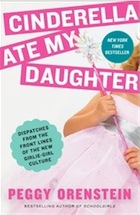
It's the colour of every little girl's dream bedroom, if not her entire wardrobe and all her toys. But is it the ultimate marketeer's magic trick, or are today's little princesses really hardwired for la vie en rose?

Here is my dirty little secret: as a journalist I have spent nearly two decades writing about girls, thinking about girls, talking about how girls should be raised. Yet, when I finally got pregnant myself, I was terrified at the thought of having a daughter. I was supposed to be an expert on girls' behaviour. What if, after all that, I was not up to the challenge myself?


Then I saw the incontrovertible proof on the sonogram (or what they said was incontrovertible proof; to me, it looked indistinguishable from, say, a nose) and I suddenly realised I had wanted a girl – desperately, passionately – all along. I had just been afraid to admit it. But I still fretted over how I would raise her, what kind of role model I would be, whether I would take my own smugly written advice on the complexities surrounding girls' beauty, body image, education, achievement. Would I embrace frilly dresses or ban Barbies? Push football shoes or tutus?
Shopping for her, I grumbled over the relentless colour coding of babies. Who cared whether the crib sheets were pink or tartan? During those months I must have started a million sentences with "My daughter will never..."
And then I became a mother.
Daisy was, of course, the most beautiful baby ever (if you don't believe me, ask my husband). I was committed to raising her without a sense of limits: I wanted her to believe neither that some behaviour or toy or profession was not for her sex nor that it was mandatory for her sex. I wanted her to be able to pick and choose the pieces of her identity freely – that was supposed to be the prerogative, the privilege, of her generation. For a while it looked as if I were succeeding. On her first day of nursery, at the age of two, she wore her favourite outfit – her "engineers" (a pair of pin-striped overalls) – and proudly toted her Thomas the Tank Engine lunchbox. My daughter had transcended typecasting.
Oh, how the mighty fall. All it took was one boy who, while whizzing past her in the playground, yelled, "Girls don't like trains!" and Thomas was shoved to the bottom of the toy chest. Within a month, Daisy threw a tantrum when I tried to wrestle her into trousers. As if by osmosis she had learned the names and gown colours of every Disney Princess – I didn't even know what a Disney Princess was. She gazed longingly into the tulle-draped windows of the local toy stores and for her third birthday begged for a "real princess dress" with matching plastic high heels. Meanwhile, one of her classmates, the one with two mummies, showed up to school every single day dressed in a Cinderella gown. With a bridal veil.
What was going on here? My fellow mothers, women who once swore they would never be dependent on a man, smiled indulgently at daughters who insisted on being addressed as Snow White. The supermarket checkout girl invariably greeted Daisy with, "Hi, Princess." The waitress at our local breakfast joint, a hipster with a pierced tongue and a skull tattooed on her neck, called Daisy's "funny-face pancakes" her "princess meal"; the nice lady at the pharmacist offered us a free balloon, then said, "I bet I know your favourite colour!" and handed Daisy a pink one rather than letting her choose for herself. Then, shortly after Daisy's third birthday, our high-priced paediatric dentist – the one whose practice was decked out with comic books, DVDs and arcade games – pointed to the exam chair and asked, "Would you like to sit in my special princess throne so I can sparkle your teeth?"
"Oh, for God's sake," I snapped. "Do you have a princess drill, too?"
She looked at me as if I were the wicked stepmother.
But honestly: since when did every little girl become a princess? It wasn't like this when I was a kid, and I was born back when feminism was still a mere twinkle in our mothers' eyes. We did not dress head to toe in pink. We did not have our own miniature high heels. As my little girl made her daily beeline for the dress-up corner of her classroom, I fretted over what playing Little Mermaid, a character who actually gives up her voice to get a man, was teaching her.
On the other hand, I thought, maybe I should see princess mania as a sign of progress, an indication that girls could celebrate their predilection for pink without compromising strength or ambition; that at long last they could "have it all": be feminist and feminine, pretty and powerful, earn independence and male approval. Then again, maybe I should just lighten up and not read so much into it – to mangle Freud, maybe sometimes a princess is just a princess.
The annual toy fair at New York's Javits Center is the industry's largest trade show, with 100,000 products spread over 350,000ft of exhibition space. And I swear, at least 75,000 of those items were pink. I lost count of the myriad pink wands and crowns (feathered, sequined and otherwise bedazzled) and infinite permutations of pink poodles in purses. The Disney Princesses reigned over a new pink royal interactive kitchen with accompanying pink royal appliances and pink royal pot-and-pan sets (though I would have thought one of the perks of monarchy would be that someone else did the cooking). There were pink dinnerware sets emblazoned with the word princess, pink fun-fur stoles and boas, pink golf clubs, sleds, tricycles, bicycles, scooters, and motorcycles and even a pink tractor. Oh, and one pink neon bar sign flashing "live nudes".
It's not that pink is intrinsically bad, but it is such a tiny slice of the rainbow and, though it may celebrate girlhood in one way, it also repeatedly and firmly fuses girls' identity to appearance. Then it presents that connection, even among two-year-olds, between girls as not only innocent but as evidence of innocence. Looking around, I despaired at the singular lack of imagination about girls' lives and interests, at the rows and rows of make-your-own jewellery/lip gloss/nail polish/fashion-show craft kits at the drumbeat of the consumer feminine.
"Is all this pink really necessary?" I asked a bored-looking sales rep hawking something called Cast and Paint Princess Party. "Only if you want to make money," he said, chuckling. Then he shrugged. "I guess girls are born loving pink."
Are they? Judging by today's girls, that would seem to be true – the colour draws them like heat-seeking missiles. Yet adult women I have asked do not remember being so obsessed with pink as children, nor do they recall it being so pervasively pimped to them. I remember thinking my fuchsia-and-white-striped dance shirt with its matching stirrup pants was totally bitchin', but I also loved the same outfit in purple, navy, green and red (yes, I had them all – there must have been a sale). My toys spanned the colour spectrum, as did my hair ribbons, school notebooks and lunchboxes. The original Easy-Bake oven, which I begged for (and never got), was turquoise, and the Suzy Homemaker line – I had the iron, which really worked – was teal. I can't imagine you would see that today. What happened? Why has girlhood become so monochromatic?
Girls' attraction to pink may seem unavoidable, somehow encoded in their DNA, but according to Jo Paoletti, an associate professor of American Studies at the University of Maryland, it's not. Children weren't colour-coded at all until the early 20th century: in the era before domestic washing machines all babies wore white as a practical matter, since the only way of getting clothes clean was to boil them. What's more, both boys and girls wore what were thought of as gender-neutral dresses. When nursery colours were introduced, pink was actually considered the more masculine hue, a pastel version of red, which was associated with strength. Blue, with its intimations of the Virgin Mary, constancy and faithfulness, symbolised femininity. (That may explain a portrait that has always befuddled me, of my father as an infant in 1926 wearing a pink dress.) Why or when that switched is not clear, but many of the early Disney heroines – Cinderella, Sleeping Beauty, Wendy, Alice in Wonderland, Mary Poppins's Jane Banks – were dressed in various shades of azure. (When the company introduced the Princess line, it deliberately changed Sleeping Beauty's gown to pink, supposedly to distinguish her from Cinderella.) It was not until the mid-1980s, when amplifying age and sex differences became a dominant children's marketing strategy, that pink fully came into its own, when it began to seem innately attractive to girls, part of what defined them as female, at least for the first few critical years.
I hadn't realised how profoundly marketing trends dictated our perception of what is natural to kids, including our core beliefs about their psychological development. Take the toddler. I assumed that phase was something experts – people with PhDs at the very least – developed after years of research into children's behaviour: wrong. Turns out, according to Daniel Cook, a historian of childhood consumerism, it was popularised as a marketing gimmick by clothing manufacturers in the 1930s.
Trade publications counselled department stores that, in order to increase sales, they should create a "third stepping stone" between infant wear and older kids' clothes. They also advised segregating girls' and boys' clothing no later than age two: parents whose sons were "treated like a little man" were thought to be looser with their purse strings. It was only after "toddler" became common shoppers' parlance that it evolved into a broadly accepted developmental stage. If that seems impossible to believe, consider the trajectory of "tween", which was also coined, in the mid-1980s, as a marketing contrivance (originally describing children aged eight to 15). Within 10 years it was considered a full-blown psychological, physical and emotional phase.
Splitting kids, or adults, into ever-tinier categories has proved a sure-fire way to boost profits. And one of the easiest ways to segment a market is to magnify gender differences – or invent them where they did not previously exist.
At one time, playthings were expressly intended to communicate parental values and expectations, to train children for their future adult roles. Because of that, they can serve as a Rorschach for cultural anxieties. Take baby dolls. In the late 19th century, industrialisation shifted the source of the family income outside the home. Without the need for free labour, middle-class couples no longer felt compelled to have more than one child. Baby dolls were seen as a way to revive the flagging maternal instinct of white girls, to remind them of their patriotic duty to conceive; within a few years dolls were ubiquitous, synonymous with girlhood itself.
I consulted Lise Eliot, a neuroscientist and the author of Pink Brain, Blue Brain, a fascinating book for which she sifted through more than 1,000 studies comparing males' and females' brains and behaviours. For the most part, at least in the beginning, the behaviour and interests of the two sexes are nearly indistinguishable. Both go gaga over the same toys: until they're about a year old, they are equally attracted to dolls; and until they're around three, they show the same interest in actual babies. Then the whole concept of labelling kicks in – sometime between the ages of two and three they realise that there is this thing called "boy" and this thing called "girl" and something important differentiates them.
The Big Kahuna of sex differences, according to Eliot, is toy choice. Boys push cars, girls push prams. You even see it in primates. In a 2002 study, researchers gave two stereotypically masculine toys (a police car and a ball), two stereotypically feminine toys (a doll and a cooking pot), and two neutral toys (a picture book and a stuffed animal) to 44 male and 44 female Vervet monkeys. The monkeys had never seen the items before and were (obviously) unaware of their connotations. The results? Though males and females were similarly drawn to the neutral items, the males gravitated toward the boy toys, while the females went for the doll and – grrr! – the cooking pot. A fluke? Maybe, but six years later, that finding was replicated by a second group of researchers studying Rhesus monkeys. Meanwhile, among us humans, girls who are born with a genetic disorder that causes them to produce high levels of male hormones are more physically active than other girls and favour traditional "boy" toys.
Toy choice turns out to be one of the largest differences between the sexes over the entire life span, bigger than anything except the preference (among most of us) for the other sex as romantic partners. But its timing and intensity shore up every assumption and stereo-type we adults hold. That blinds us to the larger truth of how deeply those inborn biases are reinforced by a child's environment.
Eliot's own research is in something called "neuroplasticity," the idea that our inborn tendencies and traits, gender-based or otherwise, are shaped by our experience. A child's brain, she explains, changes on a molecular level when she learns to walk, learns to talk, stores a memory, laughs, cries. So though kids may be the most rigid about gender during the princess years, their brains are also at their most malleable, the most open to long-term influence on the abilities and roles that go with their sex. In other words, Eliot says, nurture becomes nature. "Think about language. Babies are born ready to absorb the sounds and grammar and intonation of any language, but then the brain wires itself up to only perceive and produce a specific language. After puberty, it's possible to learn another language, but it's far more difficult. I think of gender differences similarly: the ones that exist become amplified by the two different cultures that boys and girls are immersed in from birth. That contributes to the way their emotional and cognitive circuits get wired."
Hormones, genes and chromosomes, then, aren't quite as powerful as we tend to believe. And that has implications for how we raise and educate our children.
"If you believe it's all immutable, then what is the harm in plunking girls in a pink ghetto or letting boys get by without doing art or singing or all the things they used to like to do before they got associated with girls?" Eliot asks. "But if you believe these disparities in adults are shaped by development and experience…"
I never expected, when I had a daughter, that one of my most important jobs would be to protect her childhood from becoming a marketers' land grab. I have begun to see myself as that hazel tree in the Grimm Brothers' version of Cinderella: my branches offering her shelter, my roots giving her strength. I refuse to believe that parents are helpless. We can provide alternatives, especially in the critical early years when children's brains are most malleable: choices that appeal to their desire to be girls yet reflect parents' values, worldview and dreams for them.
I wish I could tell you that I had reached my own goals: getting my daughter outside more, taking walks in the woods together, playing sports, making art. Occasionally I have – and I advocate all of that – but mostly I have just got a lot more canny about how we participate in the consumer culture. At bedtime we continue to read legends, mythology, and fairytales – all of which teem with complex female characters that fire a child's imagination. The path to womanhood is strewn with enchantment, but it is also rife with thickets and thorns and a Big Bad Culture that threatens to consume them even as they consume it. The good news is, the choices we make for our toddlers can influence how they navigate life as teens. I'm not saying we can, or will, do everything "right," only that there is power – magic – in awareness. If we start with that, with wanting girls to see themselves from the inside out rather than outside in, we will go a long way towards helping them find their true happily ever-afters.

quarta-feira, 12 de outubro de 2011

segunda-feira, 12 de setembro de 2011

the How To Draw series from The Guardian


Characters, Yetis, the whole series (and counting :)

sexta-feira, 9 de setembro de 2011

quinta-feira, 7 de julho de 2011

segunda-feira, 20 de junho de 2011

segunda-feira, 6 de junho de 2011

Far Far Away Books

Website Intro:


Books in English and Portuguese:

quarta-feira, 1 de junho de 2011