terça-feira, 11 de junho de 2013


Quiz: Jurassic Park – test your film knowledge

It's 20 years since the release of Steven Spielberg's dinosaur adventure. How well do you know Jurassic Park?

  1. 1.What is the name of the fictional island Jurassic Park is situated on?
  2. 2.Jurassic Park founder John Hammond (Richard Attenborough) tells his guests that his first ever attraction was…
  3. 3.What is Jeff Goldblum's character's job?
  4. 4.What was Jurassic Park's tagline?
  5. 5.Laura Dern played Dr. Ellie Sattler – but who was originally offered the role?
  6. 6.What kind of dinosaur do you see the Tyrannosaurus eat in the film?
  7. 7.What prevents the Jurassic Park dinosaurs from reproducing?
  8. 8.What breed is the 'ill' dinosaur the visitors come across on their initial tour of Jurassic Park?
  9. 9.Why does Dennis Nedry shut down the park's security systems?
  10. 10.How did the filmmakers make the famous glass of water ripple as T Rex approached?
  11. 11.What calamitous event in September 1992 held up filming?
  12. 12.For how many minutes of the film are dinosaurs on screen?
  13. 13.The Tyrannousauras sound effects were made up various other animals' noises, including a…
  14. 14.Jurassic Park broke box office records - but which was the first film to break Jurassic Park's record?
  15. 15.Which character dies on the toilet?

BETTER check The Guardian's Quiz page! I scored 13 out of 15 - and I should :D

The princess and the... (the Art of SMBC Comics .)


segunda-feira, 3 de junho de 2013

sábado, 1 de junho de 2013

Ó meu grandesíssimo dinossauro, mas tu és da Lourinhã?


Oito cientistas, cinco deles portugueses, anunciaram esta quinta-feira que descobriram na Lourinhã os ovos com embriões de dinossauros carnívoros mais antigos do mundo, com cerca de 150 milhões de anos, noticiou a agência Lusa. É a descoberta da década em Portugal em termos de paleontologia de dinossauros, considera a equipa.
Foi na praia de Porto das Barcas, na localidade de Atalaia, concelho da Lourinhã, que o holandês Aart Walen, voluntário do museu daquela vila, descobriu em 2005 os ovos com os embriões. O achado, segundo relata a equipa num artigo científico publicado hoje na revista Scientific Reports, é composto por cerca de 500 fragmentos de cascas de ovos, formando um conjunto com 65 centímetros de diâmetro, que continha ossos e dentes de embriões.
As cascas dos ovos e os embriões encontravam-se num estado de preservação “verdadeiramente excepcional”, segundo a equipa, que os estudou entre 2005 e 2009 utilizando diversas tecnologias de ponta.
Ricardo Araújo, um dos investigadores, sublinhou à Lusa a raridade dos achados. “Estes ovos têm 150 milhões de anos, por isso são de longe os mais antigos de dinossauros carnívoros”, explicou o paleontólogo português, que pertence ao Museu da Lourinhã e à Universidade Medodista do Sul, em Dallas, nos Estados Unidos.
Com 150 milhões de anos, existiam até agora os ovos com embriões de dinossauro encontrados na praia de Paimogo, também na Lourinhã, em 1993. A menos de dez quilómetros de distância do novo achado, esses ovos pertencem também a dinossauros carnívoros bípedes (terópodes): a equipa que os tem estudado considera que são do Lourinhanosaurus antunesi. Revelados ao mundo em 1997, os ovos de Paimogo estavam num ninho enorme, onde um grupo de fêmeas tinha posto mais de uma centena de ovos, e colocaram desde então a Lourinhã no mapa-múndi da paleontologia.
“Em conjunto com os ovos de Paimogo, [o novo achado] representa os embriões de dinossauros carnívoros mais antigos, sendo ambos do Jurássico Superior, com aproximadamente 150 milhões de anos”, acrescenta por sua vez ao PÚBLICO o paleontólogo Rui Castanhinha, do Instituto Gulbenkian de Ciências, em Oeiras, e do Museu da Lourinhã. “Nos últimos dez anos não se descobriu nada em Portugal em paleontologia de dinossauros tão importante como isto. Tem uma importância profunda na biologia, na reprodução, na embriologia de dinossauros. É a descoberta da década”, resume Rui Castanhinha. “Ovos com embriões é raríssimo.”
Ovos ainda antigos do que os da Lourinhã só os de dois dinossauros herbívoros, encontrados na África do Sul (do Massospondylus) e na China (Lufengosaurus), ambos com cerca de 190 milhões de anos.
“O registo fóssil tem apenas sete ou oito registos de ovos de dinossauro em todo o mundo e ainda são mais raros os casos de ovos com embriões”, referiu Ricardo Araújo, o primeiro autor do artigo, assinado ainda, além de Rui Castanhinha, por Rui Martins, Octávio Mateus, Luís Alves e pelo belga Christophe Hendricks, todos ligados ao Museu da Lourinhã, e pelos alemães Felix Beckman e Norbert Schell.
A equipa determinou que os achados pertencem a um torvosauro, um dinossauro carnívoro e bípede que tinha os dentes afiados e atingia dez metros de comprimento e duas toneladas. Pertencia a um grupo primitivo de terópodes, os megalossaurídeos, e é aqui que reside sobretudo a importância deste achado, ao preencher uma lacuna no conhecimento sobre as relações entre grupos distantes de dinossauros.
Em termos evolutivos, o torvosauro de Porto das Barcas encontra-se entre os dinossauros que puseram os ovos na África do Sul e na China, mais “primitivos”, e o de Paimogo, mais “evoluído” ou “derivado”. “Este novo achado vem preencher uma lacuna entre os dinossauros muito derivados [evoluídos] de Paimogo e os outros muito afastados da África do Sul e da China”, sublinha Rui Castanhinha. “Isto permite melhorar os conhecimentos sobre as origens dos dinossauros, em particular dos carnívoros, e de como eles chegaram à diversidade que vemos hoje – porque as aves são dinossauros.”

quinta-feira, 23 de maio de 2013

I want one of these :D


from Spice of Life on Facebook

terça-feira, 21 de maio de 2013

O meu Dia da Mãe


A postcard from Granny Angela - Broome's pearling history


A postcard from Granny Angela - camel line


mothers... :)


Pleated Jeans

(still) On Mother's Day

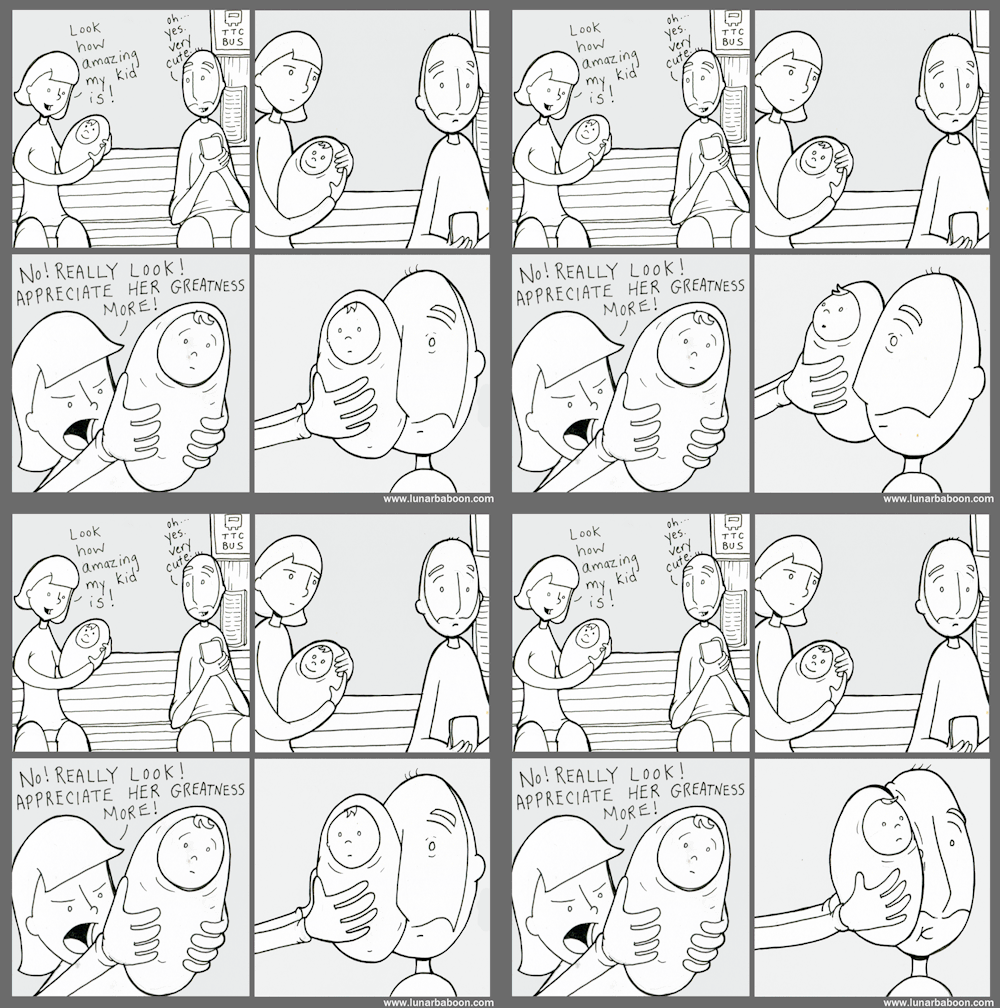
In a child's eyes, a mother is a goddess. She can be glorious or terrible, benevolent or filled with wrath, but she commands love either way. I am convinced this is the greatest power in the universe.

- N. K. Jemisin, A Hundred Thousand Kingdoms

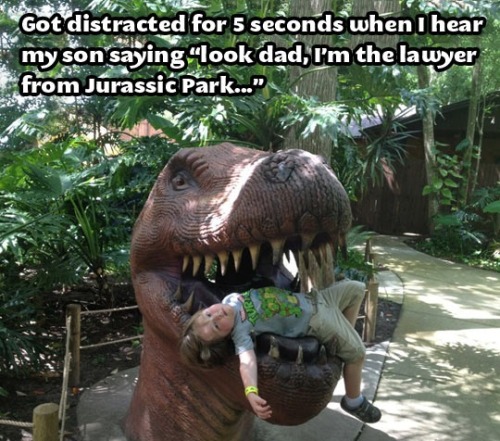
Jurassic Park, the fright that keeps on frightening


I'm on a roll with Pleated Jeans

Telemóveis!...


Thanx to Pleated Jeans, again :)

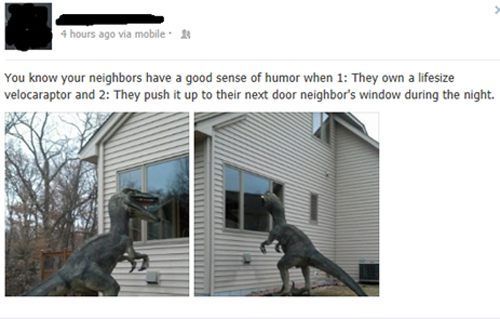
Velociraptorrrrr

Thanx to Pleated Jeans

segunda-feira, 22 de abril de 2013

sábado, 6 de abril de 2013

TWO

Cake, partyyy - we were all so engrossed with friends and kids play that nobody cared about taking pictures (!) - and the Warrior Dad Best Host Ever resting at last :)


sexta-feira, 5 de abril de 2013

I am a velociraptor, hear me ROAR!!!

A hoodie sent by Grandma Kanguru, all the wayyy from Australia!

terça-feira, 2 de abril de 2013

terça-feira, 12 de março de 2013

quinta-feira, 7 de março de 2013

Beautiful Baobab Trees, also in Australia!

A postcard from Grandma Kanguru :)


sexta-feira, 1 de março de 2013

quinta-feira, 28 de fevereiro de 2013

Toddler freak out, Dr. Harvey Karp and the caveman, bliss... :)

Melinda Wenner Moyer for Slate:


Last month, I discovered (and then nearly peed in my pants as a result of) comedian Jason Good’s blog post 46 Reasons My Three Year Old Might Be Freaking Out. (The first three possibilities: His sock is on wrong. His lip tastes salty. His shirt has a tag on it.) After exchanging a few comments on Facebook about it with a friend, she privately messaged me, frustrated with and concerned about her 18-month-old. “It's like all of a sudden in the last three weeks, she's turned into this tantrum ball and I never know what's going to set her off,” she wrote. “I'm living with a baby land mine!”
Me too. What is it with toddlers and losing their shit all the time? Is it normal that my son wails if his shirt sleeve isn’t all the way down, loves the bathtub one day but hates it the next, and manically screams “MINE!” two seconds after handing our dog a ball?
Yes, thankfully. And it’s not only normal, but reasonable. As five experts on child psychology recently explained to me, toddlers’ irrational behaviors are a totally understandable reflection of their inner turmoil and frustrations. In sum, their world is turning upside down and they don’t yet have the skills to handle it. Tantrums don’t mean your kid is a spoiled brat or needs therapy; tantrums mean he is normal.
The toddler life is not actually as cushy as it seems. Sure, I’d like 12 hours of sleep a night and all my meals prepared for me, thanks. But 2-year-olds are also going through a hellish personal crisis: They have just learned how to walk and use tools, so they really want to explore the world; at the same time, they are terrified of what that world contains and constantly fearful that their parents, whom they love and trust to a terrifying degree, will suddenly abandon them. Oh, and those same parents? They’re suddenly barking “no” all the time, seemingly just for fun. What the hell?
It’s no coincidence that kids start having tantrums around the time that parents start enforcing rules. When you say no, sweetie, you can’t have that butcher knife, your 20-month-old has no idea that you are depriving her of this awesomely shiny contraption for her own safety. “Since it’s the parent, whom they rely on for everything, who is taking it away, it’s perceived as a withdrawal of love, essentially,” says Alicia Lieberman, a professor of Infant Mental Health at the University of California-San Francisco and author of The Emotional Life of the Toddler. “They don’t know your reasoning. They just know that something they were getting great pleasure from, all of a sudden, you are taking away.” The pain that this causes, Lieberman says, is similar to what we might feel if our spouse betrays or cheats on us.
As adults, we (usually) don’t (audibly) freak out when we don’t get what we want or when somebody makes us mad because we can talk ourselves down. We can identify and label the emotion we’re feeling, which, research suggests, goes a long way toward quelling and controlling it. Our ability to label feelings stems in part from our excellent language skills, which young toddlers don’t have yet. Also thanks to language, as adults we can confront the people who are upsetting us and suggest solutions. My 22-month-old, though now very adept at informing me of his need for milk, doesn’t manage complex negotiations so well. His first response to frustration is generally to grab the nearest object and throw it across the room, which makes sense considering that his gross motor skills are among his strongest assets. If the only tool you have is an arm, you tend to see every problem as a potential projectile.
Another reality of the toddler brain: The frontal lobe, which is responsible for planning, logic, reasoning, working memory and self-control, is vastly under-developed. Because of this, “toddlers are really living in the moment, not thinking about consequences,” explains developmental psychologist Nancy McElwain, who runs the Children’s Social Development Lab at the University of Illinois at Urbana-Champaign. There’s no voice in their head saying, hmm, maybe it’s not a good idea to throw my lovie in the toilet (too bad, because lovie got very wet in our house last week).
A semi-functional frontal lobe also means that toddlers have practically no sense of time and patience and therefore “experience wanting as needing,” Lieberman says—i.e., when they want a chicken nugget, they really, really need it NOW! They can also have a skewed sense of cause-and-effect, developing a paralyzing fear of the bathtub because what if they go down the drain, too? Finally, let’s not forget the importance of experience when it comes to handling challenges appropriately, says developmental psychologist Claire Kopp, co-author of Socioemotional Development in the Toddler Years. The 2-year-old, she says, simply doesn’t have any experiences to draw from.
If it sounds like I’m characterizing your beautiful, special, way-above-average toddler as animal-like, that’s because I am. Pediatrician Harvey Karp, author of The Happiest Baby on the Block and The Happiest Toddler on the Block, calls toddlers “little cavemen.” “That is not meant to be derogatory, but meant to set the frame of reference for parents,” he explained to me. “It takes years to socialize our little toddlers, so it’s important for parents to cut themselves some slack. Don’t feel you’re a terrible parent because they smeared jam all over the walls.” (This is not to say that toddlers don’t also love organization and routine; they do. My son lines his toy cars up in a row every day, probably because he’s trying to build some order into his chaotic, confusing life. And his sleeve-down requirements may stem from a desire for consistency.)
The caveman analogy helps to explain yet another issue plaguing toddlers, Karp says: They are very under-stimulated. Little cavemen (and here I’m talking about the real ones) spent their days very differently than kids do today. “It was a sensory-rich environment: smells, the fresh air, shadows, birds, grass under your feet. Today, we put our little kids in houses and apartments with flat floors, flat walls, ceilings, and not too many chickens, and we think that’s normal,” Karp explains. “It is hard to spend all day with a two-year-old, and they don’t really want to spend all day with you anyway.”
Given all this, is it really that surprising that tantrums happen as frequently as they do? There are certainly good and bad ways for parents to handle poor behavior (an issue for another column), but the existence of tantrums, and the tendency for toddlers to tackle their woes through screaming and hitting and throwing, is perfectly normal because it’s sometimes “the toddler’s only recourse,” says Tovah Klein, director of the Barnard CollegeCenter for Toddler Development. If your universe were amazing and terrifying and frustrating and unpredictable, and you didn’t have good communication skills or a whole lot of experience or much of a frontal lobe, you’d freak the fuck out every once in a while, too.


terça-feira, 26 de fevereiro de 2013

segunda-feira, 18 de fevereiro de 2013

A roaring birthday for Daniel :-E

From our antipodean family :) 


quinta-feira, 14 de fevereiro de 2013

sexta-feira, 8 de fevereiro de 2013

Speed


quarta-feira, 6 de fevereiro de 2013

High Five! 5 anos 5 :)

A good day :) Chocolate cake at school with friends, another chocolate cake at home with Daddy. Party next Sunday (another cake :))) and more pics coming up!


segunda-feira, 28 de janeiro de 2013

quinta-feira, 17 de janeiro de 2013