quarta-feira, 30 de outubro de 2013

Elephants in fiction - quiz from The Guardian

  1. 1. What is the name of Babar’s wife and queen of Babar’s Kingdom?
  2. 2. Who wrote An Elephant in the Garden?
  3. 3. What is the name of Elmer the Elephant’s cousin, who loves playing practical jokes?
  4. 4. Who wrote Horton Hears a Who?
  5. 5. In which Roald Dahl story does Trunky the Elephant appear?
    1.   
Go check :)

You scored 4 out of a possible 5 Good effort! Your elephant knowledge isn't a grey area...

One Perspective: The Opium is Our Children

From More Intelligent Life magazine

If a Roman senator’s opium was his public life, a Viking’s was battle. Our ancestors have been addicted to honour, craved virtue and wealth, been hooked on conquest, on adventure, and on God. But ours is the first civilisation to find its deepest fulfilment in its descendants. Our opium is our children.
We’re all familiar with the results. There is the greater dismay we seem to feel at youth unemployment than at the poverty of pensioners, although some of the most disturbing scenes I’ve witnessed have been in the homes of the elderly. There is the way that older people are expected to give far more to voluntary organisations. We assume that the over-65s will take on almost the entire burden of supporting political parties, for which the young occasionally vote, and of maintaining the churches in which the young like to marry. We accept too easily that the young should not be called upon to carry the burden of sustaining communities because "their lives are too busy".
People who might once have been public figures, deeply invested in their work, are instead busy serving their children. Ours is a culture not of ancestor worship but of descendant worship. Children must sense that nothing an adult does is more important than their own desires. All political questions seem to come down to the interests of "the next generation".
I am reminded of the philosopher who was informed by a lady that the world rested on a turtle. When asked what the turtle rested on, she replied it was "turtles all the way down". Our purpose is our children, whose purpose is their children. And so on. Each generation more important than the one before. Generation after generation, all the way down.
This seems a self-defeating, infinite regression. I’d prefer our opium to be the struggle to create a living civilisation, which might daunt even our descendants. We should seek to emulate previous generations. Our obligation cannot be uniquely to the young, and those yet to be born. It is also to the living, and to the dead.

Have your say What do you think is the opium of the people? Vote in our online poll

Rory Stewart is a British MP and a former soldier who spent two years walking across Asia. He is the co-author of "Can Intervention Work?"

terça-feira, 22 de outubro de 2013

Elephant Fury

from the Africa Geographic blog, now following :)


segunda-feira, 7 de outubro de 2013

sexta-feira, 27 de setembro de 2013

terça-feira, 10 de setembro de 2013

A postcard from Granny Angela - flip flops / chinelos de enfiar no dedo :)

Other names Granny Kangaroo tells us about for this piece of apparel: Malawi = patapata Japan = zori New Zealand = jandals Australia = thongs let's add: Brazil = havaianas

terça-feira, 30 de julho de 2013

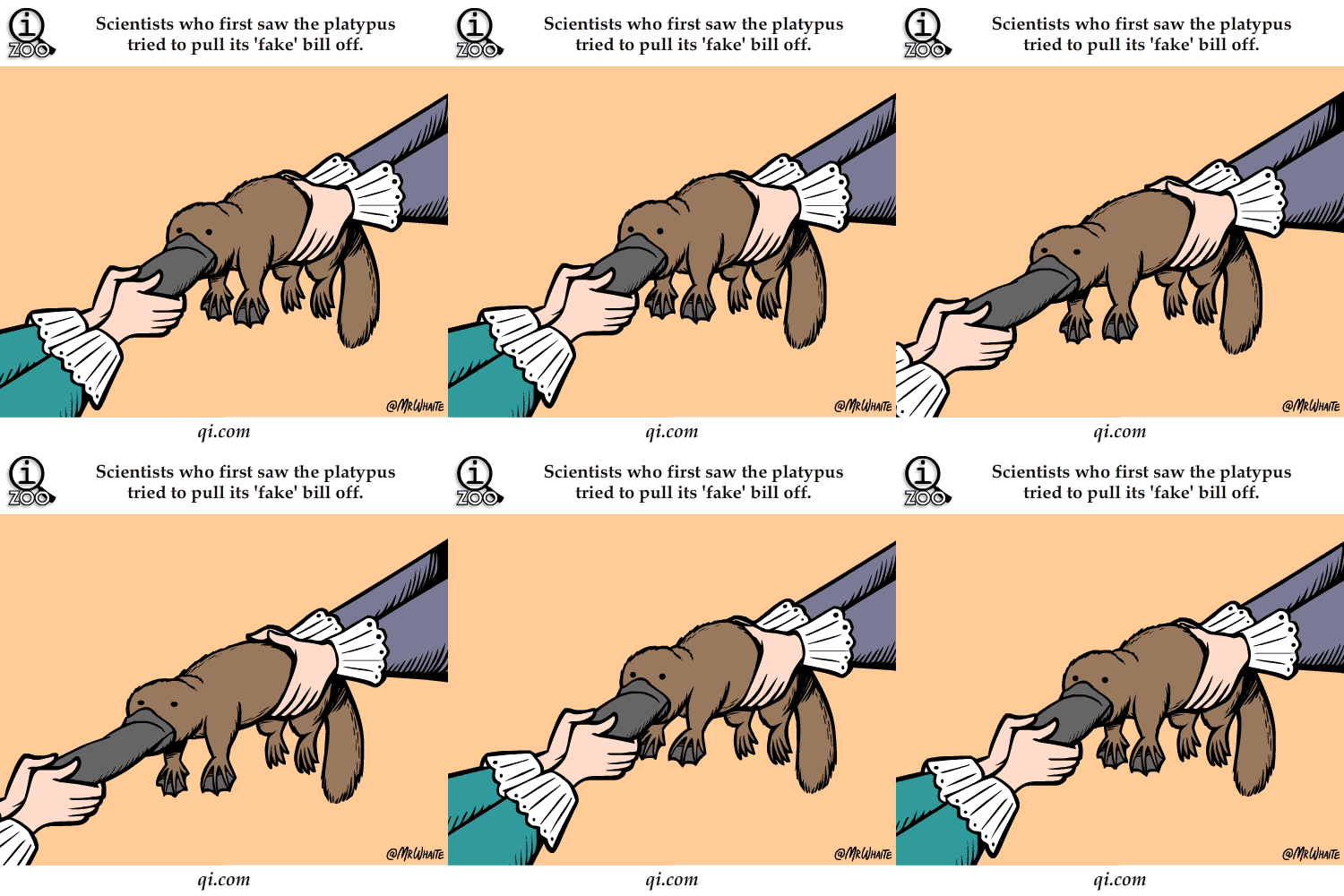
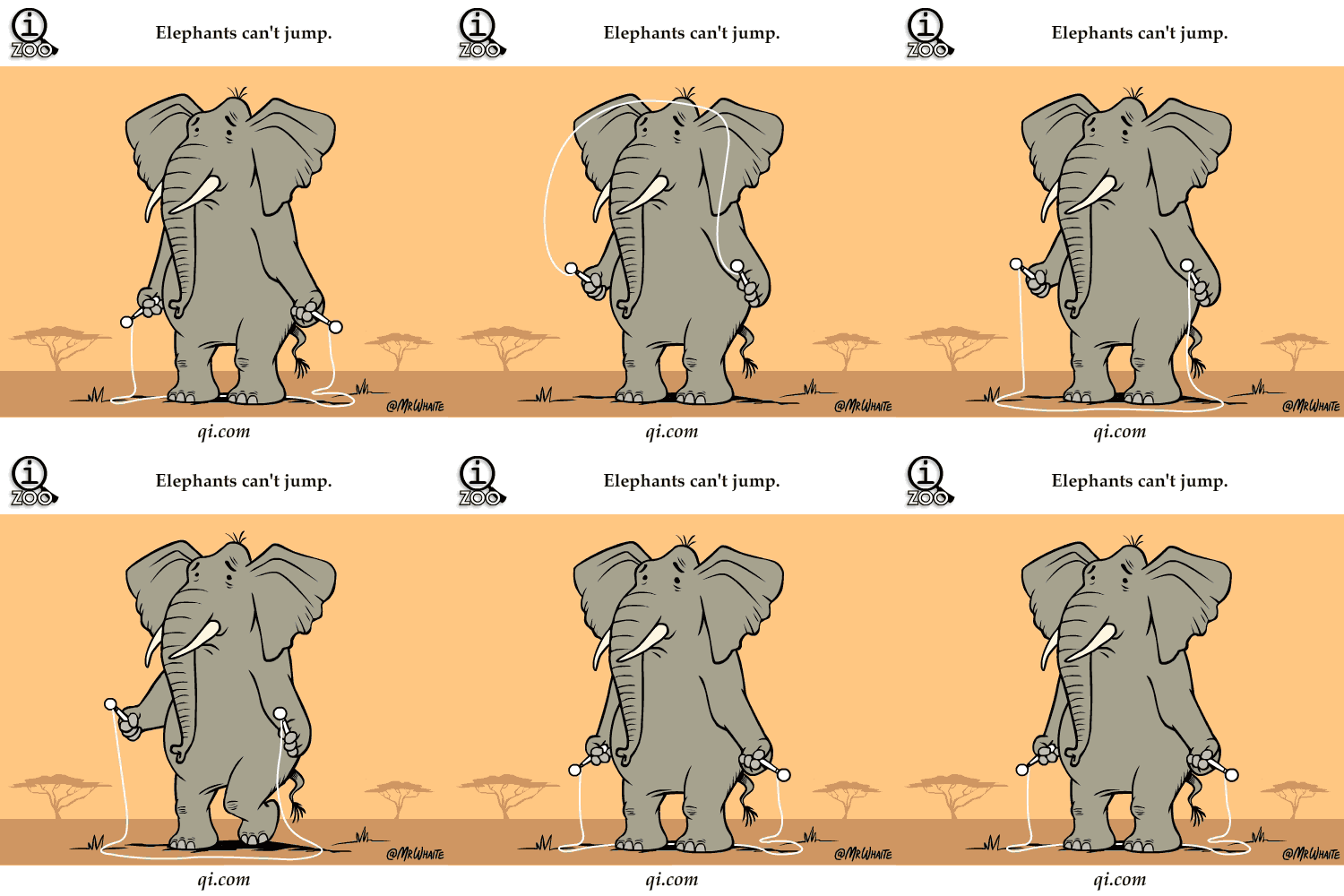
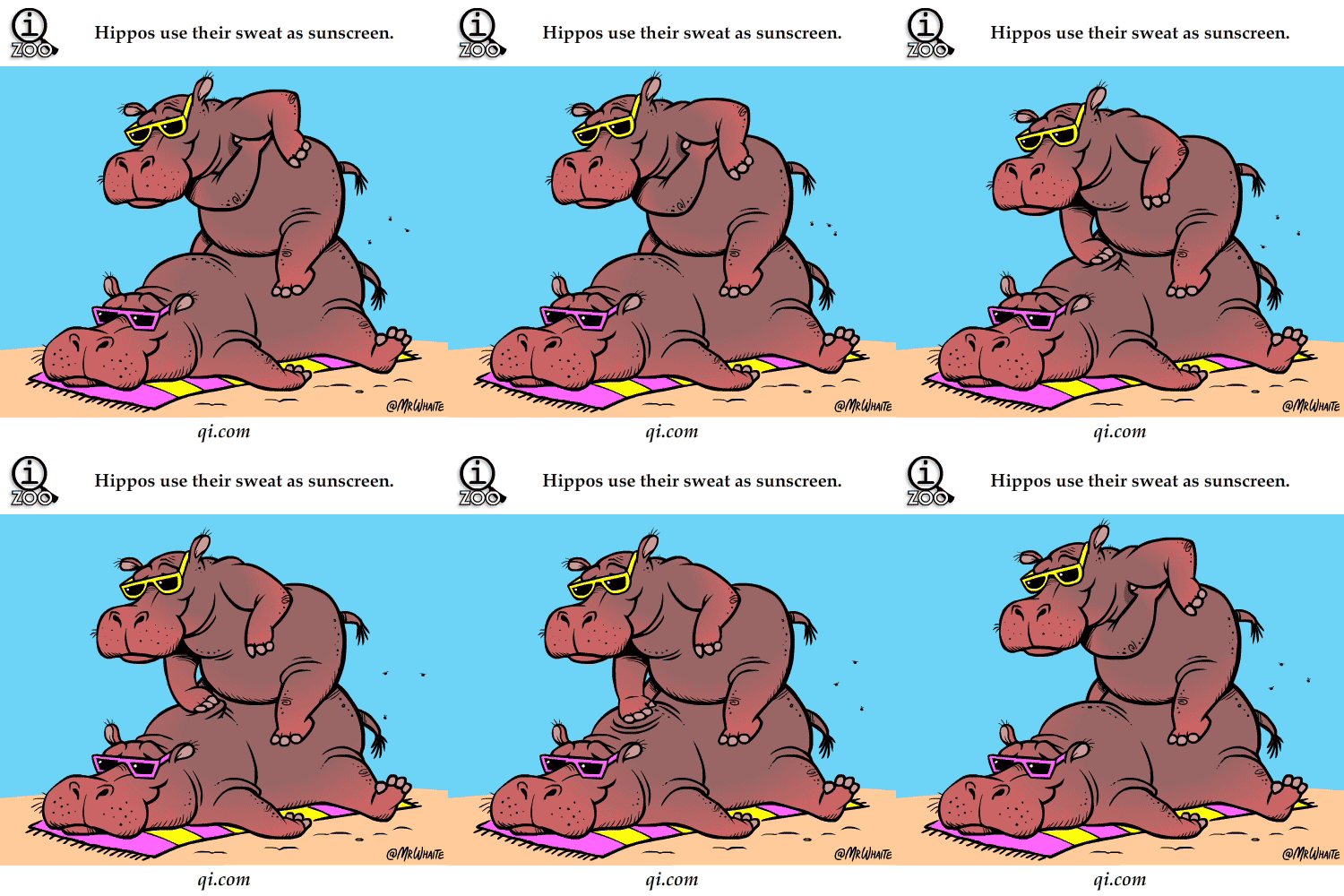
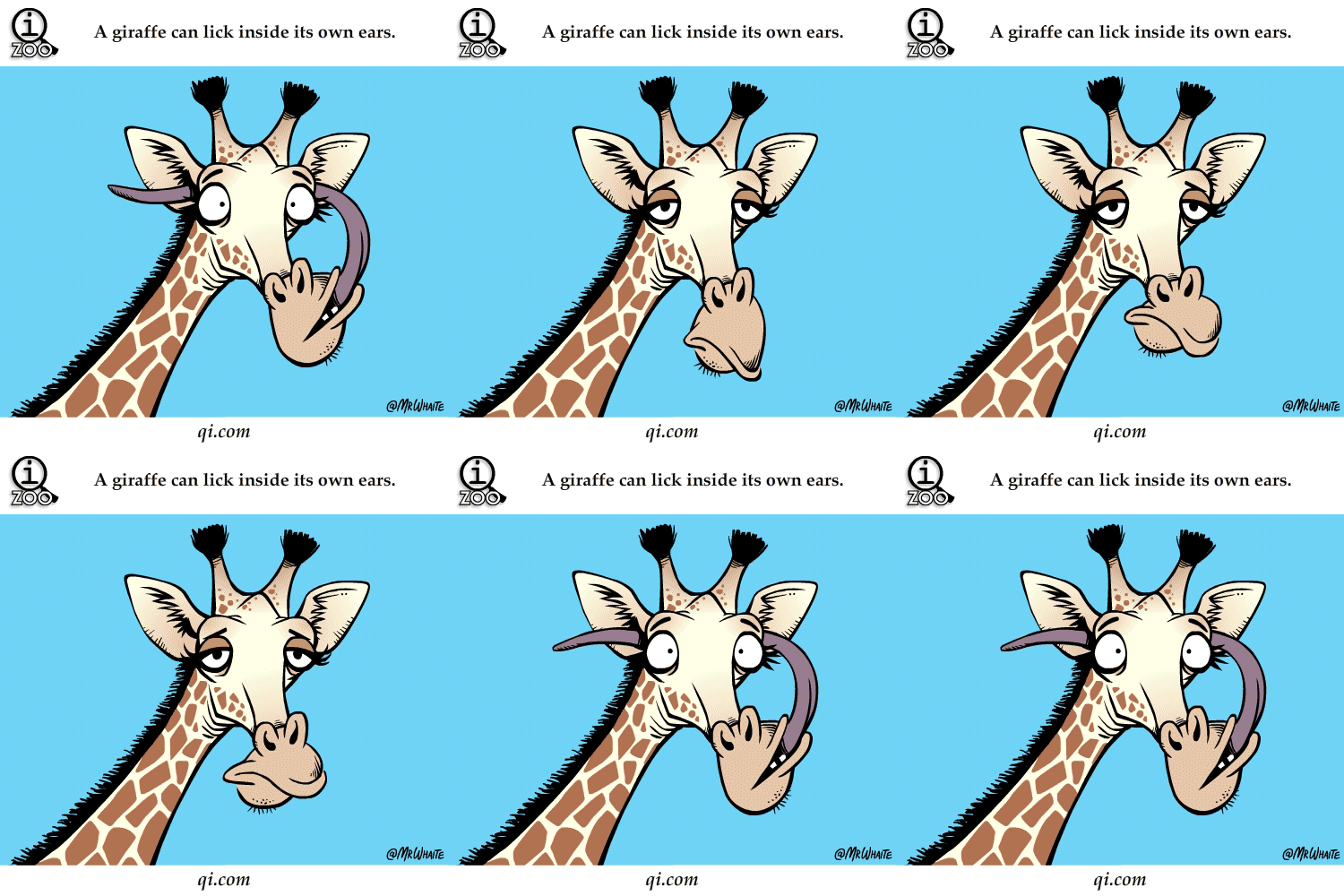
introducing The QI Zoo

so many MORE :)

A very good Dinosaur Family Tree Explainer

So spake Vondell:


made rebloggable because people wanted it, this is a very very simple thing that i used to talk about why birds are dinosaurs and what that means and where they fit into the family tree, why “reptile" is a weird arbitrary term that excludes birds only because it was made up before we knew birds were dinosaurs and we’re stubborn, why “sauropsid" is a better term that isn’t as weird and arbitrary, and where lizards and other modern reptile descendants fit into the family
there’s a lot of very interesting detail to go into that i did not go into, this is very very simplistic, as evidenced by the fact that i used a good amount of land before time nomenclature. i grouped some different animal groups together for the sake of clarity that are not usually represented as a single group (sauropods & ornithischians are usually distinct, but the thing i wanted to get across was “non-theropod dinosaurs", turtles belong to a slightly more distant-past fork than lizards and snakes, there are many more non-dinosaur archosaurs than pterosaurs and plesiosaurs and crocodilians, etc)
if youre interested in any of that stuff and you have a little while to spend on wikipedia, pretty much any term is a goldmine of information and also specifically articles like “bird evolution" or “evolution of reptiles"


How to jump into a Swimming-Pool :)

How do I make a Picture Book, by Adam Rex

Read all about it here, at Muddy Colors :)


terça-feira, 25 de junho de 2013

Natural Selection

SMBC Comics does it again :)


Leg godt, T-Rex :)


The art of the Brick, by Nathan Sawaya

terça-feira, 11 de junho de 2013

Maurice Sendak Day


Quiz: Jurassic Park – test your film knowledge

It's 20 years since the release of Steven Spielberg's dinosaur adventure. How well do you know Jurassic Park?

  1. 1.What is the name of the fictional island Jurassic Park is situated on?
  2. 2.Jurassic Park founder John Hammond (Richard Attenborough) tells his guests that his first ever attraction was…
  3. 3.What is Jeff Goldblum's character's job?
  4. 4.What was Jurassic Park's tagline?
  5. 5.Laura Dern played Dr. Ellie Sattler – but who was originally offered the role?
  6. 6.What kind of dinosaur do you see the Tyrannosaurus eat in the film?
  7. 7.What prevents the Jurassic Park dinosaurs from reproducing?
  8. 8.What breed is the 'ill' dinosaur the visitors come across on their initial tour of Jurassic Park?
  9. 9.Why does Dennis Nedry shut down the park's security systems?
  10. 10.How did the filmmakers make the famous glass of water ripple as T Rex approached?
  11. 11.What calamitous event in September 1992 held up filming?
  12. 12.For how many minutes of the film are dinosaurs on screen?
  13. 13.The Tyrannousauras sound effects were made up various other animals' noises, including a…
  14. 14.Jurassic Park broke box office records - but which was the first film to break Jurassic Park's record?
  15. 15.Which character dies on the toilet?

BETTER check The Guardian's Quiz page! I scored 13 out of 15 - and I should :D

The princess and the... (the Art of SMBC Comics .)


segunda-feira, 3 de junho de 2013

sábado, 1 de junho de 2013

Ó meu grandesíssimo dinossauro, mas tu és da Lourinhã?


Oito cientistas, cinco deles portugueses, anunciaram esta quinta-feira que descobriram na Lourinhã os ovos com embriões de dinossauros carnívoros mais antigos do mundo, com cerca de 150 milhões de anos, noticiou a agência Lusa. É a descoberta da década em Portugal em termos de paleontologia de dinossauros, considera a equipa.
Foi na praia de Porto das Barcas, na localidade de Atalaia, concelho da Lourinhã, que o holandês Aart Walen, voluntário do museu daquela vila, descobriu em 2005 os ovos com os embriões. O achado, segundo relata a equipa num artigo científico publicado hoje na revista Scientific Reports, é composto por cerca de 500 fragmentos de cascas de ovos, formando um conjunto com 65 centímetros de diâmetro, que continha ossos e dentes de embriões.
As cascas dos ovos e os embriões encontravam-se num estado de preservação “verdadeiramente excepcional”, segundo a equipa, que os estudou entre 2005 e 2009 utilizando diversas tecnologias de ponta.
Ricardo Araújo, um dos investigadores, sublinhou à Lusa a raridade dos achados. “Estes ovos têm 150 milhões de anos, por isso são de longe os mais antigos de dinossauros carnívoros”, explicou o paleontólogo português, que pertence ao Museu da Lourinhã e à Universidade Medodista do Sul, em Dallas, nos Estados Unidos.
Com 150 milhões de anos, existiam até agora os ovos com embriões de dinossauro encontrados na praia de Paimogo, também na Lourinhã, em 1993. A menos de dez quilómetros de distância do novo achado, esses ovos pertencem também a dinossauros carnívoros bípedes (terópodes): a equipa que os tem estudado considera que são do Lourinhanosaurus antunesi. Revelados ao mundo em 1997, os ovos de Paimogo estavam num ninho enorme, onde um grupo de fêmeas tinha posto mais de uma centena de ovos, e colocaram desde então a Lourinhã no mapa-múndi da paleontologia.
“Em conjunto com os ovos de Paimogo, [o novo achado] representa os embriões de dinossauros carnívoros mais antigos, sendo ambos do Jurássico Superior, com aproximadamente 150 milhões de anos”, acrescenta por sua vez ao PÚBLICO o paleontólogo Rui Castanhinha, do Instituto Gulbenkian de Ciências, em Oeiras, e do Museu da Lourinhã. “Nos últimos dez anos não se descobriu nada em Portugal em paleontologia de dinossauros tão importante como isto. Tem uma importância profunda na biologia, na reprodução, na embriologia de dinossauros. É a descoberta da década”, resume Rui Castanhinha. “Ovos com embriões é raríssimo.”
Ovos ainda antigos do que os da Lourinhã só os de dois dinossauros herbívoros, encontrados na África do Sul (do Massospondylus) e na China (Lufengosaurus), ambos com cerca de 190 milhões de anos.
“O registo fóssil tem apenas sete ou oito registos de ovos de dinossauro em todo o mundo e ainda são mais raros os casos de ovos com embriões”, referiu Ricardo Araújo, o primeiro autor do artigo, assinado ainda, além de Rui Castanhinha, por Rui Martins, Octávio Mateus, Luís Alves e pelo belga Christophe Hendricks, todos ligados ao Museu da Lourinhã, e pelos alemães Felix Beckman e Norbert Schell.
A equipa determinou que os achados pertencem a um torvosauro, um dinossauro carnívoro e bípede que tinha os dentes afiados e atingia dez metros de comprimento e duas toneladas. Pertencia a um grupo primitivo de terópodes, os megalossaurídeos, e é aqui que reside sobretudo a importância deste achado, ao preencher uma lacuna no conhecimento sobre as relações entre grupos distantes de dinossauros.
Em termos evolutivos, o torvosauro de Porto das Barcas encontra-se entre os dinossauros que puseram os ovos na África do Sul e na China, mais “primitivos”, e o de Paimogo, mais “evoluído” ou “derivado”. “Este novo achado vem preencher uma lacuna entre os dinossauros muito derivados [evoluídos] de Paimogo e os outros muito afastados da África do Sul e da China”, sublinha Rui Castanhinha. “Isto permite melhorar os conhecimentos sobre as origens dos dinossauros, em particular dos carnívoros, e de como eles chegaram à diversidade que vemos hoje – porque as aves são dinossauros.”