- 1 - “Anything that is in the world when you’re born is normal and ordinary and is just a natural part of the way the world works.”
- 2 - “Anything that’s invented between when you’re 15 and 35 is new and exciting and revolutionary and you can probably get a career in it.”
- 3 - “Anything invented after you’re 35 is against the natural order of things.”
quarta-feira, 25 de novembro de 2009
Rules.

segunda-feira, 23 de novembro de 2009
The Story and Storytelling Museum, in Oxford
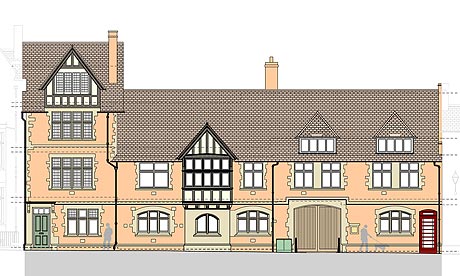
From Lewis Carroll's Wonderland to JRR Tolkien's Middle-earth, CS Lewis's Narnia and the parallel universes of Philip Pullman's His Dark Materials, Oxford has played host to some of the UK's most enduring literary creations. Now a £2.5m donation from an anonymous private benefactor means the first steps have been taken towards the creation of a museum dedicated to storytelling in the city.
The Story Museum has existed online for the past four years, holding events across Oxfordshire and running storytelling pilots in schools, but the donation enables it to start constructing a permanent home in Oxford. It has just signed a lease on Rochester House, a Victorian building a stone's throw from Christ Church College – where many scenes in the Harry Potter movies are filmed – on Pembroke Street. It now needs to raise a further £11m to transform the building into a museum, which will aim to attract 100,000 visitors a year when it opens in 2014.
Children will be able to listen to stories at the museum, to "walk through" them, to create stories of their own and to "open windows and go through doorways into other worlds", according to the team behind the museum, described as a cathedral to the children's story by trustee and children's publisher David Fickling.
"Dreams do come true: we are absolutely delighted to have a real home at last," said the museum's director Kim Pickin. "Rochester House has its roots in the Victorian era, when Oxford began producing children's stories that are known and loved across the world. Lewis Carroll himself would have known the building." Spokesperson Cath Nightingale said the donor wished to remain anonymous.
Pullman, who lives in Oxford and set his bestselling fantasy trilogy His Dark Materials in two different versions of the city, is a patron for the museum, along with fellow former children's laureates Michael Morpurgo and Jacqueline Wilson. "The Story Museum will be a wonderful gift from Oxford, where so many stories have begun, to the whole world," Pullman said. "The whole atmosphere of the city is rich with fantasy. Indeed, the very idea of having a museum devoted to story is itself such a fantastical notion than no other city in the world could have given birth to it."
Carroll wrote his Alice books in Oxford in the 19th century, Tolkien and Lewis would meet to discuss their work in the city's Eagle and Child pub in the 1930s and 40s, and Kenneth Grahame wrote The Wind in the Willows in Oxfordshire. "There must be something in the waters of the Isis that gets into the system of Oxford residents, magically causing them to think of and bring to life unforgettable characters and plots," said Oxfordshire-based children's author Mary Hoffman.
Oxford resident and Duncton Wood author William Horwood said there was "clearly something going on in Oxford which doesn't happen in other cities". "From where I'm sitting at this moment I've got within a radius of less than two miles Kenneth Grahame, Charles Dodgson [Carroll], Tolkien, Philip Pullman and CS Lewis," he said. "There is a literary tradition associated with Oxford going back to medieval times. People read here. The spirit of the word is here. Also there's the fact that the colleges are basically monastic institutions – you've got corridors within corridors, staircases within staircases, doors which open onto magical gardens. It's hardly surprising that something like Alice in Wonderland came straight out of Oxford."
The museum's team is now planning a feasibility study to establish how to create the Story Museum, and is also putting together a "major public campaign" for 2010 to raise the £11m it needs if it is to open by 2014, in time for Oxford's bid to become Unesco's World Book Capital that year.
sexta-feira, 20 de novembro de 2009

quinta-feira, 19 de novembro de 2009


Um Livro sobre Livrinhos ;) Illustrated Children’s Books

Illustrated Children’s Books is a detailed look into the design and stories of children’s books, focusing on the well-known illustrators and characters that have influenced readers of all ages.
Illustrated Children’s Book goes back and visits the history of children’s books, looking at the design and characters of these well loved tales. It takes us on a visual journey of the development of children’s illustrations throughout the ages, the ‘notion of childhood’, historical facts and the design and illustration of these memorable books. Includes a foreword by the current Children's Laureate Anthony Browne.
From classics such as John Tenniel’s Alice in Wonderland and Winnie the Pooh, to well-known illustrators such as Quentin Blake, this book explores the cover design, character illustration and interiors of these well-loved stories. With commentary from some of the most renowned illustrators of the day, the book examines the iconic design of children’s illustrated storytelling and provides background information on the authors and illustrators.
Illustrated Children’s Books features perennial favourites such as Dr Seuss, Miffy, Eric Carle’s The Hungry Caterpillar, Maurice Sendak’s Where the Wild Things Are as well as recent successes such as Oliver Jeffers’ The Incredible Book Eating Boy.
With essays from Peter Hunt and Lisa Sainsbury. Peter Hunt is the Professor Emeritus in Children’s Literature at Cardiff University and awarded the International Brothers Grimm Award for services to children’s literature in 2003. Lisa Sainsbury is based at the National Centre for Research in Children’s Literature at Roehampton University.
Black Dog Publishing rules :)
segunda-feira, 16 de novembro de 2009

domingo, 15 de novembro de 2009

sábado, 7 de novembro de 2009
quarta-feira, 4 de novembro de 2009

Funny Parenting
Here's a funny story for dads and kids to enjoy.
An older, tired-looking dog wandered into my yard; I could tell from his collar and well-fed belly that he had a home and was well taken care of.
He calmly came over to me, I gave him a few pats on his head; he then followed me into my house, slowly walked down the hall, curled up in the corner and fell asleep.
An hour later, he went to the door, and I let him out.
The next day he was back, greeted me in my yard, walked inside and resumed his spot in the hall and again slept for about an hour. This continued off and on for several weeks.

Curious I pinned a note to his collar: ' I would like to find out who the owner of this wonderful sweet dog is and ask if you are aware that almost every afternoon your dog comes to my house for a nap.'
The next day he arrived for his nap, with a different note pinned to his collar: 'He lives in a home with 6 children, 2 under the age of 3 - he's trying to catch up on his sleep. Can I come with him tomorrow?'
terça-feira, 3 de novembro de 2009
Direito à educação desde o nascimento

O texto que aqui apresentamos baseou-se em investigações actuais e conhecimentos empíricos sobre educação na primeira infância e visa constituir-se como um ponto de partida para outras reflexões sobre o DIREITO À EDUCAÇÃO DESDE O SEU NASCIMENTO.
A APEI pretende alargar a reflexão e a discussão em torno de questões fundamentais para a educação.
Por outro lado, a visão da associação pretende diversificar o espaço de participação no debate público, de forma a assegurar um crescimento sustentado dos serviços e o reconhecimento social da educação de infância e do seu valor para a sociedade.
O presente documento será a base para o debate, que decorrerá até ao final de 2009. No primeiro semestre serão integrados os contributos resultantes do mesmo e, com o apoio de juristas, a APEI preparará um projecto de lei, recolherá 15000 assinaturas e que apresentará à Assembleia da República para discussão e votação.
Mais

sábado, 31 de outubro de 2009

quinta-feira, 29 de outubro de 2009
How did you learn to tell the time? Here's a new method...
We all have to learn to tell the time, and many of us probably can't remember how we ever managed to do so. What you might recall is how difficult it was, and this is something I've been reminded of in recent years as my children have started learning about clocks.
After all, it's hard to do things in 60s. It would all be so much easier if minutes were 100 seconds and hours were a hundred minutes. And all that big hand/little hand stuff is very complicated too. One minute we're saying that a hand on the one means one o'clock. The next we're saying it means five past the hour. How confusing....
Jamie Rugge-Price first thought about this when his children - who are now grown-up and have children of their own - were small. He also spoke to various teachers about it and realised that they found telling the time frustrating to teach. It took a while, but he finally decided to do something about it.
 "Telling the time is a basic life skill," he says. "It should be easy and fun, but it isn't. Then I had a Eureka moment. I thought 'what shape is an hour?' If it could be visualised, telling the time would be so much easier."
Jamie decided to come up with a concept for telling the time, and he called it a nonsense name (and acronym of his four daughters' names), Aramazu.
I shall briefly stop the story for a moment. I get sent a lot of things - books, teaching aids etc - and look at them all. Some impress me more than others. I have to admit that I was very impressed by Aramazu, and especially when my son, who's four, started to understand the concept of telling the time. He understood the hours and half pasts (seen in this method as time climbing a mountain) very quickly. The minutes were a bit more complicated, but he was still keen to learn more.
Jamie wrote about his method in a series of storybooks. The key to them is how visual they are - an hour is the shape of a mountain, and it takes 30 minutes to walk to the top of the hour or down to the half past. The hour hand is a finger, and the minute hand a foot.
Jamie tested the books and refined them. Then he tested them again. The results have been good; unsurprisingly he just wants more people to know about it.
Cheryl Hossle is a Year 1/2 teacher at a state school in the Forest of Dean. She has used the Aramazu method for teaching children to tell the time for the last two years and is very impressed. She also acts as an educational consultant to Jamie.
"Aramazu is not abstract," she says. "From the books the children can see why we need time, and how everything can go wrong if we don't have it. They can also work out how to use the feet and finger method. They make the connections."
Hossle says that this method works well for dyslexic children too, because it is so visual. "It addresses thinking skills and is humorous," she says. "I've been very pleased with the results we've had".
The Aramazu method (you can see a clock in the illustration) comes in different forms, for children of different ages. As I say, I am quite convinced by it, and would be interested to know what other people think. Or if anyone has any other brilliant ways to teach children how to tell the time.
As traduções da Mamã ;)

Jay ligou a Nádia na manhã seguinte.
— Olá — disse ela, alegremente.
— Como estás?
— Destroçado. É duro, isto de dar à luz.
— Bom trabalho. E mais?
— Um rapaz. Três quilos e novecentos, sadio, olhos azuis, cabelo preto. — E rematou:
— E uns tomates enormes.
Nádia riu-se. Não podia evitar, ele parecia perplexo.
— Ele depois cresce. Como se chama?
— Daniel Anthony. Nasceu às onze horas. Tenho estado a ligar à família toda.
— Ainda bem que correu tudo bem. E a Belinda?
— Emocionada. Feliz. Jura que ele é a cara do Anthony, mas tu sabes como são os recém-nascidos. A mim só me parecem encarnados e amolgados.
Nádia quis ajudar:
— Isso é por seres homem.
(...)
Nádia fez chá e admirou as fotografias do bebé. Eram muitos os recém-nascidos que pareciam montinhos de carne, mas Daniel, felizmente, tinha umas sobrancelhas cheias de personalidade, olhos castanhos enormes e um tufo de cabelo como o Tintim.
— É lindo — disse Nádia, porque tinha de se dizer sempre isso de um bebé, mesmo que parecesse uma noz dentro de um fato de macaco. Mas aquele não. Daniel era bonito, com grandes pestanas, dedinhos delicados e um queixinho pontiagudo delicioso.
— Obrigado. Embora não seja meu — disse Jay.
(...)
— Desculpa, desculpa... as coisas pegajosas estavam sempre a colar-se às partes erradas... e depois percebi que a tinha posto ao contrário... entra, meu Deus, isto é mais difícil do que eu pensava. — Com ar aturdido mas contente por vê-la, Jay mandou-a entrar. Era evidente que ele também não tinha tido tempo de se pentear nem de pôr brilho nos lábios. O bebé, todo nu tirando uma fralda descartável pendurada num pezinho, queixava-se e agitava as perninhas contra o peito de Jay. Havia uma mancha muito suspeita na parte da frente da camisa de ganga. Evidentemente desagradado por se encontrar nas mãos de um amador daqueles, Daniel deu um pontapé que atirou a fralda pelo ar.
— Mary Poppins, presumo. — Apesar de tudo, Nádia não conseguia fazer cara séria. Desde que o conhecera, Jay sempre tivera tudo controlado, em todas as situações. Nada o abalava.
Excepto, como se estava a ver, as complexidades de pôr uma fralda descartável a um bebé.
— Deixa-me pegar-lhe. — Nádia estendeu os braços para o bebé e Jay passou-lho, sem esconder o alívio.
— Cuidado, ele parece a Fonte de Trevi. Quase me acertava no olho quando estava a mudá-lo. Não fazia ideia de que os bebés fazem chichi a cada dois minutos.
— Eu diria que tiveste sorte. Os bebés não fazem só chichi. — Os anos em que tomara conta de crianças para ajudar à faculdade davam vantagem a Nádia; deitou Daniel no trocador – branco com elefantinhos azuis – e pôs-lhe uma fralda limpa num instante. Remexeu no saco que estava no chão, encontrou um macaquinho limpo e vestiu-lho sem dificuldade. As molas entre as pernas deram um estalido de satisfação quando ela as apertou. O bebé estava com um ar quase desapontado, como se ela lhe tivesse ido estragar a brincadeira. Olhou à sua volta em busca de inspiração, e começou a balbuciar. Nádia viu o biberão de água na mesinha baixa, pegou nele e pô-lo na boca do bebé antes que este estivesse lançado.
— Foi fervida?
— Claro que foi fervida, não sou completamente incompetente.
(...)
Nádia sentiu a mãozinha pequenina de Daniel agarrar-se ao dedo indicador dela, certamente uma das melhores sensações de todos os tempos.
(...)
— Não é o único a quem tu fizeste esperar — observou Jay.
Nádia olhou para baixo e viu os olhos pestanudos de Daniel fecharem-se. Já não estava agarrado ao biberão. Cuidadosamente, deitou-o no sofá e rodeou-o de almofadas, e arrependeu-se quase de imediato. Daniel servira de escudo. Agora já não sabia o que fazer às mãos.
— Esse plano correu mal — disse Jay com um sorriso pesaroso.
— A ideia era abrir a porta com o Dan ao colo. Ele era para estar contente e sossegado, e tu ias ficar loucamente impressionada com a minha capacidade de lidar com ele, para não falar de deslumbrada pelo quadro espectacular que faríamos.
(...)
— Posso sempre tirar a casa do mercado, sabes. Não sou obrigado a sair de Bristol.
No sofá, romanticamente, Daniel escolheu a ocasião para soltar um punzinho de bebé a dormir.
Nádia desatou a rir.
(...)
Rrrrinnng.
— Raios, quem é? — Jay virou-se, siderado, quando a campainha guinchou.
Bem alto.
No sofá, os olhos castanhos de Daniel abriram-se, alarmados. Sacudido do sono, soltou um berro indignado e deu socos nas almofadas com as mãozinhas fechadas, a exigir que lhe pegassem.
Irresistível Tentação, de Jill Mansell, para as Edições Chá das Cinco
quarta-feira, 28 de outubro de 2009

THE FRUITS OF FAMILY TREES - Jonathan Safran Foer

(...)
“Grandma,” I said. “We have a baby.”
Her only phone is in the kitchen. She picked up halfway into the first ring. It was just after midnight. Had she been clipping coupons? Preparing chicken with carrots to freeze for someone else to eat at some future meal? I’d never once seen or heard her cry, but tears pushed through her words as she asked, “How much does it weigh?”
A few days after we came home from the hospital, I sent a letter to a friend, including a photo of my son and some first impressions of fatherhood. He responded, simply, “Everything is possible again.” It was the perfect thing to write, because that was exactly how it felt. The world itself had another chance.
(...)
Subscrever:
Mensagens (Atom)
