sexta-feira, 5 de março de 2010

Food and Children's Books

 
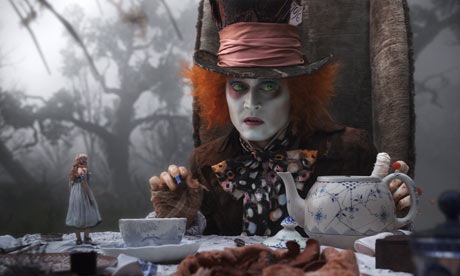
Tim Burton's Alice in Wonderland is released today, the latest adaptation of Lewis Carroll's books. Alice in Wonderland and Through the Looking-Glass are packed with descriptions of food: treacle wells, wine that doesn't exist, jam you can have tomorrow but never today (so you never actually get to eat it) and the Bread-and-Butterfly, which lives on nothing but weak tea with cream in. If it can't find any, it will die. ("'But that must happen very often,' Alice remarked thoughtfully. 'It always happens.'")
There's much to learn from food in children's books. Starvation was all too often inevitable in Victorian society, even if your diet wasn't limited to weak tea and cream. Plus Alice needs to be more sensible. Eating cake you've just found because it says 'EAT ME'? Drinking out of a strange bottle on the grounds it's not labelled "poison"? It's hardly clever. But kids in literature are far too keen to accept treats from strangers – just look at Edmund Pevensie in The Lion, The Witch and The Wardrobe. Turkish Delight is his downfall. Will he sell out his siblings for a quick sugar rush? Why, yes he will.

CS Lewis filled his books with religious imagery, so one line of thought says Edmund's face-stuffing is simply a warning against temptation, a caution against being lured by the sins of the flesh. It's also an effective warning against gluttony and stranger danger. Think before you scoff and don't take sweets from people you don't know, especially if you're lost and / or have just emerged from a magic wardrobe. You might find they've cancelled Christmas.
The greedy, grabby kids in Roald Dahl's Charlie and the Chocolate Factory meet stickier fates, though: Violet Beauregarde turns into a blueberry, squirrels push Veruca Salt down a rubbish chute and Mike Teavee gets put through a gum stretcher. So if you're going on a day trip, don't be greedy, nosy or disobedient. In fact, to be on the safe side, just don't eat, breathe or touch anything.
My friend Kat was traumatised by Enid Blyton's The Magic Faraway Tree: "I'll never forget Dick getting punished for breaking off a barley sugar door knocker in the Land of Goodies," she says. "I never looked at a door knocker in the same way again." Even Winnie the Pooh's beloved honey (or rather hunny) causes trouble in Pooh Gets Stuck: in another warning about the perils of over-eating, he fattens up on hunny and gets himself wedged in Rabbit's front door (Rabbit helps by hanging tea towels on his legs).
From warning against greediness and fussiness to the perils of sweet-wielding strangers, is there no such thing as an innocent snack in children's literature? Actually yes, there is. Look no further than the Moomin books by Tove Jansson. They are always nice to each other and they never seem to run out of porridge.

What food do you remember from children's books? Were you discouraged from eating it, or have you spotted any hidden messages you didn't notice when you were younger?

segunda-feira, 1 de março de 2010

Good news for anyone who may be looking for a present for a child they really like

The Weirdstone of Brisingamen is back in print! This is one of my all-time favourite books. Long after other childhood fantasy books have faded into the mists of memory, The Weirdstone stands proudly on my shelf, badly battered but hauled out for regular visits to the deceptive rural peace of Alan Garner's Cheshire.
With Colin and Susan (children of some indeterminate age between infancy and adolescence) I get off the train at Alderley Station, and am met by Gowther Mossock. We get into his horse-drawn carriage and go up the Edge, to the Mossocks' farmhouse, still lit by candles and lamps, for the Mossocks have not seen fit to change the way of life that suits them...
That is the beginning, and simple enough. Colin and Susan have been sent to stay with the Mossocks because their parents have been called away abroad. At first they -- and we, the readers -- see only the pleasant strangeness of their new home. But we are soon introduced to a deeper strangeness, yet so naturally that it flows out of the story as beautifully as the water of the Wizard's Well.
Garner, who besides being a writer of fiction is also a noted scholar of British folklore, tells us a story at the beginning of the book, a story about a wizard, and a sleeping king, and a farmer from Mobberley who had a milk-white mare. It's a true story -- or at least, a genuine piece of Cheshire folk tradition. And very soon, Colin and Susan discover just how true it really is, and how their lives have accidentally become interwoven with this great magic. For the wizard is real, and the cave where the King sleeps, along with a hundred knights on horseback, who, it is prophesied, will one day save the world.
This is not a typical Arthurian story, nor is it the usual story in which fortunate children leave this world for a more exciting one. Garner finds magic and mystery enough in his familiar English landscape, in the beautiful strangeness of Alderley Edge, in the maze of mines and tunnels that underlies Cheshire. The Weirdstone of Brisingamen, a magical stone lost for hundreds of years, has come into the children's possession and makes them a target for the servants of Nastrond, the dark spirit of Ragnarok. Their quest to return the stone to its keeper leads them on a desperate chase through the mines, and into a countryside transformed by a fierce and unseasonable winter. Colin and Susan, dragged bewildered into the magical country interwoven with their own, find themselves on an adventure more thrilling than they have ever dreamed of.
Yet what no review can convey is the solid reality of Garner's English landscape, and the way in which the magical creatures stand squarely on the ground with everyone else. In The Weirdstone of Brisingamen (as with its successor, The Moon of Gomrath) Alan Garner succeeds in the greatest magic of all: creating a world of imagination as absolutely believable as our own. 

Orchid or Dandelion?

Most of us have genes that make us as hardy as dandelions: able to take root and survive almost anywhere. A few of us, however, are more like the orchid: fragile and fickle, but capable of blooming spectacularly if given greenhouse care. So holds a provocative new theory of genetics, which asserts that the very genes that give us the most trouble as a species, causing behaviors that are self-destructive and antisocial, also underlie humankind’s phenomenal adaptability and evolutionary success. With a bad environment and poor parenting, orchid children can end up depressed, drug-addicted, or in jail—but with the right environment and good parenting, they can grow up to be society’s most creative, successful, and happy people.

Read all  The Atlantic

sábado, 27 de fevereiro de 2010

Dar à Luz em Portugal, por Cidália Dias - as experiências são sempre parecidas :|

Notícias Sábado, 6 de fevereiro - 2 anos depois do nascimento do Lucas

terça-feira, 23 de fevereiro de 2010

sábado, 20 de fevereiro de 2010

Vamos Plantar uma Árvore


PORQUÊ:

* Milhares de hectares ardem anualmente em Portugal, é imperativo reflorestar

* + Floresta = Redução de Carbono;

* + Floresta = Incremento Biodiversidade;

* Reflorestar = Benefícios para todos;

* Plantar Árvores = Oportunidade de proximidade (Amigos + Familía + Colegas + Vizinhos);

* Participação = propôr + fazer = Mudar o mundo;

* Sustentabilidade = Pequenas Acções x Muitas Pessoas = Grande Mudança;

* É através do exemplo que melhor transmitimos valores aos nossos filhos;

sexta-feira, 19 de fevereiro de 2010

Black

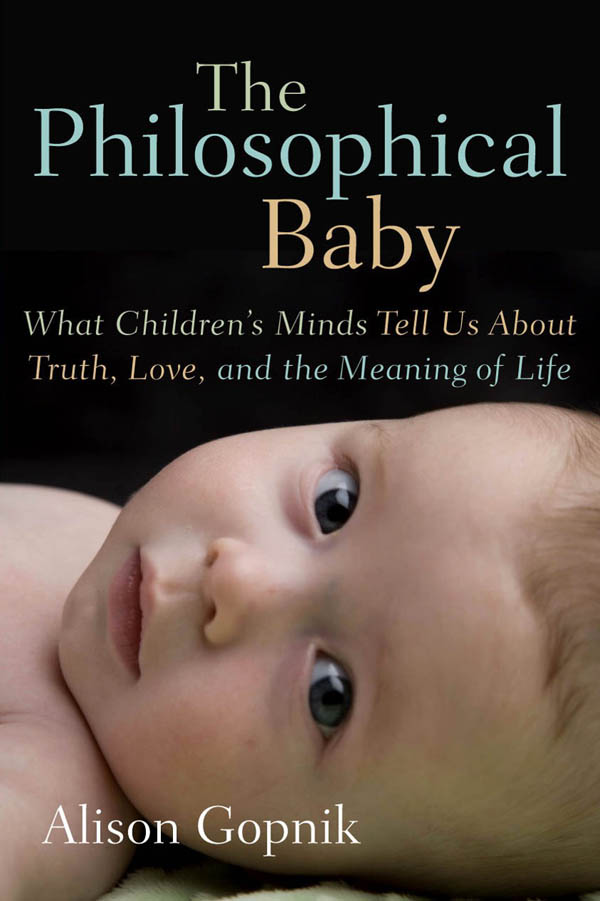
What Babies Know and We Don't

The most elusive period of our lives occurs from birth to about the age of five. Mysterious and otherworldly, infancy and early childhood are surrounded later in life by a curious amnesia, broken by flashes of memory that come upon us unbidden, for the most part, with no coherent or reliable context. With their sensorial, almost cellular evocations, these memories seem to reside more in the body than the mind; yet they are central to our sense of who we are to ourselves.
Part of the appeal of psychoanalysis may be that, in its quest to locate the faded child in the adult, it turns the adult into a kind of child at a play date with his analyst. The date is structured along the lines of imaginary play, complete with free association and open-ended conversation that can wind up anywhere; but like imaginary play, the date with the analyst follows a series of strict rules. The aim is to articulate what has been repressed, to fill in a blank in the narrative about ourselves. But as Alison Gopnik and her fellow cognitive psychologists have discovered, those years are so difficult to recapture not because of repression but because the states of consciousness and memory in early childhood are so different from those we experience later on.
"Children and adults are different forms of Homo sapiens," writes Gopnik in The Philosophical Baby, a tour through the recent findings of cognitive science about the minds of young children. For one thing, the prefrontal lobe, which has a major part in blocking out stimuli from other parts of the brain and fostering internally driven attention, is undeveloped in young children, and doesn't fully form in most people until they are in their twenties. Internally driven attention, cognitive research suggests, isn't a capacity that children fully acquire until at least the age of five. What arouses them is what is in front of their eyes, the first burst of information about cause and effect in the physical world.

More from the NY Review of Books

IlustrArte


No Museu da Electricidade

Galeria para abrir o apetite

Programa


terça-feira, 9 de fevereiro de 2010

Segundo Aniversário do Daniel Lucas

Obrigada a todos os tios e amiguinhos que apareceram, foi um dia muito feliz para o chicha ,)

O Bolo:
Prendinhas!


E muita roupinha boa que há-de ficar em fotografias do chicha para a posteridade ;)

quarta-feira, 27 de janeiro de 2010

quinta-feira, 14 de janeiro de 2010

quarta-feira, 13 de janeiro de 2010

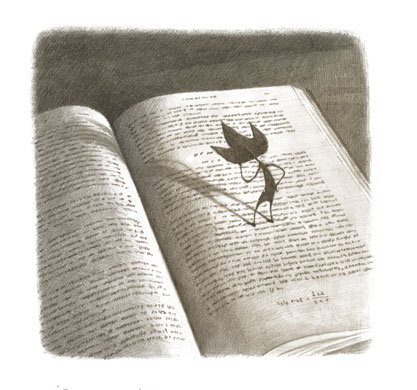
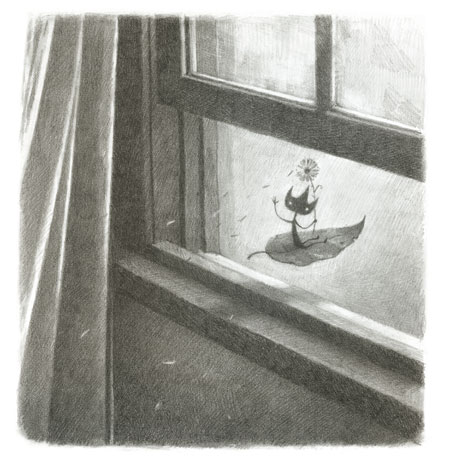
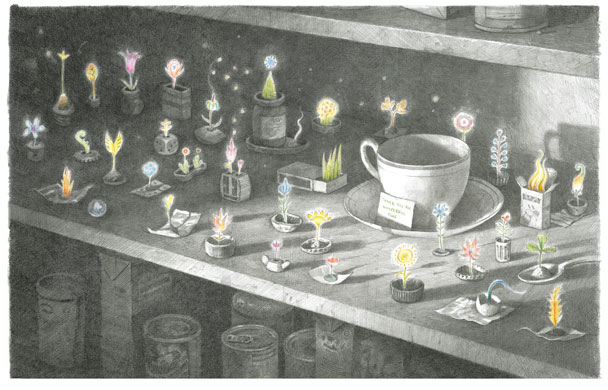
A Story in Pictures


Read all at The Guardian's gallery on Shaun Tan, the author


sábado, 9 de janeiro de 2010

sexta-feira, 8 de janeiro de 2010

A história do design editorial no livro infantil é indissociável da história do Livro assim como do percurso traçado pela literatura infanto-juvenil

O design editorial projecta a forma e determina as características funcionais, estruturais e estéticas do Livro, materializando o seu conteúdo textual e/ou imagético.

Visando a melhoria da qualidade de uso do livro, o design editorial tem vindo a considerar um número cada vez maior de intervenientes nas decisões a tomar sobre um projecto, decorrente da multidisciplinaridade em que se move, ao mesmo tempo que procura a satisfação de um conjunto de objectivos cada vez mais alargado que é definido, hierárquica e cronologicamente, para cada um dos destinatários do seu produto: leitor, consumidor, vendedor, distribuidor, editor, autor (escritor e/ ou ilustrador), complexificando todo o processo de produção.

Recuando no tempo, podemos admitir que o design gráfico, em particular o editorial, sempre existiu desde que se construiu o primeiro livro. A História foi sempre encaminhada pelas inovações técnicas e tecnológicas, que permitiram prosperar a forma e a preservação dos volumes sempre com o objectivo da melhoria e aperfeiçoamento da utilização, manuseamento e produção do livro.

Quer se tratasse de redigir sobre argila, pedra, madeira ou papiro, a forma de apresentação do livro requereu sempre a projecção da sua utilização. O "Karthés" ou "Volumen" tratava-se de um cilindro de papiro, facilmente transportável, que era desenrolado à medida que era lido. Mais tarde, o Códex, que surge com os Gregos para a compilação das leis, é aperfeiçoado pelos Romanos, nos primeiros anos da Era Cristã, utilizando-se o pergaminho - excerto de couro bovino ou de outros animais - para a construção das páginas compiladas e mais facilmente unidas por costurado do que o papiro. O livro ganha então a forma rectangular que hoje conhecemos constituindo-se como um conjunto de páginas cosidas que suportam a informação a distribuir. Toda a produção é manual e apenas acessível às elites, políticas e religiosas, que os encomendam, e não se conhece a existência de livros infantis, expressa ou implicitamente dirigidos às crianças, desta época.

Aprovado e incentivado pela Igreja, que via o objecto como um veículo das suas teses e ideologias, ao livro acresce o valor do trabalho dos monges copistas, notoriamentea partir do século XIII, que reproduziam as obras carregadas de artísticas iluminuras e recursos gráficos que decoravam os textos. É com eles que se definem as primeiras regras no que diz respeito à mancha do texto em colunas, às margens e ao trabalho tipográfico de entreletra e entrelinhamento. A sua responsabilidade era a de copiar fielmente o design do original reproduzindo os arranjos estéticos que valorizavam as obras. A velocidade de produção era obviamente baixa e o custo por unidade elevado devido ao detalhado e moroso trabalho de reprodução. As crianças continuavam esquecidas embora algumas, por ingressarem nas instituições religiosas desde cedo, tivessem acesso ao livro.

No século XIV, com a gravação do conteúdo de cada página em blocos de madeira, mergulhados em tinta, o livro conhece a impressão em papel. A juntar-se ao avanço tecnológico da invenção de Johannes Guttenberg, os tipos móveis reutilizáveis aceleram a produção do livro em série reduzindo drasticamente o seu custo. A variedade tipográfica é muito limitada mas começa a ser desenvolvida no sentido de se garantir a legibilidade. O desenho das letras é simplificado para garantir a impressão de todos os detalhes dos grafemas e para facilitar a execução e a produção dos tipos.


Os "Hornbooks", gravados em folha de couro, com origem em Inglaterra no século XV, serviam os estudos das crianças. Eram conhecidos como "Crisscross", provavelmente como uma referência à cruz de Cristo pela semelhança formal. O texto compacto não deixava espaço para ilustrações pelo que estas se encontravam normalmente gravadas no verso.


Tudo, tudo, no blogue da Pós-Graduação em Livro Infantil

Oito frases para escrever uma obra-prima


Oito frases. Menos de 350 palavras. Pouco mais de 1750 caracteres distribuídos por 48 páginas. Para escrever aquela que é considerada uma das obras-primas da literatura para crianças, Maurice Sendak precisou de um terço do texto que leitor vê neste artigo.

O segredo de "Onde Vivem Os Monstros" - porque só podia haver um - está nas 18 ilustrações, e na musicalidade, e até na forma como o texto aparece arrumado na página. Afinal, este não é um romance ou um livro de banda-desenhada; é sim um dos mais bem conseguidos álbuns de sempre, um género em que todos estes elementos concorrem para contar uma história - sem redundâncias, sublinha a coordenadora da pós-graduação em Livro Infantil da Universidade Católica, Dora Batalim.

"Ele tem um domínio perfeito do que o texto e a palavra dizem. Pode escrever pouco e dizer muitas mais coisas", reforça a professora. Depois, cada palavra tem um peso. "É uma espécie de peça musical. Curtíssima, mas com notas exactas."

Sendak terá escrito o livro para ser lido em voz alta. "Ouvi-lo em inglês é fabuloso", assegura. E até a forma como as palavras estão distribuídas pelas páginas ajuda à leitura. A viagem do protagonista Max até à terra das Coisas Selvagens conta-se numa única frase; a mancha gráfica estende-se por 10 páginas.

Ainda hoje, passados quase 50 anos do lançamento da obra, o autor recorda um confronto com os editores. Todos queriam que trocasse a palavra "quente" por "morno", referindo-se ao jantar de Max. Sendak fez finca-pé. "Morno não queima a língua. Há qualquer coisa de perigoso na palavra 'quente'", justificou à revista "Newsweek". "'Quente' são os sarilhos em que nos podemos meter. Eu ganhei."

Polémica Lançado na década de 60, "Onde Vivem os Monstros" foi uma obra revolucionária, mas também muito controversa. Chegou a ser banida de várias bibliotecas. Em 1969, o psicólogo Bruno Bettelheim exortou aos pais: mantenham os vossos filhos longe desse livro, é perigoso (mais tarde, reconheceria que nunca o lera).

Max grita com a mãe, a mãe manda-o para o quarto sem jantar. Inédito no mundo da edição, demasiado familiar para Sendak, que crescera em Brooklin numa família de imigrantes judeus polacos, com uma mãe atormentada por problemas psicológicos.

Até então, os livros eram uma forma de as crianças aprenderem regras sociais, explica Dora Batalim. "Sendak achou que serviam para mostrar aquilo que a criança sente, pensa e é, com todas as suas ambiguidades", explica. "Se não há livros de histórias a falar disto então não servem para nada porque não falam da vida real."

Sozinho no quarto, Max projecta a raiva num mundo de fantasia povoado por monstros - os tios maternos vindos da velha Polónia, que, com dentes podres e pêlos no nariz, queriam sempre um beijinho, explicaria o autor. Sozinho, resolve os seus conflitos e não deixa que a fúria tome conta dele - ou que os monstros o comam. E regressa a casa de uma viagem de um ano a tempo de jantar.


quinta-feira, 7 de janeiro de 2010