sábado, 20 de setembro de 2008
Bichaninho, bichaninho... =>)
In 1969, nearly thirty nine years ago, a lion cub was on sale in Harrods, London
São muitos anos, estou velha, ou será tão chocante como saber que há quinze anos ainda se viam ursos dançarinos na Turquia?
Já sei, nós (ainda) temos touradas, mas nós não temos a mania de que somos o motor civilizacional da Europa, oh bifes!

quarta-feira, 17 de setembro de 2008
'like suddenly being offered the superpower of your choice'

Douglas Adams's increasingly inaccurately named Hitchhiker's Guide to the Galaxy trilogy is to be extended to six titles, after Adams's widow Jane Belson sanctioned a project which will see children's author Eoin Colfer taking up the story.
And Another Thing… by Colfer, whose involvement with the project was personally requested by Belson, will be published next October by Penguin. No information has yet emerged about the plot of the novel but Hitchhiker fans will be hoping for a resurrection of much-loved characters Arthur Dent, Trillian and Ford Prefect, who were all apparently blown to smithereens at the end of the fifth novel, Mostly Harmless.
Adams himself had plans for a sixth Hitchhiker book, saying in an interview: "People have said, quite rightly, that Mostly Harmless is a very bleak book. And it was a bleak book. I would love to finish Hitchhiker on a slightly more upbeat note, so five seems to be a wrong kind of number, six is a better kind of number."
But his death in 2001, aged 49, meant the book was never written, and "legions of Hitchhiker fans were left with their hearts beating a little too quickly for all eternity," said Colfer, author of the bestselling Artemis Fowl series for children.
The proposal from the literary agency which manages Adams's estate was "quite out of the blue", said Penguin marketing and publicity director Joanna Prior. "It was something I guess [Jane Belson] had been mulling over for some time, and we jumped the minute we got the call – we could immediately see what a fantastic project this would be."
Colfer, who has been a fan of Hitchhiker since his schooldays, said being given the opportunity to continue the series was "like suddenly being offered the superpower of your choice". "For years I have been finishing this incredible story in my head and now I have the opportunity to do it in the real world," he added. "It is a gift from the gods. So, thank you Thor and Odin."
The book will "make no claims for Eoin being Douglas", according to Prior. "It's not Eoin Colfer writing as Douglas Adams, as was the case with Sebastian Faulks," she said, pointing to Penguin's successful publication of Faulks's new James Bond novel Devil May Care earlier this year. "It's absolutely about him being himself – Eoin the author, but with the cast of Hitchhiker."
Colfer himself is currently grappling with nerves over the quality of his addition to Adams' oeuvre. "I feel more pressure to perform now than I ever have with my own books, and that is why I am bloody determined that this will be the best thing I have ever written," he said. "For the first time in decades I feel the uncertainty that I last felt in my teenage years. There are people out there that really want to like this book."
Penguin hopes that Belson's choice of Colfer will bring a new generation of readers to Adams's work. "It's always a challenge when we haven't got Douglas any more – how can we introduce his writing to the next generation?" asked Prior. "There's a huge fan base out there, but this is a really exciting way of creating a new legacy."
Belson said the project had her full support. "I am delighted that Eoin Colfer has agreed to continue the Hitchhiker series. I love his books and could not think of a better person to transport Arthur, Zaphod and Marvin to pastures new," she added.
Approximately 16m copies of Hitchhiker books have been sold worldwide, according to Penguin. The "trilogy in five parts", which started with radio series The Hitchhiker's Guide to the Galaxy in 1978 and was completed with The Restaurant at the End of the Universe; Life, The Universe and Everything; So Long, and Thanks for all the Fish; and Mostly Harmless, has been translated into 35 languages.
terça-feira, 9 de setembro de 2008
O parque do Lucas é uma cama de viagem!


Quadrada e algo colorida, embora em fundo preto, mas onde cabe o maravilhoso tapete Tiny Love maravilhoso (duas vezes :)
segunda-feira, 8 de setembro de 2008


sexta-feira, 5 de setembro de 2008
10 Geeky Movies to Raise Your Kids On
In our never-ending quest to provide you the tools and knowledge to raise your kids in your own geeky image, we present you with a list of 10 geeky movies to raise your kids with. This is a starter list, and by no means comprehensive. It also skews towards the younger set because we have to lay the proper geeky foundation. As always, leave your suggestions for additional titles in the comments.
1. Star Wars: You must, MUST! I say, start your child our with Episode IV: A New Hope. Diligence is key, brothers and sisters, and while your kids will probably enjoy even the new trilogy for its grand spectacle, they must be brought into the fold the right way. Isn't it a thousand times better to fall in love with the non-verbal pluckiness of R2-D2 in New Hope, and then cheer when he pops up in Phantom Menace? I knew you'd agree.
2. Harry Potter and the Sorcerer's (Philosopher's) Stone: The Potter movies are this generation's Star Wars trilogy, and so far, ALL of them have been well-done. The first is a perfect introduction to the world, in a more kid-friendly Chris Columbus way, and makes for a great way to get your kids into all sorts of fantasy literature later. I'll also take my lumps now: I'm *not* putting LOTR on this list because I don't think it's for younger kids - too long for them, and in cases too scary and violent. It'll definitely make the second list, for your Geeky Tweens, though, so have no fear.
3. The Last Starfighter: This is the film from our youth that did the first, and maybe best, job of arguing that being good at videogames could be worthwhile in other aspects of your life (like being able to save the universe someday). They early CG was pretty darned good, too. Classic tale of the downtrodden geeky kid getting to find out they're special, and live out a wish fulfillment.
 4. My Neighbor Totoro: All Miyazaki is wonderful, with a beauty and spirit we seldom see in American-produced animation (Iron Giant counts as an exception to that statement). I chose Totoro because it's the most accessible for a child, I think (Spirited Away and Princess Mononoke are a bit too scary in parts). The imaginary friend angle appeals to every young-at-heart parent, as well. If you can get your kid in love with this, then follow up with Howl's Moving Castle, Kiki's Delivery Service, and Nausicaa.
5. Time Bandits: Another great story of wish-fulfillment for a downtrodden kid, but this one has a merry band of miscreant little-people, time-travel, Sean Connery, John Cleese, and David Warner. Plus, it sets them up for Brazil and all the Monty Python oeuvre as they get older.
1. Star Wars: You must, MUST! I say, start your child our with Episode IV: A New Hope. Diligence is key, brothers and sisters, and while your kids will probably enjoy even the new trilogy for its grand spectacle, they must be brought into the fold the right way. Isn't it a thousand times better to fall in love with the non-verbal pluckiness of R2-D2 in New Hope, and then cheer when he pops up in Phantom Menace? I knew you'd agree.
2. Harry Potter and the Sorcerer's (Philosopher's) Stone: The Potter movies are this generation's Star Wars trilogy, and so far, ALL of them have been well-done. The first is a perfect introduction to the world, in a more kid-friendly Chris Columbus way, and makes for a great way to get your kids into all sorts of fantasy literature later. I'll also take my lumps now: I'm *not* putting LOTR on this list because I don't think it's for younger kids - too long for them, and in cases too scary and violent. It'll definitely make the second list, for your Geeky Tweens, though, so have no fear.
3. The Last Starfighter: This is the film from our youth that did the first, and maybe best, job of arguing that being good at videogames could be worthwhile in other aspects of your life (like being able to save the universe someday). They early CG was pretty darned good, too. Classic tale of the downtrodden geeky kid getting to find out they're special, and live out a wish fulfillment.
 4. My Neighbor Totoro: All Miyazaki is wonderful, with a beauty and spirit we seldom see in American-produced animation (Iron Giant counts as an exception to that statement). I chose Totoro because it's the most accessible for a child, I think (Spirited Away and Princess Mononoke are a bit too scary in parts). The imaginary friend angle appeals to every young-at-heart parent, as well. If you can get your kid in love with this, then follow up with Howl's Moving Castle, Kiki's Delivery Service, and Nausicaa.
5. Time Bandits: Another great story of wish-fulfillment for a downtrodden kid, but this one has a merry band of miscreant little-people, time-travel, Sean Connery, John Cleese, and David Warner. Plus, it sets them up for Brazil and all the Monty Python oeuvre as they get older.
The Dark Crystal: The best pure-fantasy movie out there for younger kids, period. There are no human characters in the film at all (yes, I know, they're all puppets), but we still get attached to them and sucked into their world. An also-ran here would be Neverending Story, but I'd put Labyrinth in the tweens list for next time.
WarGames: You could argue for WarGames to be on the tweens list as well, but I like it here because the kids will connect with the computer angle, the being ignored by grown-ups angle. I also like the idea of starting them young with a sense of the government and military being important, but not always bad. Let's just pretend the "sequel" that's out on DVD now never happened, okay?
Chitty-Chitty Bang-Bang: The technicolor American musical in all its splendor, with Dick van Dyke at his prime, and a magical car. The breakfast machine in the beginning should inspire many a Maker, and I always revel in noticing Desmond Llewelyn (original Q in the Bond movies - this was an Ian Fleming story, after all!), and Benny Hill as the toymaker.
Goonies: The perfect geek-gang adventure story with home-made gadgets, pirates, treasure and all, this movie also helps reinforce finding and sticking to friendships. The talk about a sequel for this movie, with most or all of the original cast, really gets me excited (just like the Tr2n footage).
Back to the Future: The best way to initiate your kids into the joys of time-travel stories, and the joys of all things Christopher Lloyd. This is one of those cases where the whole series is enjoyable and family-friendly, and the great geeky repeatable dialog will keep you amused for a long time. Hello, McFly?!?!
How babies of only three months can learn to have a theory of mind
Psychologists in general, and developmental psychologists in particular, suffer from a special dilemma. All human beings have intuitive ideas about minds, including their children’s minds. Scientific psychology is measured against this intuitive psychology – and often seems either obvious or absurd as result. Both sciences, furthermore, are afflicted by anxiety about being a “soft” rather than “hard” science. In reaction to these dilemmas and anxieties, developmental psychologists often divorce their science from their lives. We say that studying children is just a means to an end – that we’re more interested in answering the deepest questions in cognitive science than in children themselves.
But all great scientists start out by being captivated by the subjects they study, and all the great developmentalists start from a sense of wonder at children’s everyday lives. Cognitive development began, after all, with Jean and Valentine Piaget’s amazingly rich observations of their own children. Parents and children live, feel, think and act together in rich, complex and enormously significant ways. How does the science of developmental psychology interact with the everyday experience of caring for children?
Charles Ferneyhough’s The Baby in the Mirror and Vasudevi Reddy’s How Infants Know Minds raise this question in different ways. Ferneyhough’s book is a memoir of his daughter’s early childhood, interspersed with information about developmental psychology. Reddy’s book is essentially academic. She explicitly argues that we should reject the idea of an objective developmental science in favour of a more engaged “second-person” approach. Both books provide exceptionally sensitive, careful and thoughtful descriptions of the everyday lives of babies, particularly the authors’ own babies. Reddy’s book is full of eloquent and informative descriptions of the playful way that even young infants tease, act coy, and generally muck about with their parents. Ferneyhough is primarily a novelist, and his book is an elegantly written, warm, thoughtful, novelistic account of his first three years with his daughter Athena.
Childhood is central to many memoirs and novels, but good descriptions of very early childhood, good stories about babies, are surprisingly rare. Perhaps it is because becoming a parent is so emotionally overwhelming that it undermines the detachment that is necessary for either literature or science. Both Reddy and, especially, Ferneyhough do a lovely job of conveying what life with a baby is like. Neither book, however, is very effective at conveying what the science of cognitive development is like.
Cognitive development, like the rest of cognitive science, relies on a general theoretical framework. That framework assumes that the mind performs computations and the brain implements them. Developmental cognitive science asks, and answers, some of the most important questions about those computations. Where do they come from? Are they innate, or the result of simple associations? Or are they derived from experience by some kind of rational inference? How much do they depend on social interaction, maturation, perception and action? Cognitive development has actually been the most cognitive branch of cognitive psychology. While most cognitive psychology asks what representations are like, or how they are stored, manipulated and used, cognitive development asks where those representations come from and how they allow us to know about the real world.
Mais no TLS
Amamentar ou Não Amamentar...

Parece que o Leite materno tem falta de Vitamina D:
Physicians have known for more than a century that exclusive breast-feeding may be associated with vitamin D deficiency and rickets, and that the condition is easily prevented and treated with inexpensive vitamin drops or cod liver oil. But doctors are reluctant to say anything that might discourage breast-feeding.
Physicians have known for more than a century that exclusive breast-feeding may be associated with vitamin D deficiency and rickets, and that the condition is easily prevented and treated with inexpensive vitamin drops or cod liver oil. But doctors are reluctant to say anything that might discourage breast-feeding.
Now some researchers are also linking vitamin D deficiency with other chronic diseases like diabetes, autoimmune disorders and even cancer, and there have been calls to include blood tests of vitamin D levels in routine checkups.
“I completely support breast-feeding, and I think breast milk is the perfect food, and the healthiest way to nourish an infant,” said Dr. Catherine M. Gordon, director of the bone health program at Children’s Hospital Boston and an author of several studies on vitamin D deficiency, including Aleanie’s case.
“However,” Dr. Gordon continued, “we’re finding so many mothers are vitamin D deficient themselves that the milk is therefore deficient, so many babies can’t keep their levels up. They may start their lives vitamin D deficient, and then all they’re getting is vitamin D deficient breast milk.”
Mais no NY Times :|
Dar de Mamar Dói:
Breast or bottle? That simple question is always certain to generate a lively debate among women about the pros and cons of breast-feeding.
That debate has continued on the Well blog this week , with hundreds of readers talking about a new report from Brigham Young University that shows while three out of four mothers start breast-feeding, only 36 percent of them continue for at least six months.
I spoke with study lead author Renata Forste, professor in department of sociology at Brigham Young University, about why so many women decide to stop nursing.
“A lot of women don’t understand the discomfort,” says Dr. Forste. “They aren’t necessarily prepared for that. There is sort of an expectation that it’s a very natural process — bring the baby to your breast and it’s very simple. But it’s not. I think it’s much more complicated than that. It requires a lot more support.”
Dr. Forste also notes that a generation of women was discouraged from breast-feeding in the 1960s and 1970s. Even though the pendulum has swung back, and women are encouraged to breast-feed, the support system necessary to make it happen hasn’t followed.
“We’re also a culture that is focused much more on bottle-feeding in terms of support networks,” says Dr. Forste. “A lot of women have to return to work. They don’t have the support in the work environment so they can continue to breast-feed. If you don’t have a support network around you, if you don’t have a partner who is supportive, it’s much more difficult to continue.”
NY Times, 237 comentários 237, no less :)
domingo, 31 de agosto de 2008
Container Syndrome
Babies are put at risk when they are left in devices like strollers, car seats, and swings too long-- Some researchers call it "container syndrome"
At your convenience with just the click of a button, you can carry your baby around and then simply place your baby into the car seat. But leaving them for extended amounts of time? Well it could lead to some serious problems. There's considerable pressure that is exerted on the back of the head that can lead to brain injury.
In fact, a published study from the Journal of Pediatrics says, 22-percent of babies who slept on their backs had some delays in motor skills such as sitting up, crawling, rolling over and climbing stairs. It also can even cause speech delay. Flattened skulls can also result and doctors advise parents to put babies on their back only when they sleep. One mother believes she knows the answer to preventing her baby from getting a flattened skull. Joanna Whitlow says, "Hold your baby. Babies like to be held."
http://www.deserttelevision.com/Global/story.asp?S=8882142&nav=menu412_2
At your convenience with just the click of a button, you can carry your baby around and then simply place your baby into the car seat. But leaving them for extended amounts of time? Well it could lead to some serious problems. There's considerable pressure that is exerted on the back of the head that can lead to brain injury.
In fact, a published study from the Journal of Pediatrics says, 22-percent of babies who slept on their backs had some delays in motor skills such as sitting up, crawling, rolling over and climbing stairs. It also can even cause speech delay. Flattened skulls can also result and doctors advise parents to put babies on their back only when they sleep. One mother believes she knows the answer to preventing her baby from getting a flattened skull. Joanna Whitlow says, "Hold your baby. Babies like to be held."
http://www.deserttelevision.com/Global/story.asp?S=8882142&nav=menu412_2
terça-feira, 26 de agosto de 2008
Estes Americanos...
Kids treated like Smokers on Planes
Last month a mom traveling with four kids, including an autistic son and a daughter with cerebral palsy, were detained in Phoenix and not permitted to board their connecting flight to Seattle because her kids were unruly on the previous flight.
However you feel about that incident, a recent study says that 85% of those polled believe that airlines should have a section reserved for adults traveling with children. When I first heard this statistic, I was initially indignant. Our society calls for tolerance of all types of people. What about kids? Should they be segregated like smokers, their cries the equivalent of carcinogenic second-hand smoke? The quality of air travel has declined enough without being forced to sit every flight in the back of the plane next to the smelly bathrooms.
Besides, one of the things I love about air travel is being mixed in with business travelers, teens, and senior citizens. Not being segregated is good for kids. How else will they learn to behave in "mixed" company? It's the same problem I have with dining out. If kids don't do it they'll never know. Ditto for restaurants that limit kid's menu options to fried finger foods that never require them to expand their palate or use a knife. At some point we have to civilize them.
Rachel Campos-Duffy for ParentDish
Is Parmalat really Milk?
So this is a weird one. When we travel we always bring along Parmalat for our toddler. It's much easier, obviously to transport and deal with on the road as it's vacuum-sealed and doesn't need to be refrigerated (until it's opened of course). Upon a recent trip to Central Park Zoo, a friend said someone had once told her that Parmalat isn't really milk.
The friend's acquaintance who made this claim was vegetarian (as is our family) and my friend was actually commenting on how people make such strange distinctions. The acquaintance refused to drink Parmalat because it wasn't "real milk." My understanding is that Parmalat is, indeed, real milk, it's just packaged differently, and perhaps treated a little differently to ensure it's safe to be packaged in a way that allows it to not need to be refrigerated (until opened).
So what is the deal? A recent trip to the Parmalat website upped my curiosity factor. They refer to the milk they distribute as "milk products." They also call it "ESL milk" which means Extended Shelf Life--not English as a Second Language. With regard to the whole vegetarian thing, while we don't necessarily eat meat, a good deal of us do drink milk--Parmalat included. Vegans don't do any animal products whatsoever, but quite a few vegetarians do.
Jennifer Jordan for ParentDish
Abandoning your Children now Legal in Nebraska
Every state in the U.S. now has what is called a "safe haven" law. Intended to prevent unwanted babies from being abandoned just any old place, the law allows desperate parents to leave their babies at hospitals with no questions asked.Until recently, Nebraska was the only state without a safe haven law. But about a month ago, they passed their own version and added a unique twist. Unlike other states who are trying to protect newborn babies with the law, Nebraska wants to protect all unwanted children and therefore allows a minor of any age to be abandoned at a safe haven hospital. What's more, the law doesn't even specify that it must be a parent who abandons the child. Which means the babysitter, the neighbor or anyone else can surrender custody of a child.
Adam Pertman, a frequent critic of safe-haven laws is especially critical of this one. "Whether the kid is disabled or unruly or just being a hormonal teenager, the state is saying: 'Hey, we have a really easy option for you,'" he says.
Sandy Maple for ParentDish
Jeez, digo eu...
terça-feira, 19 de agosto de 2008
Aos 6 Meses / At 6 Months Old
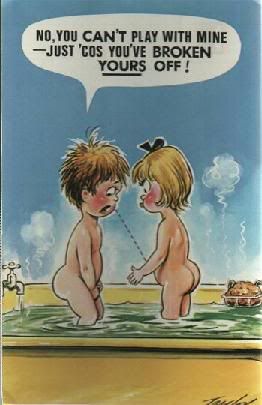
O Daniel Lucas brinca com a pilinha ;)
Daniel Lucas plays with his willy ;)
segunda-feira, 18 de agosto de 2008

terça-feira, 12 de agosto de 2008
Ornitorrincos Bebés!!
Check these morsels out. They've got a combination of velvety Sharpei rolls, evil webbed otter paws, and perfectly machined drilled nostril holes.
Snork-snork [double nostril-hole sniffing sound]

Cute Overload, of course ;)
segunda-feira, 4 de agosto de 2008


sábado, 2 de agosto de 2008

terça-feira, 22 de julho de 2008

sexta-feira, 18 de julho de 2008
Ciência Viva no Verão

BIOLOGIA:
Viagem Botânica à Sintra Romântica
A Floresta Relíquia da Serra de Sintra
GEOLOGIA:
As Pedras Preciosas no Patriarcado de Lisboa
As Pedras Preciosas no Museu Nacional de Arte Antiga
As Pedras Preciosas no Museu Calouste Gulbenkian
As Pedras Preciosas no Museu do Oriente
Tesouros Gemológicos do Museu Nacional de História Natural
quinta-feira, 17 de julho de 2008
Conceptions

A blog by The New Atlantis staff.
Part One and Part Two of an Interview with Dr. John D. Gordon, author of
domingo, 13 de julho de 2008

terça-feira, 17 de junho de 2008
As Tuas Músicas e Todos os Nomes


Dizem-nos que, em 2007, o nome mais pedido foi Inês, que destronou Beatriz, a rainha de 2006.
João e Maria também figuram no top dos nomes mais pedidos.
Subscrever:
Mensagens (Atom)
