quarta-feira, 30 de dezembro de 2009

As mãos também lêem


À mesa, diz-se que os olhos também comem. Para Robert Sabuda, um dos mais conhecidos autores de pop-up books do mundo, essa máxima inverte-se numa troca anatómico-oftalmológica: "As mãos também lêem."

Os livros de Robert, adaptações de clássicos como "Alice no País das Maravilhas" e "Peter Pan", ou livros pedagógicos como a colecção "Enciclopédia Pré-Histórica", apelam à criança que há dentro de cada um de nós e à criança que há dentro de cada criança. São livros com vários livros (e animais, heróis e vilões) lá dentro, obras de arte feitas à mão, peças de artesanato que demoram um ano a serem produzidas. A Robert Sabuda junta-se frequentemente outro artista do papel, Matthew Reinhart. Ambos são frequentemente interpelados com uma pergunta: "Como é que isso é possível?"

"É magia sem electricidade", lembra Reinhart, "quando alguém vira uma página dos nossos livros e se interroga como aquilo foi feito está a ter a mesma reacção de quando vê um truque de ilusionismo". O segredo aqui é simples: papel, tesoura e cola. Isso e um par (às vezes mais) de mãos muito talentosas.

Nos livros pop-up não há trabalho de máquinas ou computadores durante a maior parte do processo. Toda a montagem é feita à mão, o que justifica tanto o preço elevado (nunca menos de 30 euros) como a escassez de títulos neste formato.

Trabalhos manuais
Engenharia do papel é o nome de um mestrado da Universidade da Beira Interior. A descrição do site da faculdade é encorajadora: "A formação multidisciplinar fornece as competências para a concepção e desenvolvimento de novos produtos e processos, bem como para a condução e optimização de processos de transformação existentes." Fascinante. Mas, verdade seja dita, nem toda a gente gosta de passar o resto da vida a optimizar processos de transformação existentes. Não é isso, pelo menos, que faz Andrew Baron um dos engenheiros de papel por trás de mais de uma dezena de livros pop-up - e aqui a expressão "engenheiro do papel" é usada segundo a designação americana de quem conta histórias com dobragens e colagens.

"Sou responsável pelo pop, na expressão pop-up", resume. É Andrew quem constrói os sistemas de alavancas, aparentemente simples, que dão vida ao livros. "Tenho de olhar para as ilustrações e ver o que posso movimentar ali e como", explica ao i por e-mail. Tem um emprego raro - "como eu devem haver uns 12 no mundo" - mas gaba-se que não lhe falta trabalho. Ocupação que tem duas grandes recompensas: "A reacção de miúdos e graúdos", em primeiro lugar, "e a oportunidade de trabalhar numa das últimas indústrias no mundo em que o trabalho é 100% manual".

Livros como "Alice no País das Maravilhas" interpretados por Robert Sabuda voam das prateleiras das livrarias sempre que se aproxima o Natal. Numa altura em que se fala tanto de suportes digitais de leitura (como o Kindle ou o Sony Reader) e se questiona o futuro dos livros em papel, que lugar têm estes estranhos objectos - uma mistura de literatura com banda desenhada, escultura, cenografia, origami e arquitectura?

"Ter um livro destes nas mãos é um prazer enorme, sem comparação no mundo digital", assinala Matthew Reinhart. "São objectos de colecção, peças únicas de trabalhos manuais", aponta Robert Sabuda.

Pilhagem ao economato
"A minha mãe era secretária na Ford Motor Company, no Michigan, e levava para casa material de escritório. Comecei a fazer recortes de papel porque não tinha muitos brinquedos", recorda Sabuda. Motivado pela professora primária, foi estudar para uma escola de artes, o Pratts Institute, em Nova Iorque.

Anos mais tarde, como ilustrador, começou por ganhar dinheiro a desenhar para livros de colorir infantis - o grau zero da carreira de um contador de histórias. Só depois do primeiro livro para crianças, no final dos anos 80, a vida profissional de Robert Sabuda entrou em modo bola-de-neve. Mas o seu verdadeiro interesse (ou vocação), os livros com animações tridimensionais, começou anos mais tarde, com a publicação do aclamado "Tutankhamen's Gift", em 1994.

Legado
Mas este texto não estaria a ser escrito agora se não fosse Vojtech Kubasta. Foram os livros deste arquitecto checo que fizeram Sabuda começar a fazer ilustrações 3D. E foram os seus castelos e cavaleiros a saltar das páginas que fizeram Waldo Hunt, a meio do século passado, salvar os pop-up books do esquecimento.

Na história dos pop-up books há um AW, DW (antes de Waldo, depois de Waldo). Antes deste publicitário pegar nestes livros-brinquedo esquecidos, os pop up eram velharias à venda em lojas de curiosidades. Uma arte perdida por ser muito trabalhosa e pouco rentável, conheceu nas mãos de Waldo uma segunda vida. Criou a editora Intervisual Books depois de encontrar livros de Kubasta numa velha livraria e dinamizou a produção e distribuição destes livros raros - que surgiram na idade média e conheceram o seu auge na época vitoriana, altura em que contavam histórias de fadas e dragões em edições luxuosas e personalizadas.

O coração de Waldo Hunt deixou de bater a 26 de Novembro deste ano, mas o seu legado sobrevive no trabalho de homens como Robert Sabuda. Depois da sua morte, o autor disse que antes de Waldo os livros para crianças eram "uma espécie de enteado das editoras" e os pop-up eram "filhos desses enteados". E hoje? "São objectos que os pais compram para eles próprios com a justificação de que é para oferecer aos filhos."


sexta-feira, 25 de dezembro de 2009

A nossa árvore de Natal e o nosso presépio!


Árvore decorada com enfeites especiais feitos pela Crafty Mood, o que resultou num misto de sagrado e profano ;), Presépio onde um dos Reis Magos já perdeu a cabeça, mas os mémés foram um sucesso junto do chicha ;)

segunda-feira, 21 de dezembro de 2009

quinta-feira, 17 de dezembro de 2009

Prince of Egypt gets the Reel History treatment ;)

According to the Book of Exodus, the Hebrew people were enslaved in Egypt by a pharaoh.
There is historical debate over whether Exodus records history, myth, or a mixture of both.

Family

Scene from The Prince of Egypt (1998) 
To save her son from an Egyptian cull of Hebrew baby boys, Moses's mother seals him in a basket and floats him off down the Nile. The pharaoh's queen plucks him out of the waters and adopts him. The film's story bears a glancing similarity to the legend of Sargon of Akkad, a Sumerian king of the 24th century BC (around a millennium before Moses). Sargon was sealed in a basket by his mother and floated off down the Euphrates, arrived at the palace of the goddess Ishtar, was adopted, and grew up to become king. Of course, this doesn't prove it's a myth.

Class

Scene from The Prince of Egypt (1998) 
Moses is brought up thinking he's an Egyptian. This isn't obvious from Exodus, but it does create a satisfying character arc for him, going from spoilt brat to a leader of humanity. The film invents a daredevil race through the city, with Moses and his brother Rameses sending slaves scuttling into doorways as they gallop around in their shiny gold chariots, guffawing with princely entitlement. At one point, they even knock the nose off the Great Sphinx of Giza, which appears to be under construction. In real life, the Sphinx was built at around the time of Sargon of Akkad. Its nose probably wasn't knocked off until around three millennia after Moses, possibly by British or French troops.

Slavery

Scene from The Prince of Egypt (1998) 
Moses has a dream which reveals he is really a Hebrew. This isn't in Exodus either, but it looks fantastic on film, told through a beautiful piece of animation based on Egyptian frescoes. The ancient Egyptians may have been portrayed in the Bible as a bunch of imperialist slave-driving genocidal maniacs, but they really did have a delightful artistic sensibility. In Exodus, Moses murders an Egyptian beating a Hebrew slave and hides his body in the sand. In the film, it's more of an accident. It's not the only time Prince of Egypt sanitises the biblical story. Admittedly, it's hard to see how you'd get Exodus 4:24-26 into a kids' film without sending the entire audience into permanent psychological trauma.

Disease

Pharaoh won't free the slaves, so God sends plagues. There are lice, locusts, frogs, hail (upgraded dramatically to massive bolts of fire plummeting out of the sky), dead cows, boils, and a new and horrifying 11th plague of people bursting into song. Or maybe that's just because this is a musical. As is the Book of Exodus: there's a song in chapter 15. The plagues were not recorded in Egyptian texts, but this doesn't mean they didn't happen. Egyptian royal inscriptions tended to stick to the positive stories.

Escape

Scene from The Prince of Egypt (1998) 
Moses leads the Hebrews to the Red Sea, which whooshes back to allow them through. Again, it's superbly done – the shadow of a whale shark looming through the parted sea is a nice touch – but not particularly accurate. Scholars have pointed out that the Hebrew text of Exodus refers not to the Red Sea but to yam sûf, the "Reed Sea", possibly a marsh or lake. Unlikely, therefore, to accommodate a whale shark.

Interpretation

There's a triumphal final shot of Moses's face as he comes down from the mountain with the 10 commandments. In Exodus, after meeting God, Moses's face radiated light, forcing him to wear a veil. Owing to another mistranslation, "radiated light" appeared in the Latin Bible for centuries as "grew horns". There's even a statue of Moses by Michelangelo complete with a lovely set of horns. Disappointingly, the film's Moses has a face that is neither glowing nor horned. There's a bit of light spiralling around half-heartedly behind him, but this won't do at all.

Verdict

Even assuming that the Book of Exodus is a reliable historical source, Prince of Egypt takes some major liberties. Nonetheless, it's a stunning film.

Guardian's Reel History column

quarta-feira, 16 de dezembro de 2009

A revista Malasartes


passou da Campo das Letras para a Porto Editora, mas não se consegue encontrar à venda em lado nenhum (a vida não é só o mundo online, homessa!)


Kids Movies That Won't Drive You Crazy


The Princess Bride
The Incredibles
Elf
The Goonies
The Muppet Movie
Young Sherlock Holmes
Sleeping Beauty
and many more

quarta-feira, 9 de dezembro de 2009

LEGO - Árvore de Natal


Jakarta, Indonesia (Telegraph gallery)

sexta-feira, 4 de dezembro de 2009

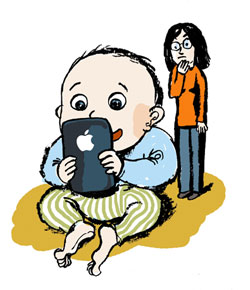
The iPhone is the ultimate kid-pacification device


Move over, patio man. My new favorite demographic is the iPhone mom. A recent survey from a mobile-advertising company says that iPhone moms make up 25 percent of iPhone users and rely on their phone for such things as: scheduling! Store locating! Downloading coupons! All very nice, but the key stat is that 59 percent of these moms let their children use the phone. That leaves me wondering what's up with the other 41 percent. The iPhone is the ultimate kid-pacification device.
The iPhone moms (and dads) walk a fine line when they hand over their phone. (In mobile-scholarship circles, this behavior is known as the "pass-back.") Typically, iPhone parents are the kind who limit TV and "screen time" and would cringe at buying a Nintendo DS for a 4-year-old. This is the wooden-toy crowd, who plan to sign up Sophie for Suzuki any day now. Yet, they—OK, me—really love their iPhones. So sleek, so intuitive—and isn't it incredible that even a 1-year-old can figure out how to use it?

(Illustration by Robert Neubecker)


My 1-year-old also likes to look at photos on the iPhone. What the video above doesn't show is how a youngster will get frustrated and throw the phone, or how he'll put it in his mouth and drool on it, or smush cookies into the charging port and fry the whole motherboard. Even better: how he'll use his cute little fingers to get into your e-mail and forward messages to your co-workers.
I salute the Apple usability team for creating an interface that a toddler can intuit, but how about a "Kid Mode" in the next software update? It would disable e-mail, text messaging, the actual phone, and YouTube. And maybe the home button, when you're using an app. (Yes, the iPhone parent will still need a way to quit apps. When in Kid Mode™, turning the ringer on or off shall act as the home button.) Isn't it in your best interest to foster a new generation of iKids?
The beauty of the iPhone is how it can be configured to balance the need to entertain a restless child with the guilt you feel for wanting a few minutes of peace. If the situation calls for going to DEFCON 1, simply load up the iPhone with Wall-E, Paddington Bear, Backyardigans, and Cars. You may never see your child or your phone again.
Most parents try to walk a more subtle, self-serving path: seeking out "educational" apps. Developers are on to us—there is a lot of kiddie crap lurking in the iTunes store. You pay 99 cents for some "Farm" app that turns out to be six stock photographs and a much too realistic pig sound that makes your 1-year-old cry. The best apps should be aesthetically pleasing, easy to use, occupy your kid (but not in a glazed-eyeball way), and not so addicting that you start playing them yourself—every free moment, late at night, when you should be getting some sleep.
That's what happened to me with SlotZ Racer, a slot-car racing game. I thought it would be good for my 4-year-old boy because it involves cars and the controls are simple: Press the screen to accelerate, don't press the screen to slow down. He loved it. I loved it, too. I missed my subway stop because I was at a crucial moment in the National Cup Championship, "a 6 race series to find the top racer in the country."
SlotZ Racer is perhaps too much fun and should be used only for no-escape moments, such as when you're working at home and need reasonable silence during a phone call. Other apps that fall into this category include Skee-Ball and Monster Trucks Nitro. Another downside of these apps—let's call them games—is that they make your iPhone very attractive, and pretty soon your kid is hiding behind the couch and you're saying things like, "Give Daddy his phone back or he will delete all of the games."
So the ideal app should be enjoyable but carry a faint whiff of the classroom. I have friends who swear by PopMath and Wordex. My own go-to app has been the matching game AniMatch—it has clever animal icons and funny sounds, and matching is a challenge that doesn't require sophisticated manipulation of the phone. The boys will even play it together. As in all things, the 1-year-old is easier to amuse. He's content with Wheels on the Bus and the pleasant storybook pastels of Peekaboo Barn.
For picking new apps, I've found that the best way is to go by studio. Freeverse makes both SlotZ Racer and Skee-Ball, Night & Day has Peekaboo Barn and Peekaboo Wild, Duck Duck Moose has an excellent Old MacDonald, and so on. But you can also see that my list of apps is utterly incomplete. I have boys, so I've heard only rumors of girls dedicating themselves to the care of an iHusky in iPuppyWorld or guiding fairies through the sky. And I don't know what interests older kids who have reached Rubik's Cube age.

Send me your favorite apps at michaelagger1@gmail.com, and I'll compile a master list. If you have time, please specify the best age range for the app and where it falls on the guilt/virtue scale, with 1 being "Might as well drop them off at an arcade" and 10 being "My iPhone is a portable Montessori classroom." Look for the results next week. If we work together, we need never be active parents ever again.

Where the Wild Things Are - Literary Tattoos


segunda-feira, 30 de novembro de 2009

Raising Vegetarian Children


How do you explain meat to hildren? If you don’t eat it, are you raising your children as vegetarians, too?

Surrounded as we are this week by yams and brussels sprouts and cranberries and turkey (and those mini hot dogs that have somehow also become a tradition at our family’s Thanksgiving table), the moment seems right to write about vegetarian parents and children.

My two sisters-in-law are vegetarians, along with my husband’s first cousin, which means there are a lot of vegetables included in our yearly feast. As it happens, none of the parents in this group expect that their children will refrain from meat, allowing them to make that decision for themselves when they get older.

Many vegetarian parents do expect their children to eat as they eat, though, and The Los Angeles Times ran a story earlier this month about the challenges of raising vegetarian kids. The writer, Emily Sohn, points out that it becomes tougher as the children get older because:

Resentment can build up if foods are forbidden completely. School-age children in particular can become anxious when anything about them is different from their peers, including what they eat for lunch.

The experts she quotes strongly suggest that parents allow some leeway, such as “allowing kids to eat meat at friends’ houses or restaurants or packing snacks and lunches that look like chicken nuggets or hot dogs but are actually made from soy or wheat gluten.”

But while compromise works for some parents, it is not in the plan for Cindy Waxer, who wrote an essay for Babble recently about raising her 3-year-old on a vegetarian “cruelty free” diet. Her problem so far, she says, is partly the temptation presented by other children. (“What sort of chance does marinated tofu and mango-flecked quinoa stand against deep-fried chicken fingers?” she asks.)

Most of the challenge, though, comes from adults. Her husband, “a committed carnivore, agreed to go along for the ride, sanctioning Chloe’s meat-free existence on the condition that she be free to switch to the dark side if the urge arose.” But others in her child’s life have been less accommodating:

When I informed Chloe’s preschool teacher the very first day of class that my daughter is a strict vegetarian, she snapped her gum and responded: “Oh, O.K. But she can still eat chicken and fish, right?” I almost fainted.

And, she continues:

I spend my days fielding e-mails from my father containing links to articles entitled, “Iron Deficiency Anemia.” Even the normally stone-cold nurse at our pediatrician’s office burst into gales of laughter when a routine check-up revealed that Chloe is a die-hard vegetarian — as if it were a role reserved for hemp-wearing, patchouli-loving adolescents.

The complications are not only faced by parents who don’t eat meat, of course, but also by those who do. A reader, Erika Edwards, sees one of those complications looming on her parenting horizon. In an e-mail message she explains:

My son is 17 months old and loves farm animals. Last night, he was eating chicken, and I thought: “I wonder when he’s going to figure out that the chicken he is eating is the same chicken that he sees in his books, at the farms and petting areas that we visit, etc.? I wonder how he will react? And I wonder what we will do about it?”

How do you explain meat to children? If you eat it, what’s your answer when questioned by your animal-loving kids? And if you don’t, are you raising your children as vegetarians, too?

112 comments as of now ;) The NYT. Illustration by Barry Falls

domingo, 29 de novembro de 2009

quarta-feira, 25 de novembro de 2009

Rules.

  1. 1 - “Anything that is in the world when you’re born is normal and ordinary and is just a natural part of the way the world works.”
  2. 2 - “Anything that’s invented between when you’re 15 and 35 is new and exciting and revolutionary and you can probably get a career in it.”
  3. 3 - “Anything invented after you’re 35 is against the natural order of things.”
Douglas Adams

segunda-feira, 23 de novembro de 2009

The Story and Storytelling Museum, in Oxford


From Lewis Carroll's Wonderland to JRR Tolkien's Middle-earth, CS Lewis's Narnia and the parallel universes of Philip Pullman's His Dark Materials, Oxford has played host to some of the UK's most enduring literary creations. Now a £2.5m donation from an anonymous private benefactor means the first steps have been taken towards the creation of a museum dedicated to storytelling in the city.
The Story Museum has existed online for the past four years, holding events across Oxfordshire and running storytelling pilots in schools, but the donation enables it to start constructing a permanent home in Oxford. It has just signed a lease on Rochester House, a Victorian building a stone's throw from Christ Church College – where many scenes in the Harry Potter movies are filmed – on Pembroke Street. It now needs to raise a further £11m to transform the building into a museum, which will aim to attract 100,000 visitors a year when it opens in 2014.
Children will be able to listen to stories at the museum, to "walk through" them, to create stories of their own and to "open windows and go through doorways into other worlds", according to the team behind the museum, described as a cathedral to the children's story by trustee and children's publisher David Fickling.
"Dreams do come true: we are absolutely delighted to have a real home at last," said the museum's director Kim Pickin. "Rochester House has its roots in the Victorian era, when Oxford began producing children's stories that are known and loved across the world. Lewis Carroll himself would have known the building." Spokesperson Cath Nightingale said the donor wished to remain anonymous.
Pullman, who lives in Oxford and set his bestselling fantasy trilogy His Dark Materials in two different versions of the city, is a patron for the museum, along with fellow former children's laureates Michael Morpurgo and Jacqueline Wilson. "The Story Museum will be a wonderful gift from Oxford, where so many stories have begun, to the whole world," Pullman said. "The whole atmosphere of the city is rich with fantasy. Indeed, the very idea of having a museum devoted to story is itself such a fantastical notion than no other city in the world could have given birth to it."
Carroll wrote his Alice books in Oxford in the 19th century, Tolkien and Lewis would meet to discuss their work in the city's Eagle and Child pub in the 1930s and 40s, and Kenneth Grahame wrote The Wind in the Willows in Oxfordshire. "There must be something in the waters of the Isis that gets into the system of Oxford residents, magically causing them to think of and bring to life unforgettable characters and plots," said Oxfordshire-based children's author Mary Hoffman.
Oxford resident and Duncton Wood author William Horwood said there was "clearly something going on in Oxford which doesn't happen in other cities". "From where I'm sitting at this moment I've got within a radius of less than two miles Kenneth Grahame, Charles Dodgson [Carroll], Tolkien, Philip Pullman and CS Lewis," he said. "There is a literary tradition associated with Oxford going back to medieval times. People read here. The spirit of the word is here. Also there's the fact that the colleges are basically monastic institutions – you've got corridors within corridors, staircases within staircases, doors which open onto magical gardens. It's hardly surprising that something like Alice in Wonderland came straight out of Oxford."
The museum's team is now planning a feasibility study to establish how to create the Story Museum, and is also putting together a "major public campaign" for 2010 to raise the £11m it needs if it is to open by 2014, in time for Oxford's bid to become Unesco's World Book Capital that year.

sexta-feira, 20 de novembro de 2009

quinta-feira, 19 de novembro de 2009

If only...

The Pet Dragon, by Christoph Niemann - como é possível um talento destes?


Um Livro sobre Livrinhos ;) Illustrated Children’s Books


Illustrated Children’s Books is a detailed look into the design and stories of children’s books, focusing on the well-known illustrators and characters that have influenced readers of all ages.
Illustrated Children’s Book goes back and visits the history of children’s books, looking at the design and characters of these well loved tales. It takes us on a visual journey of the development of children’s illustrations throughout the ages, the ‘notion of childhood’, historical facts and the design and illustration of these memorable books. Includes a foreword by the current Children's Laureate Anthony Browne.
From classics such as John Tenniel’s Alice in Wonderland and Winnie the Pooh, to well-known illustrators such as Quentin Blake, this book explores the cover design, character illustration and interiors of these well-loved stories. With commentary from some of the most renowned illustrators of the day, the book examines the iconic design of children’s illustrated storytelling and provides background information on the authors and illustrators.
Illustrated Children’s Books features perennial favourites such as Dr Seuss, Miffy, Eric Carle’s The Hungry Caterpillar, Maurice Sendak’s Where the Wild Things Are as well as recent successes such as Oliver Jeffers’ The Incredible Book Eating Boy.
With essays from Peter Hunt and Lisa Sainsbury. Peter Hunt is the Professor Emeritus in Children’s Literature at Cardiff University and awarded the International Brothers Grimm Award for services to children’s literature in 2003. Lisa Sainsbury is based at the National Centre for Research in Children’s Literature at Roehampton University.

segunda-feira, 16 de novembro de 2009