
sexta-feira, 4 de abril de 2008

terça-feira, 1 de abril de 2008


domingo, 30 de março de 2008
The art of having a baby

One spring morning a few years ago - well five, in fact: one never forgets such things - a postcard dropped through my door. It showed the Madonna del Parto by Piero della Francesca, a painting I thought I knew well. You probably know it too, at least from reproductions, the original being on display in a former village school in Tuscany. It shows two angels drawing back the curtains of a tent-like pavilion to reveal a Madonna with her eyes gently lowered: a column of calmness, beautiful in blue, one of Piero's magnificently still, silent figures.
I did a double-take. I had always thought the Madonna was supposed to be pregnant - she has one hand to her waist as if easing the weight, and the other just below her breast where a seam in her overdress has been unstitched, as if her clothes were growing too tight. But I wondered, suddenly, whether she was not pregnant at all, just gesturing at a potential pregnancy, representing a mystical future she could only imagine. Like so much Christian art, perhaps the Madonna was only a symbol; or worse, centuries of people looking at the picture had mistaken the bulk of her robes for a gently swelling belly. After all, anyone who thought that Arnolfini's wife was pregnant in Jan Van Eyck's famous painting had only fairly recently been told to think again. Costume historians had established, once and for all, that the yards of green cloth she holds swagged up to her waist are not a sign of fertility, just Flemish high fashion of the 15th century.
I know exactly why I had this brief crisis of faith in Piero's mysterious painting. I had just believed - hoped - that I was pregnant: pregnant again after the loss of a baby. It was inconceivable to me (and inconceivable is, alas, the vicious word that always springs to mind in these circumstances) that I was not, after all, pregnant; or at least not very pregnant. They call it a chemical pregnancy, as if it existed only in a science laboratory and not in the hearts of the parents, and it is generally over within weeks. I found I could not look at paintings or sculptures of pregnant women at all at that time without wondering whether they were really, conclusively pregnant.
We need images, quite apart from anything else, where we have no words. The postcard was an encouragement from a friend who couldn't possibly have guessed how bad the timing would be. Grateful as I am, it's not actually the painting I would choose in any case. I don't know that pregnancy per se is what one wants to see when struggling through the sunless corridor of infertility, any more than photographs of other people's longed-for babies on the walls of IVF clinics.
But how is an artist to represent fertility when it is an unknown quantity - an entirely invisible state? Nobody knows who has it and who doesn't, at least from the outside. In Piero's day, the only manifestation of fertility would have been pregnancy itself; the only proof for the purposes of art the growing belly or - to use an atrocious but common fertility clinic phrase - a 'take-home baby'. The first proof of it nowadays, oddly enough, is still graphic: that notorious double blue line on the test, although even this is not quite a proof. I have seen lines so faint you could barely make them out by the light of 100 suns, gone ahead and celebrated, and then seen them vanish in the very next test.
Fertility in art is generalised, if I may so generalise. It is an attribute in search of a body. It is a ripe bosom and child-bearing hips, or a healthy young nude with an inviting smile, or a woman in some frieze bearing a basket of apples or corn. It is plentiful Ceres, Roman goddess of harvest and motherly love (a concept, you notice, not a human being) or her Greek counterpart Demeter, scattering seeds, her name apparently meaning distribution-mother. It is, I am sorry to say, the figure made 25,000 years age by an anonymous man in Austria, who picked up a piece of limestone and carved it into a nude woman with outsize breasts and Zeppelin thighs (but no face of course), that posterity has laughably dubbed the Venus of Willendorf.
Fertility in art is availability plus abundance, with an optional lusty wink. It is, in short, total embarrassment. And an embarrassment not even restricted to the depiction of women, let it be freely said. Who, coming across it in the National Gallery, hasn't squirmed in front of David Tenier's rude personification of Spring as a gardener carrying an upright young tree in a pot before him: fertility as a huge comedy phallus.
And its opposite: infertility? No sight gags there; no sights at all. I can hardly summon even one image to mind. Barren land, seeds cast on stony ground, the empty vessel, the drought - Biblical metaphors, all, that speak irrefutably for themselves without need of further illustration.
Perhaps one should not be surprised that art has trouble representing fertility except as animal, vegetable or allegory. For fertility is a curious, secret thing, something unknown, invisible, unmeasurable until, like so many of us, you end up in a clinic being told that you do not have very much of it.
Fertility is a potential, pure and simple, abstract. But art has always had to invent images for states of being that can't be discerned in the visible world. Depression, for instance: think of Dürer's Melancolia, that large woman sitting heavily on her stool, head in hand, face like thunder, surrounded by a sizeable junk yard of allegorical bric-a-brac from which she can't escape and in which nothing is clear, uplifting, bright or ever likely to improve. Or Munch's Scream - that peculiar worm-like figure clapping its hands to its face while the air around him reverberates with a long howl of psychic pain. Not for nothing is it the most instantly recognisable image, I'd say, in modern art. If you want something to give you courage, look at Delacroix's deathless Liberty at the Barricades, best foot forward and that brave high arm leading the citizens onwards. If you want to stop arguing about who's turn it is to do something dull but needful about the house, look at Rembrandt's Jewish Bride, the tenderest image of harmonious love and the pleasures of marital peace imaginable.
We should use art. It's a necessity, not a luxury for connoisseurs and collectors. And what painter ever made a picture just to be seen by one or two viewers? Our great public collections are for our great mutual benefit: to be plundered for comfort, new ideas, moral lessons, tales of the lives of others and, like music, for inspiration and encouragement.
During the years I have longed, beyond words, for a child, I have often gone to the National Gallery for inspiration. But there are only one or two paintings of women with child (none of them, incidentally, the Virgin Mary: Piero's Madonna was always uncommon). Naturally, there are cornucopias of fruitful nudes.
In my work as an art critic I came across Anish Kapoor's quasi-mystical sculptures, rounded womb-like cavities that seemed to glow by cunning optical effect. I saw Peter Randall-Page's fertile stone forms, rounded again, sometimes gathering soft moss outdoors in the landscape. I looked at Helen Chadwick's ethereally beautiful necklaces made of images of rejected embryos - five cells interlinked like Olympic rings, silver-blue, just as they are beneath the microscope in reality. I looked and felt as sorrowful as Chadwick must have hoped.
I remember that Ron Mueck, the Australian super-real sculptor my fellow critics like to despise, but I don't, made a sculpture during a residency at the National Gallery clearly with the Virgin Birth in mind. Half life-sized, and astoundingly real right down to the last follicle and flush of the cheek, it's a mother seeing her baby for the first time only seconds after birth, both of them utterly dazed.
Labour is so recent the mother's hands are still clenched, her toes flexed as she struggles to raise her head high enough to see the baby on her stomach. What she feels is not yet obvious either to herself or the viewer - how can she know who this person is; we call them little strangers, don't we? - a being only just made visible. It is the precise moment before amazement gives way to emotion. Who is this child and where did it come from? It's a question the sculpture itself raises since there seems to be no explanation for the baby's position so high upon the mother's stomach, the chord still uncut. How did this miracle get here?
Science still doesn't have many useful answers. You can know every single fact of reproduction and yet not understand why it isn't happening. You can be as expert, very nearly, as the experts themselves. But unexplained infertility remains the commonest kind, and almost as inexplicable is the way it may suddenly come to an end.
Fertility clinics have no idea what to put on their walls. Something pink, something soothing, something vague and inoffensive as the ambient, computer-generated waterfalls and glades displayed under the comically literal banner 'Pictures' at Ikea.
I suppose they don't want to raise your hopes to a pitch. But it is in these clinics that some of us may be blessed enough to see the first, best, most astonishing image of fertility finally coming to life - in my case the little dark universe on the scanner twinkling with two sequins of light: my twin daughters' tiny beating hearts.
And how does that feel? I don't have words. Let me give you an image instead. It is a painting made a very long time ago by a monk working alone in a cell, a man whose imagination enters more deeply than one can believe, almost, into this timeless, ever-recurring moment. A woman is receiving the news that she has conceived - not from a doctor, as you guessed, but an angel. In fact the split-second of the telling is in itself the conception. Mary leans forward, her hands crossed over her body as if receiving a blessing, but also as if protecting the new life there. Her face is a graceful portrait of that singular moment between universal awe and the dawning of more bewildering emotion. It is Fra Angelico's Annunciation - sudden revelation made visible.
segunda-feira, 24 de março de 2008

domingo, 16 de março de 2008
Ora que bela ideia!


- Parents listed as “Producers”
- Variety of “Critic’s Quotes” about your baby
- Title of “movie” (can be anything you'd like)
- Date, time, weight and height of baby
- Doctor listed as “Director”
- Filmed in” the Hospital the baby was delivered
- Siblings, Grandparents, Godparents, Aunts, Uncles, Cousins
and ANY other special people who you want included - Made Possible with a grant by God
- “Catering” by the mother
- “Stories” by Mother Goose
- “Subtitles in ...” any additional language
- “Soundtrack” on Waaaahhhh!!! records
- Rated B for Boy, Rated G for Girl, or Rated T for Twins
- “Costumes” and “Props” listed
- “Now Showing” in your city of residence
(Choose whatever details are appropriate for you)
sábado, 15 de março de 2008

quinta-feira, 13 de março de 2008
Fears / Medos
Fears: Ranked from childhood through parenthood
(with thanks to Ray Federman)
1. Fear of the dark
Under the bed.
Inside the closet.
Between leap and landing (floor to bed).
(Related) Long arm reaching out from under bed.
2. Fear of separation
Lost in a crowd (accidental).
Lost in a crowd (on purpose).
Lost in the woods (either).
3. Fear of abandonment
Parents dying.
Parents divorcing.
One parent moving.
Parents remarrying.
4. Fear of wicked stepparent
5. Fear of pee accidents
In school.
In bed.
In friend’s bed.
6. Fear of bras
Needing one.
Not needing one.
Anyone looking closely enough to know.
7. Fear of menstrual period
Getting it.
Not getting it.
Surprise attack.
8. Fear of embarassment
Wrong clothes.
Wrong hair.
Wrong glasses.
Wrong body.
Wrong mother.
9. Fear of Getting Pregnant
10. Fear of rejection
By friends.
By boyfriend.
By colleges.
11. Fear of being found out
12. Fear of not getting work
Not paying student loans.
Not paying bills.
13. Fear of selling out
Deserting dreams.
Embracing capitalism.
14. Fear of the dark (continued)
Parking lots at night.
Deserted streets at night.
Apartments at night.
Houses at night.
Bedrooms at night.
15. Fear of rejection (continued)
By lovers.
By bosses.
By friends.
16. Fear of being unloved
17. Fear of being unlovable
18. Fear of having married the wrong person
19. Fear of not getting pregnant
20. Fear of mortality
Parents’ mortality.
Spouse’s mortality.
Signs of mortality.
Cancer.
21. Fear of childbirth
22. Fear of losing a child
To crib death.
To falling down stairs.
To a head injury.
To bathtub.
To a bicycle accident.
To a car accident.
To a playground accident.
To a freak accident.
To pneumonia.
To cancer.
To a thousand kinds of cancer.
To a pedophile.
To a kidnapper.
To a babysitter.
To a stranger.
To a tick bite.
To a bad heart.
To thin ice.
To a swimming pool.
To falling rocks.
To drugs.
To gun violence.
To poor judgment.
To sport.
To a dare.
To driving.
To driving drunk.
To heartbreak.
To childbirth.
—Jan Pettit
terça-feira, 11 de março de 2008
How To Cook Everything
And anything ;)


"Recipes that taste this good aren't supposed to be so healthy.
Mark Bittman makes being a vegetarian fun."
—Dr. Mehmet Oz



"Recipes that taste this good aren't supposed to be so healthy.
Mark Bittman makes being a vegetarian fun."
—Dr. Mehmet Oz

segunda-feira, 10 de março de 2008
O teu primeiro álbum de Poesia
 O Meu Primeiro Álbum de Poesia tem a capacidade rara de tornar acessíveis, a leitores de todas as idades, poemas de grandes autores portugueses do séc. XVI aos nossos dias, conseguindo proporcionar-lhes um prazer genuíno e duradouro.
Nesta antologia encontra-se poesia criteriosamente seleccionada por Alice Vieira de autores como Luís Vaz de Camões, Fernando Pessoa, Miguel Torga, António Gedeão, Eugénio de Andrade, Sophia de Mello Breyner Andresen, Mário-Henrique Leiria, Ruy Belo, Luísa Ducla Soares, Matilde Rosa Araújo, Vasco Graça Moura, entre outros.
Cada leitor será livre de decidir aquele que prefere, aquele de que menos gosta, aquele que mais o encantou (mesmo que não tenha percebido as palavras todas), aquele que lhe pareceu mais estranho, aquele que aprendeu logo de cor.
As autoras Alice Vieira e Danuta Wojciechowska coleccionaram os poemas e conceberam as imagens deste álbum, que somos convidados a apreciar página a página e, no fi nal, a completar.
Trata-se de uma obra para leitura individual ou em grupo. Com ela se pode começar a amar a língua, a literatura e os livros numa aventura através da linguagem poética que envolve compreensão, imaginação e coração.
A vida emocional dos Bebés
Interessante... e leu-se na sala de espera da Pediatra!
(sou muuuuuito rápida, não esperámos assim tanto tempo :)
Agora resta ouvir o CD... Ainda andamos a ouvir Raimond Lap.
E temos que lhe dar com muito Mozart, sei lá ;)

O Teu Pequeno Nome aborda questões do desenvolvimento afectivo dos bebés durante o tempo de gestação e no primeiro ano de vida, destacando a importância das boas experiências emocionais precoces para um adequado desenvolvimento individual e social futuro.
Pensado para pais que aguardam a chegada do seu filho ou que lidam diariamente com as necessidades globais de um bebé, este é um livro que se destina a todos quantos se interessam pela promoção da saúde mental infantil desde os primeiros tempos de vida.
O Teu Pequeno Nome inclui ainda um CD com a interpretação da obra de Robert Schumann Cenas Infantis op. 15, pelo pianista Jorge Moyano.
(sou muuuuuito rápida, não esperámos assim tanto tempo :)
Agora resta ouvir o CD... Ainda andamos a ouvir Raimond Lap.
E temos que lhe dar com muito Mozart, sei lá ;)

O Teu Pequeno Nome aborda questões do desenvolvimento afectivo dos bebés durante o tempo de gestação e no primeiro ano de vida, destacando a importância das boas experiências emocionais precoces para um adequado desenvolvimento individual e social futuro.
Pensado para pais que aguardam a chegada do seu filho ou que lidam diariamente com as necessidades globais de um bebé, este é um livro que se destina a todos quantos se interessam pela promoção da saúde mental infantil desde os primeiros tempos de vida.
O Teu Pequeno Nome inclui ainda um CD com a interpretação da obra de Robert Schumann Cenas Infantis op. 15, pelo pianista Jorge Moyano.
sábado, 8 de março de 2008
Estou passada
ou, título alternativo, esta gente deve saber o que é um Bidé ;)
Não obstante, não vou chamar nomes a esta gente, eu que sou do tempo do banho semanal e da lavagem diária possivel, e não chamo também porque as crianças, seja em que idade for, devem ter dias impossíveis de encaixar, de aturar, de banhar :)
Lá chegaremos...
How often to bathe kids?
há que ler tudo, especialmente os comentários.Não obstante, não vou chamar nomes a esta gente, eu que sou do tempo do banho semanal e da lavagem diária possivel, e não chamo também porque as crianças, seja em que idade for, devem ter dias impossíveis de encaixar, de aturar, de banhar :)
Lá chegaremos...
A Torre de Belém em Lego
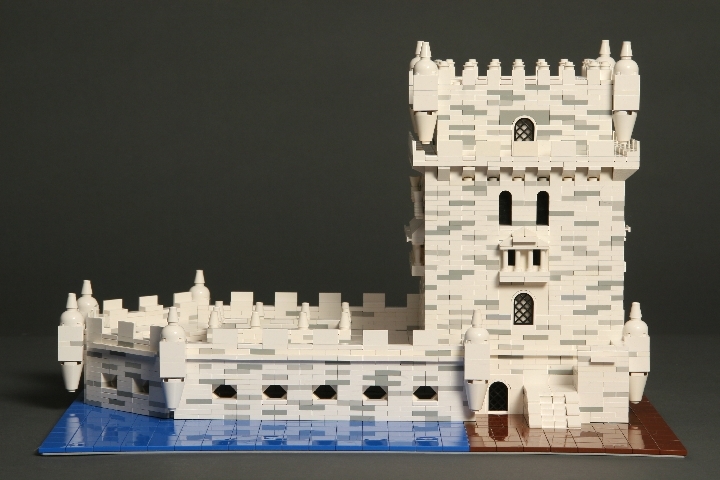
Todas as imagens aqui.
Muitas maravilhas da arquitectura... Lego ;) aqui.
Master torgugick for Brickshelf, thanx!
sexta-feira, 7 de março de 2008
Why Do They Put Lead Paint in Toys?
Toy manufacturer Mattel recalled nearly 19 million Chinese-made toys Tuesday, including 436,000 toy cars containing lead paint. That was only two weeks after yanking nearly a million of its Fisher-Price toys for preschoolers because of lead content. Why would a toymaker ever use lead paint?
Because it's bright, durable, flexible, fast-drying, and cheap. Paint manufacturers mix in different lead compounds depending on the color of the paint. Lead chromates, for example, can enhance a yellow or orange hue. Municipal workers often use lead paint because it resists the color-dimming effects of ultraviolet light: The double yellow line in the middle of the road? That's loaded with lead. Paint manufacturers also add lead and other heavy metals to make paint stick better instead of flaking off. Price is also a factor: China mass-produces the stuff, and coloring agents like lead chromate are generally cheaper than organic pigments. (That said, added lead used to be a luxury. A house painter in the early 20th century would show up to a job with two buckets—one for the paint substrate, one for the lead powder. The more lead he added, the better the paint, the higher the price.)
Lead paint has other qualities that make it attractive to manufacturers. For one thing, it resists mildew, making it perfect for wood furniture and other surfaces likely to get wet. It's also anti-corrosive: Ship makers have historically applied a coating of lead paint, often containing the red mineral litharge, to the bottom of metal ships' hulls. (The Romans used lead paint, too—that's why the paint on some of their ruins is so well-preserved.)
But for all its utility, lead is dangerous even in small quantities. In 1978, the U.S. Consumer Product Safety Commission made it illegal to use any paint containing more than 0.06 percent lead for residential structures, hospitals, and children's products. But it's still widely used on bridges, tanks, towers, heavy equipment, parking lots, road signs, and other large-scale projects. There's still lead in most consumer paints, too—just much, much less. Many paint manufacturers now use safer alternatives like zinc, although it doesn't quite match lead's luster or strength.*
People have known about lead's harmful effects for centuries. Benjamin Franklin once wrote a letter about the "bad Effects of Lead taken inwardly," and some 19th-century paint companies ran newspaper ads bragging about their lead-free paint. President George H.W. Bush's dog, Millie, attracted national attention to the dangers of lead poisoning in 1992, when she got sick from breathing lead dust during White House renovations. In 2006, the state of Rhode Island won a lawsuit against three major paint companies, which were ordered to clean up 300,000 contaminated homes.
From Slate's Explainer
Isto sou eu agora
Babies can cause 'momnesia'
Holly Massingill noticed the little slip-ups first.
The Austin mother, who once had an "almost photographic" memory, began to stumble over friends' names when introducing them. She would hop in her car and forget where she wanted to go.
Massingill began to wonder about her brain, though, after she asked her friend if she was looking forward to her upcoming wedding. The friend reminded her the wedding had taken place a month ago — and Massingill was there.
Momnesia — the mental fuzziness and memory lapses that set in shortly after childbirth — had struck again.
"At first I thought it was about being really tired," says Massingill, 36, whose son, Mace, is now 7 months old. "I can't even remember the things I've forgotten. I really think motherhood does something to your brain."
Scientists agree. While researchers say they can't explain all the ways motherhood affects a woman's memory, they agree there's a pattern.
Like Massingill, many moms feel mentally foggy in the days after delivery. And they notice that the details of labor and delivery, which are scenes one might expect to be seared into a woman's consciousness, began to slowly slip away.
Sadly, Massingill says, her son's first few weeks of life have become a blur.
Few parents enjoy feeling so scatterbrained, says neuropsychiatrist Louann Brizendine, author of The Female Brain. And momnesia can be dangerous, such as when moms forget to fasten the straps in an infant's car seat. Yet momnesia may give modern mothers an evolutionary advantage, Brizendine says.
"It turns you into someone who serves that little infant, to keep it alive no matter what," says Brizendine, founder of the Women's and Teen Girls' Mood and Hormone Clinic at the University of California in San Francisco. "Other parts of your brain that are usually on high alert are sort of taken offline."
Women may be reluctant to talk about their memory problems for fear of being judged poorly at work, especially because returning to a demanding job puts even more stress on the brain, Brizendine says.
But women don't get dumber after childbirth. Instead, like sleep-deprived medical residents who learn on the job, their brains are getting a workout. "You are learning a lot," she says. "Once your mommy brain gets readjusted, you get more efficient, and you become smarter and learn things faster, but it won't happen all at once."
Mothers' priorities often change dramatically while caring for a baby. They need to be "hyper vigilant" about their infants, who may develop symptoms of illness that are apparent only to those who have scrutinized their every coo and cry, Brizendine says. "You're on the mother beat all the time. It requires certain parts of your brain to work hyper, hyper, hyper well. But it requires other parts of your brain to play second fiddle."
Hypervigilance in other areas
The cost of that vigilance can be a little ditziness, and that is a price many moms are willing to pay.
Amy Prather of Nampa, Idaho, for example, occasionally leaves wet laundry in the washing machine or forgets to return phone calls. But she also has learned to spot subtle signs of trouble in her 2½-year-old daughter, Faith, including a dangerous bowel obstruction that doctors initially dismissed as colic.
Elizabeth Singleton of Gig Harbor, Wash., has learned to react quickly when her 17-month-old daughter, Kiersten, is choking, partly because she has had so much practice. She estimates she has fished objects out of her baby's throat at least 20 times.
Yet she burned her favorite teapot by leaving it on the stove, and she still occasionally stores milk in the cupboard rather than the fridge, a mistake she typically discovers after the milk has spoiled.
When it comes to the pain of childbirth, a little amnesia is a good thing. The brain typically softens or erases memories of traumatic events to permit people to continue functioning.
Women whose memories of childbirth remain too vivid may suffer post-traumatic flashbacks, Brizendine says. "You remember the pain was really bad, but you can't get into that space," she says.
If women's memories of labor and delivery didn't fade, "we'd never have sex again," says Sharon Phelan, an obstetrician and gynecologist with the University of New Mexico School of Medicine.
Women's plummeting estrogen levels, which lurch from "incredibly high" in late pregnancy to "virtually non-existent" after delivery, can make it hard to focus. While estrogen plays a key role in fertility, it also acts as a neurotransmitter, sending signals in the brain.
Breast-feeding can prolong the mental haze, Brizendine says, by circulating hormones that help mothers relax and promote a "mellow, mildly unfocused" feeling. Massingill says she has been feeling slightly sharper since she stopped nursing her son a few weeks ago.
quinta-feira, 6 de março de 2008

Never give in, never, never, never
Every day you may make progress.
Every step may be fruitful.
Yet there will stretch out before you an ever-lengthening, ever-ascending, ever-improving path.
You know you will never get to the end of the journey.
But this, so far from discouraging, only adds to the joy and glory of the climb.
Every step may be fruitful.
Yet there will stretch out before you an ever-lengthening, ever-ascending, ever-improving path.
You know you will never get to the end of the journey.
But this, so far from discouraging, only adds to the joy and glory of the climb.
--Sir Winston Churchill
terça-feira, 26 de fevereiro de 2008
Babies are Angels
Babies are Angels that fly to the earth,
their wings disappear at the time of their birth,
one look in their eyes and we're never the same.
They're part of us now and that part has a name,
that part is your heart and a bond that won't sever,
our Babies are Angels, we love them forever.
their wings disappear at the time of their birth,
one look in their eyes and we're never the same.
They're part of us now and that part has a name,
that part is your heart and a bond that won't sever,
our Babies are Angels, we love them forever.
From Grandma Angela, an angel herself ;)
How to make Apple Rabbits

Making food into decorative shapes is a favorite children’s bento lunch technique in Japan, where it’s become an art form. Cutting fruit into fun shapes is one way to get your picky eaters interested in their food; I’m game as long as it doesn’t take much time or effort.
To make an apple bunny, first cut an apple into eight wedges and remove the core. With a sharp knife, cut a shallow V-shape into the skin about an eighth of an inch deep. If you’re making a half-size miniature apple rabbit, first cut the apple wedge in half so it’s short, then score a V-shaped incision in the skin with the tips of the ears pointing towards the squared-off, cut end. I like to start the tips of the ears about two-thirds of the way up the apple to expose a little apple ‘body’, but that’s just personal preference. Play around!
O resto em Lunch in a Box
To make an apple bunny, first cut an apple into eight wedges and remove the core. With a sharp knife, cut a shallow V-shape into the skin about an eighth of an inch deep. If you’re making a half-size miniature apple rabbit, first cut the apple wedge in half so it’s short, then score a V-shaped incision in the skin with the tips of the ears pointing towards the squared-off, cut end. I like to start the tips of the ears about two-thirds of the way up the apple to expose a little apple ‘body’, but that’s just personal preference. Play around!
O resto em Lunch in a Box
domingo, 17 de fevereiro de 2008
Copos e Narizes

Calling all party animals - here are the perfect beverage
cups to let you express your inner beast! Drinking from
these double- coated durable 9 oz cups turns anybody’s
nose into something WILD. Perfectly sized for both kids
and adults, each pack of Pick Your Nose/Party Animals
includes 24 cups in 6 assorted animal styles. The clear box
has a picture of an adult on one side and an adorable
youth on the other...clever huh?
From Fred & Friends ;)
quarta-feira, 6 de fevereiro de 2008
6 de Fevereiro / February 6th

The Newborn
This morsel of man I've held -
What potency it has,
Though strengthless still and naked as
A nut unshelled!
Cecil Day-Lewis para o filho, Daniel Day-Lewis
terça-feira, 5 de fevereiro de 2008
Experts have plenty of advice for new parents. If only they could agree.
«I AM RAISING my baby all wrong. You're probably raising your baby wrong, too. I have it on good authority. The authority comes from an assortment of books, mostly large-format paperbacks, strewn around my living room. I can tell they are addressed to me because most of them have "Your Baby" in the title or subtitle.
(...)
Feed the baby cereal with a spoon. Feed the baby cereal with your finger.
(...)
Consider the pacifier. "Most babies don't need them and are better off without," Penelope Leach declares. "Pacifiers," the American Academy of Pediatrics counters, "do not cause any medical or psychological problems."
Or the perilous issue of whether a baby should sleep with its parents. "Family beds do have snags and it's sensible to foresee them if you can so that you can weigh the pros and cons," Leach writes, on tiptoe. The American Academy of Pediatrics chooses its side by omitting "family bed" and "co-sleeping" from its index altogether; the Searses, partisans of love and attachment, present a bullying hard sell for cuddling through the night: "If there were fewer cribs, would there be fewer crib deaths?"»
(...)
(...)
Feed the baby cereal with a spoon. Feed the baby cereal with your finger.
(...)
Consider the pacifier. "Most babies don't need them and are better off without," Penelope Leach declares. "Pacifiers," the American Academy of Pediatrics counters, "do not cause any medical or psychological problems."
Or the perilous issue of whether a baby should sleep with its parents. "Family beds do have snags and it's sensible to foresee them if you can so that you can weigh the pros and cons," Leach writes, on tiptoe. The American Academy of Pediatrics chooses its side by omitting "family bed" and "co-sleeping" from its index altogether; the Searses, partisans of love and attachment, present a bullying hard sell for cuddling through the night: "If there were fewer cribs, would there be fewer crib deaths?"»
(...)
Hilarious ;)
sexta-feira, 1 de fevereiro de 2008

quarta-feira, 30 de janeiro de 2008
Arte em Papel: o Navio-Escola Sagres

Built in 1937 by Blohm & Voss in Hamburg, Germany, the Sagres II began life as a German Navy training vessel known as the Albert Leo Schlageter. Damaged in World War II, she was subsequently confiscated by the United States and given to Brazil, where she served through 1961 as a training vessel under the name Guanabara. Following a sale to the Portuguese Navy, she became the training vessel Sagres II, a role that continues through today. Her name comes from the Sagres Cape, the site of the world's first marine school, established by Prince Henry the Navigator in the 15th century. Its sails feature the Cross of Malta, which was emblazoned on sails of Portuguese vessels during the Age of Discovery.
Ahhhh, pois é ;)
Happy Birthday, LEGO ;)

50 years old on January, 28 :)
The art of Sean Kenney, official Lego artist - what a job!
O Órgão do Mar em Zadar, na Croácia

Eu quero ir à Croácia!
Desde sempre, desde o belíssimo e despojado pavilhão da Croácia na Expo'98, e ainda mais depois de o Miguel lá ter ido em viagem pela Europa e nos mostrar fotos lindas, lindas daquele país à beira Adriático plantado!
Esta intervenção urbanística ganhou o European Prize for Urban Public Space de 2006 (nós não temos nem unzinho :(

Mais informações na página do Órgão de Zadar, em inglês.
The Sea organ is an architectural object located in Zadar, Croatia and an experimental musical instrument which plays music by way of sea waves and tubes located underneath a set of large marble steps. The waves create somewhat random but harmonic sounds. The device was made by the architect Nikola Bašić as part of the project to redesign the old city coast (riva), and the site was opened to the public on April 15, 2005.
(Wikipedia)

Podemos quase fazer como esta família amorosa, e ouvir o som do órgão no YouTube, essa maravilha da internet ;)

Podemos quase fazer como esta família amorosa, e ouvir o som do órgão no YouTube, essa maravilha da internet ;)
E tudo isto foi obra de uma amiga, por email.
Saudades!!!
Saudades!!!
terça-feira, 29 de janeiro de 2008
Catraios.net

Excelente listagem de tudo o que possa interessar a Catraios e seus pais ;)
Jogos Tradicionais, Televisão, Personagens, Brinquedos, Marcas e Lojas, Parques e Brincadeiras em geral, etc., etc.
segunda-feira, 28 de janeiro de 2008

Malawian peanut Futali
 Where peanut farmer Judith Harry lives in Mkanda, Malawi, most farmers subsist below the poverty line: 'They earn below $1 every day and do not have enough food to last them the whole year. I start work at 3.30 every morning. Last year I grew enough groundnuts to make 14,000 jars of peanut butter and I have been able to build my family a brick house with concrete foundations and a tin roof.'
Serves 4-6
4 medium sized sweet potatoes or half a pumpkin, washed and peeled and cut into pieces
60g peanut flour
pinch salt
a handful fairtrade peanuts, chopped
Bring a large saucepan of water to the boil. Add the sweet potatoes or pumpkin pieces and cook until almost tender. Drain the water off once they are cooked. Add the peanut flour and salt and mash everything together. Stir continuously, and continue cooking for a further few minutes until the mixture is almost dry. Garnish with chopped peanuts.
Brinquedos de Madeira


Em barda, a bom preço, variadíssimos e muito fofos, nas lojas Ale-Hop.
Há no Centro Comercial Alegro, no Almada Fórum e nas galerias do Campo Pequeno.
Até fiquei parva, e só espero que não seja uma moda e que ainda haja para quando o Lucas começar a mexericar em tudo ;)
Há no Centro Comercial Alegro, no Almada Fórum e nas galerias do Campo Pequeno.
Até fiquei parva, e só espero que não seja uma moda e que ainda haja para quando o Lucas começar a mexericar em tudo ;)
quarta-feira, 23 de janeiro de 2008
How to hug a baby
THE FOLLOWING ARE IMPORTANT INSTRUCTIONS FOR EVERY DOG TO KNOW
Instructions for properly hugging a baby.
1. First, spy a baby.

2. Second, be sure that the object you spied was indeed a baby by employing classic sniffing techniques. If you smell baby powder and the wonderful aroma of wet diapers this is indeed
a baby.

3. Next you will need to flatten the baby before actually beginning the hugging process.

**Note: The added slobber should help in future steps by making the 'paw slide' easier.
4. The 'paw slide'
Simply slide paws around baby and prepare for possible close-up.

5. Finally, if a camera is present, you will need to execute the difficult and patented 'hug, smile, and lean' so as to achieve the best photo quality.

Dogs, if this is properly done, it will secure you a warm, dry, climate-controlled environment for the rest of your life!
Instructions for properly hugging a baby.
1. First, spy a baby.

2. Second, be sure that the object you spied was indeed a baby by employing classic sniffing techniques. If you smell baby powder and the wonderful aroma of wet diapers this is indeed
a baby.

3. Next you will need to flatten the baby before actually beginning the hugging process.

**Note: The added slobber should help in future steps by making the 'paw slide' easier.
4. The 'paw slide'
Simply slide paws around baby and prepare for possible close-up.

5. Finally, if a camera is present, you will need to execute the difficult and patented 'hug, smile, and lean' so as to achieve the best photo quality.

Dogs, if this is properly done, it will secure you a warm, dry, climate-controlled environment for the rest of your life!
O Grande Livro do Bebé
 Primeiras páginas (hiperligação PDF) |  | Sinopse: O nascimento de um filho é um momento único na vida dos pais. Chegados a casa, inicia-se uma fantástica aventura onde todas as horas, noites, dias, semanas, meses, contam. O primeiro ano de vida é longo, repleto de dúvidas, perguntas, inquietações e momentos críticos. Estes doze meses intensos são fundamentais para a personalidade e o desenvolvimento do vosso filho. Infelizmente, ou felizmente, o vosso bebé não vem com «manual de instruções». O autor foca todas as necessidades fundamentais do bebé – alimentação, sono, desenvolvimento, saúde e conforto – que são objecto de grande preocupação por parte dos pais. – Devo dar de mamar?– Posso dar banho ao meu bebé recém-nascido?– Como combater a febre?– Que alimentos pode comer o meu bebé aos 6 meses?– O meu filho não dorme bem, é normal? O que posso fazer?– O que é melhor para o meu filho, ficar em casa com os avós ou ir para o infantário? |
domingo, 20 de janeiro de 2008
sexta-feira, 18 de janeiro de 2008
Parent Tip: How not to laugh
It happens to everyone. Out of the blue, your child says something hilariously inappropriate like, "Mommy, you're weally PISSIN' ME OFF!" and your reaction will help determine the level of smart assedness in the kid's future. So what's a parent with a healthy sense of humor supposed to do?!
I read somewhere that it is hard to smile if your eyebrows are raised (assuming you're Boxtox-free). So while it might look freakish, I've learned that lifting the brows really, really high can buy you enough time run to the bathroom. There, running water can drown out the sounds of a convulsive laughing fit until you're able to pull yourself together and stop pissin' off the small fry.
From ParentDish
quarta-feira, 16 de janeiro de 2008
Fraldiário

Da abundante biblioteca da Poison Ivy,
e ainda bem porque na página da Editorial Bizâncio diz que está esgotado - francamente!
É o que vos digo, quem quer boas bibliotecas arranja bons amigos :-Þ
Estas imagens são sobre as milhentas compras que pensamos ter de fazer para o bebé.
Em todo o livro, a cereja no topo do bolo para mim, mas em rodapé, são os Conselhos de Pessoas Sem Filhos, que eu ainda sou, mas que espero não ter dado a ninguém ;)
Deixo aqui já um sobre amamentação:
«Deve surgir naturalmente, com essa coisa chamada 'instinto maternal'.
Quero dizer, a mulher das cavernas conseguia dar de mamar sem consultores de lactação, não é verdade?»


segunda-feira, 14 de janeiro de 2008


sexta-feira, 11 de janeiro de 2008

The Art of Jim Campbell

Whose website, or something, I cannot find online, or it takes a bit of time, sorry Jim...
Still from Haynes Baby Manual, a gift from Daddy's ;)
Here are examples of Jim's wonderful work.

quinta-feira, 10 de janeiro de 2008
Giggles Software for Babies & Toddlers

Babies of geeks love technology. From the buttons on the answering machine to the bright light of the cell phone screen, their internal compasses seem to be set toward microchips and motherboards.
And, problematically for parents, they can distinguish the real items from substitutes. Sure, our son gets moderate play value from a blue plastic phone with lights and sounds, but he'll drop it in a heartbeat for any real cell phone.
The same discernment of real technology is also true for computers- which causes real problems for parents. How is it random keyboard banging always tends to result in questions like "Format drive?"
Giggles: Computer Funtime for Baby removes the possibilities of data destruction and unwittingly horrific changes in general properties. This fun software keeps your 6 to 24 month old child away from the desktop and makes even the function keys benign.
From Adrienne of Baby Toolkit, found in Parent Hacks.
quarta-feira, 9 de janeiro de 2008
domingo, 6 de janeiro de 2008
The 9 Manliest Names in the World
#9 - Lance Armstrong
The Name:
It's impossible to hear this name without picturing many men getting impaled on a battlefield. He' got the lance, and he' got the arm strength to drive it through you and the four guys standing behind you.
Click the title link to see
The Man, Does he live up to it, The only way it could have been Manlier,
for all names featured :)
The Man, Does he live up to it, The only way it could have been Manlier,
for all names featured :)
#8 - Powers Boothe
The Name:
A strong, solid name. The first name especially leaves the reader wondering, "What kind of powers? Mind control? Flight? Laser-beam eyes? It's laser-beam eyes, isn't it?"
The last name admittedly leaves a little to be desired, especially with the extra "e", but the whole thing has a certain poetry to it as it rolls off the tongue and kicks you in the face.
#7 - Max Planck
The Name:
Great name. It' got the solid "Max" and the mental image of a man as rigid and unyielding as a thick piece of lumber. A name like this, you're probably either a carpenter or pirate.
#5 -Dr. Duncan Steel
The Name:
The title is what makes this one. This man gets to be called "Doctor Steel" on a daily basis. That is so awesome that we're thinking of forming a heavy metal band just so we can call it that. We can't believe there hasn't been some sort of comic book/cartoon villain with this name. Not even a James Bond film. Madness.
#4- Stirling Mortlock
The Name:
When you think about it, this is a ridiculous name. Its individual names would not have worked in a different setting. "Stirling Smith" probably got a wedgie every day at school, and "Cecil Mortlock" very likely had his head dumped in the toilet nearly as often.
#3 -Magnus Ver Magnusson
The Name:
Nordic naming conventions mean that his name essentially means "Magnus son of Magnus" which immediately brings to mind a line of men, all Magnuses, doing incredibly manly things through the ages. This is a damn solid entry, and you can never go wrong with a nice "Ver" or Von" or "Mac" in there somewhere.
#1 -Staff Sgt. Max Fightmaster
The Name:
Fightmaster is the kind of name we all wish we were born with. And, the irony is that it' the one name that will prevent you from ever having to actually fight anybody. If you ever get into a scuffle at a bar, before the fists start swinging, people would pull the other guy back shouting, "No you fool! He's Max Fightmaster! Think about this for a second!"
Max Fightmaster.
Found in Cracked

quinta-feira, 3 de janeiro de 2008
The Happiest Baby on the Block

Parecem truques de magia!
Excertos do livro e do DVD no linque do título deste post :)
The five Ss:
Swaddling… A feeling of pure "wrap"ture;
Side (or, Stomach)… Your baby's "feel-good" position;
Shhhh… Your baby's favorite soothing sound;
Swinging… Moving in rhythm with your baby's needs;
Sucking… The "icing on the cake".
Próspero Ano Novo! :)

Sim, também este blogue tem que ligar a esse manancial
de fofuras e delícias que é o Cute Overload :)
Subscrever:
Mensagens (Atom)
