[Os valores foram convertidos no sistema métrico]
(...)
Definitions differ as to what constitutes a large baby. The previous threshold was 3,600 kg. Now most health professionals class any baby more than 4,150 kg as above average. Although larger babies do seem to be increasingly common, the heftiest are still rare enough to make the news. Big babies used to be more common when people had larger families, simply because weight tends to increase with each subsequent baby.
(...)
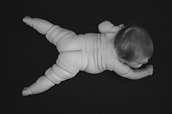
In January 2005 in Brazil, Francisca Ramos dos Santos gave birth to an 8 kg "giant baby". He was her fifth child. Last year in Siberia, Tatyana Barabanov had a girl who weighed 7,900 kg. She was a 12th child. According to the Guinness Book of Records the largest baby ever was born in Canada in 1879, weighing 10,400 kg, but died 11 hours after birth. The heaviest surviving baby was born in Italy in 1955 and weighed 10,300 kg. A 9,500 kg baby was born in Cornwall in 1852 and a boy weighing 9,100 kg was born in Crewe, Cheshire in 1894.
(...)
The reason babies are getting heavier is obvious, says Mervi Jokinen of the Royal College of Midwives: "It is mostly linked to better diet and living standards in the population. But big babies have always existed and sometimes it's very difficult to say if it's genetic or if it's diet." What is undeniable, however, is that obesity - of the mothers, not the babies - is a major factor.
(...)
But the worry of having a large baby is becoming yet another stress factor in pregnancy. "I actually felt a bit guilty and embarrassed about having such a large baby," says Ruth Ainley, 34, a physiotherapist from St Albans. Her son James, now two, weighed 4,900 kg at birth. When he was born by emergency C-section after a 28-hour labour, the surgeon announced, "Well, this one would not have come out any other way."
(...)
Size remains a hugely contentious and emotional issue. Who wants to be told they're overweight when they're pregnant and can't diet anyway? In any case, many pregnant women who have gestational diabetes or large babies - or both - are not obese. And many obese women give birth to normal weight babies with no problems at all. The two concerns with larger babies are cephalopelvic disproportion (when the baby is too large to pass through the mother's pelvis) and shoulder dystocia (when the head comes out but the shoulders get stuck). But neither of these conditions is exclusive to larger babies: they can occur with small ones too.
(...)
Despite the possible complications, many mothers still argue that bigger babies are better. They report feeling more confident in looking after them, less concerned about their growth and relieved that they often sleep through the night at an earlier age. A University College London study conducted over several decades found that babies weighing more than 8lb performed better in IQ tests throughout their lives.
(...)
Definitions differ as to what constitutes a large baby. The previous threshold was 3,600 kg. Now most health professionals class any baby more than 4,150 kg as above average. Although larger babies do seem to be increasingly common, the heftiest are still rare enough to make the news. Big babies used to be more common when people had larger families, simply because weight tends to increase with each subsequent baby.
(...)
In January 2005 in Brazil, Francisca Ramos dos Santos gave birth to an 8 kg "giant baby". He was her fifth child. Last year in Siberia, Tatyana Barabanov had a girl who weighed 7,900 kg. She was a 12th child. According to the Guinness Book of Records the largest baby ever was born in Canada in 1879, weighing 10,400 kg, but died 11 hours after birth. The heaviest surviving baby was born in Italy in 1955 and weighed 10,300 kg. A 9,500 kg baby was born in Cornwall in 1852 and a boy weighing 9,100 kg was born in Crewe, Cheshire in 1894.
(...)
The reason babies are getting heavier is obvious, says Mervi Jokinen of the Royal College of Midwives: "It is mostly linked to better diet and living standards in the population. But big babies have always existed and sometimes it's very difficult to say if it's genetic or if it's diet." What is undeniable, however, is that obesity - of the mothers, not the babies - is a major factor.
(...)
But the worry of having a large baby is becoming yet another stress factor in pregnancy. "I actually felt a bit guilty and embarrassed about having such a large baby," says Ruth Ainley, 34, a physiotherapist from St Albans. Her son James, now two, weighed 4,900 kg at birth. When he was born by emergency C-section after a 28-hour labour, the surgeon announced, "Well, this one would not have come out any other way."
(...)
Size remains a hugely contentious and emotional issue. Who wants to be told they're overweight when they're pregnant and can't diet anyway? In any case, many pregnant women who have gestational diabetes or large babies - or both - are not obese. And many obese women give birth to normal weight babies with no problems at all. The two concerns with larger babies are cephalopelvic disproportion (when the baby is too large to pass through the mother's pelvis) and shoulder dystocia (when the head comes out but the shoulders get stuck). But neither of these conditions is exclusive to larger babies: they can occur with small ones too.
(...)
Despite the possible complications, many mothers still argue that bigger babies are better. They report feeling more confident in looking after them, less concerned about their growth and relieved that they often sleep through the night at an earlier age. A University College London study conducted over several decades found that babies weighing more than 8lb performed better in IQ tests throughout their lives.
28 horas em trabalho de parto é... mais de um dia!
(já a actriz Kate Winslet esteve 37 horas...)
O que é que isto tem de bom para a mãe e para o bebé, pergunto eu?
Está visto que não acontece só aqui no portugalito :|
(já a actriz Kate Winslet esteve 37 horas...)
O que é que isto tem de bom para a mãe e para o bebé, pergunto eu?
Está visto que não acontece só aqui no portugalito :|


Sem comentários:
Enviar um comentário